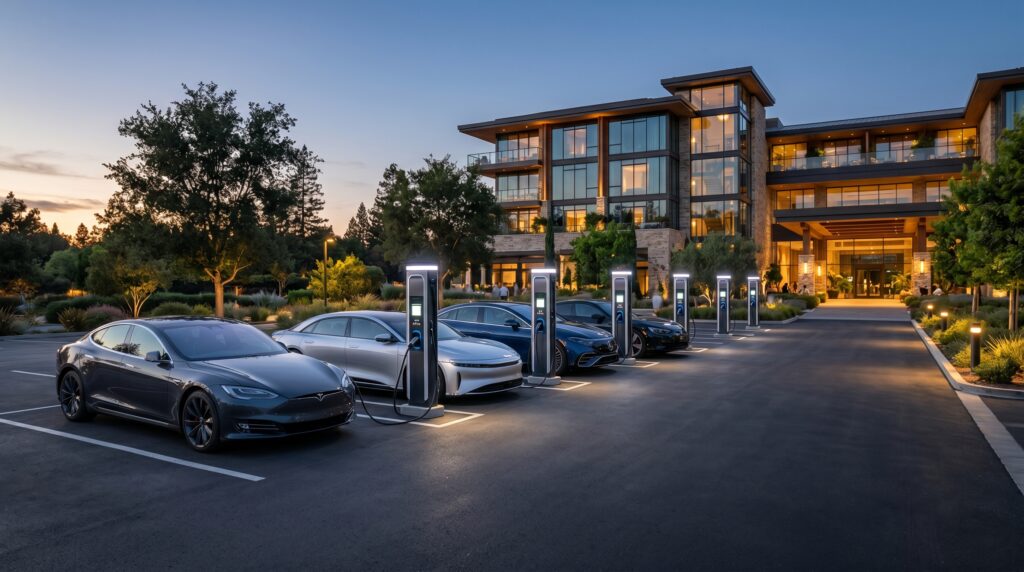
Ultra-Fast Charging Stations are deploying across busy highway corridors through a new partnership between ChargePoint and travel plaza chain Onvo. The commercial rollout brings modular Express Plus hardware to twelve major travel centers across Pennsylvania and upstate New York state…
Disclaimer: This post contains affiliate links. If you click through and make a purchase or submit a request for a quote, we may earn a small commission or referral fee at no extra cost to you.
Table of Contents
Ultra-Fast Charging Stations Require Hardened Building Envelopes
Commercial travel plazas are rapidly upgrading physical infrastructure to support high-power highway charging corridors.
Network provider ChargePoint has formally partnered with Pennsylvania-based travel center operator Onvo to install high-voltage charging systems across key Interstate routes.
The initial deployment phase focuses on twelve strategically selected Onvo travel plaza locations positioned along heavy freight and tourist corridors in Pennsylvania and New York.
Integrating megawatt-scale charging infrastructure into existing retail fuel stations demands structural modifications to facility envelopes and outdoor staging areas.
Commercial property developers must build hardened equipment pads and resilient site housings capable of supporting heavy liquid-cooled power cabinets.
Installing high-density power blocks requires reinforced concrete pads designed to withstand localized load stress and severe thermal expansion.
Site engineers must specify structural insulated panels and fire-rated exterior enclosures to house high-voltage utility switchgear near customer retail facilities.
Commercial facilities must adhere to strict structural standards to prevent weather-induced fatigue across outdoor power equipment.
High wind-velocity ratings are essential for structural canopies installed above charging bays to protect drivers and hardware from adverse weather.
Properly engineered building envelopes prevent moisture intrusion and extreme ambient temperature swings from degrading internal power electronics.
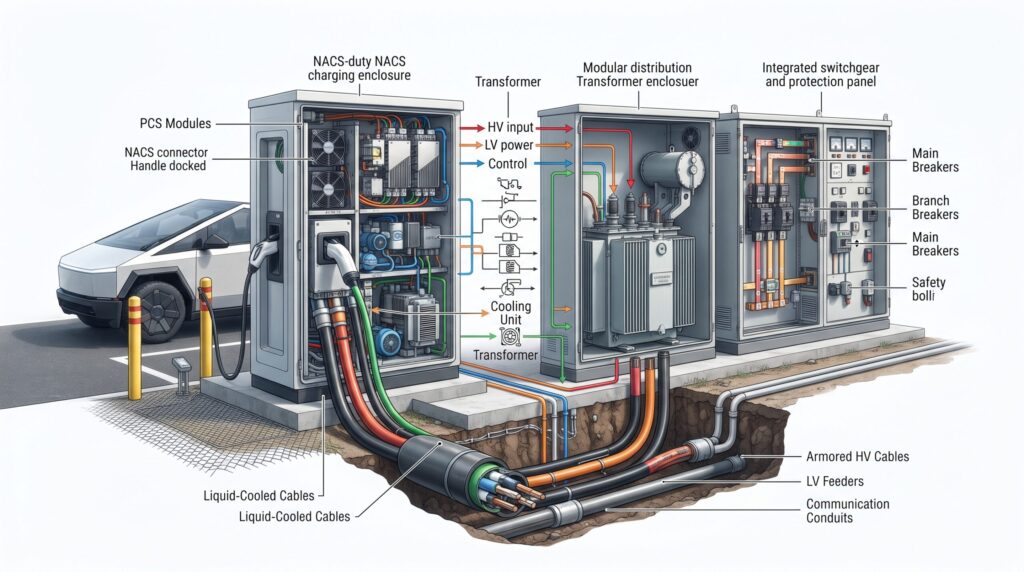
Protecting subterranean utility conduits with schedule 80 PVC encasement ensures long-term physical durability against surface vehicle pressure.
Upgrading highway rest stops with high-capacity electrical architecture transforms traditional retail gas stations into multi-modal energy hubs.
Commercial developers must conduct comprehensive geotechnical ground tests before pouring concrete foundations for multi-megawatt transformer vaults.
Heavy physical traffic at highway travel plazas increases the risk of accidental vehicle collisions with sensitive charging hardware.
Site designers must install heavy-duty steel-pipe bollards filled with concrete around every charger pedestal and power cabinet.
Proper spatial planning separates high-voltage utility infrastructure from high-traffic pedestrian zones around convenience stores and dining areas.
Integrating protective structural barriers minimizes corporate property damage and limits insurance liability for commercial site hosts.
Establishing dedicated electrical mechanical rooms allows field service technicians to perform routine maintenance safely without interrupting retail operations.
Building envelope designs must incorporate physical noise dampening features to control acoustic output from high-output cooling fans inside liquid-cooled power cabinets.
Resilient site engineering safeguards initial capital expenditure while establishing a durable foundation for long-term corridor electrification.
Modular Infrastructure Engineering for Highway Travel Hubs
Placing high-voltage charging hardware at highway travel plazas requires dynamic electrical distribution systems.
Site developers must design modular utility connection points that allow for seamless future power expansion without disrupting existing service lines.
Oversizing underground trenching and installing spare conduit pathways dramatically lowers future capital expenditure during facility upgrades.
Utility interconnect points must be physically isolated with lockable perimeter fencing to satisfy regional electric utility access guidelines.
💡 Pro Tip: During initial site grading for highway fast-charging plazas, install pre-cast concrete equipment pads with pre-drilled conduit knockouts to reduce field installation time and eliminate costly structural core-drilling during future power cabinet upgrades.
ChargePoint Express Plus Platforms Drive High Power Corridor Deployment
The collaborative expansion between ChargePoint and Onvo centers on the deployment of ChargePoint Express Plus Platforms.
ChargePoint Express Plus hardware utilizes a modular architecture that dynamically allocates power blocks based on individual vehicle demand.
This centralized power distribution system enables simultaneous high-speed charging across multiple vehicle stalls from a single integrated utility feed.
High-output power blocks deliver up to 500 kilowatts of continuous DC power to supported vehicle architectures.
Equipping highway rest stops with liquid-cooled cables allows charging pedestals to sustain high amperage without excessive thermal throttling.
The Express Plus system supports both Combined Charging System and North American Charging Standard connectors to ensure complete vehicle compatibility.
Supporting diverse vehicle connector types allows travel plaza operators to serve passenger cars, commercial delivery vans, and light freight trucks.
Onvo operates 42 travel plazas and convenience stores across central Pennsylvania and upstate New York.
Many of these travel centers sit along high-density freight routes, including Interstate 80, Interstate 81, Interstate 78, and Interstate 90.
Closing fast-charging gaps along these critical highway corridors helps eliminate driver range anxiety during long-distance trips.
Deploying scalable power cabinets allows travel center operators to match electrical supply with growing commercial electric vehicle adoption rates.
Dynamic power-sharing technology prevents single vehicles from monopolizing site power, optimizing turnover rates across busy travel plaza stalls.
Automated power routing improves electrical conversion efficiency, lowering internal energy losses within localized inverter circuits.
Reducing system heat generation extends the operational lifecycle of internal power electronics and reduces cooling fan energy consumption.
Commercial site operators benefit from reduced utility demand charges by balancing active power delivery across active charging sessions.
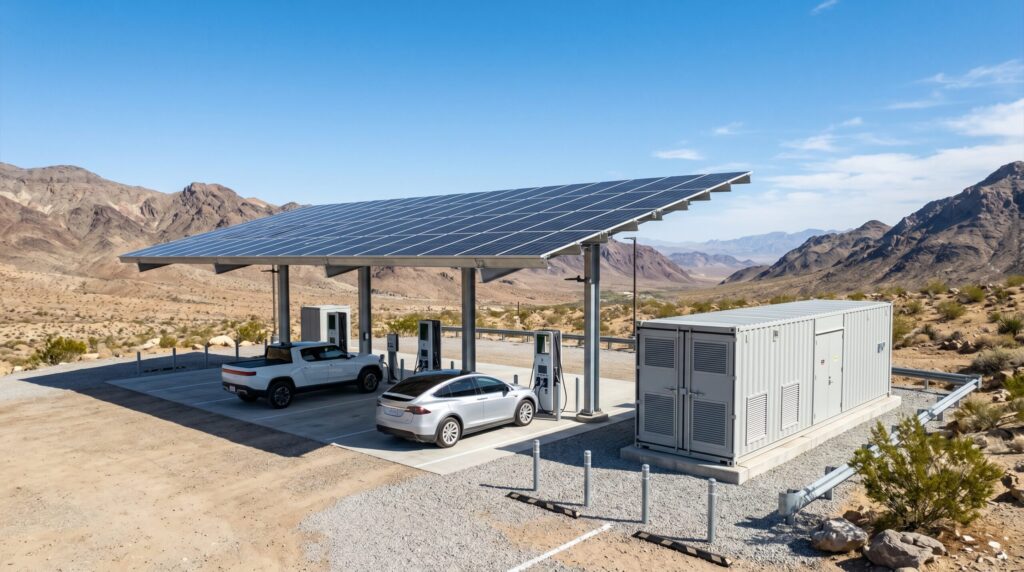
Integrated microgrid capabilities allow Express Plus installations to pair directly with on-site solar canopy arrays and stationary battery energy storage systems.
Localizing power generation buffers the primary electrical grid during peak summer travel periods when highway charging demand spikes.
Advanced telemetry software continuously monitors cell temperatures, voltage stability, and connector latch integrity across all active ports.
Remote diagnostic tools allow factory service teams to resolve software glitches automatically over-the-air without dispatching field technicians.
Predictive maintenance algorithms alert site managers to physical wear on cable assemblies before component failures cause station downtime.
Commercial Travel Plaza Monetization Strategies Enhance Infrastructure Investment
Integrating high-power charging assets into travel centers creates new revenue streams through Commercial Travel Plaza Monetization.
Highway travelers typically spend twenty to thirty minutes on site while utilizing high-speed charging infrastructure.
Onvo travel plazas leverage this dwell time by offering proprietary food services, retail shopping, and comfortable rest amenities.
Providing premium site amenities increases average customer foot traffic and boosts high-margin retail sales inside travel convenience stores.
Commercial real estate developers recognize that installing fast chargers transforms standard rest stops into preferred travel destinations.
Site hosts can establish flexible charging tariffs that vary based on time-of-day utility rates and local electricity demand curves.
Implementing dynamic pricing models helps offset expensive demand charges levied by regional electric distribution utilities.
Strategic site selection along major transportation corridors maximizes daily asset utilization rates across all installed charging ports.
High utilization rates accelerate the payback period for initial civil engineering and electrical capital expenditures.
Federal grant programs and state clean transportation subsidies further improve financial returns for commercial charging developers.
Long-term real estate valuations increase for commercial properties equipped with robust, grid-connected high-voltage power capacity.
Property owners who secure high-power utility interconnections gain a strong competitive advantage over surrounding commercial parcels.
Upgrading local electrical service panels positioning travel plazas to support future commercial fleet megawatt charging requirements.
Collaborating with established network operators provides travel plaza owners with turnkey billing, customer support, and asset management software.
Turnkey network management platforms simplify financial reporting and ensure seamless payment processing for highway drivers.
Data-driven analytics platforms allow site managers to track hourly charging trends and adjust staffing levels inside retail stores accordingly.
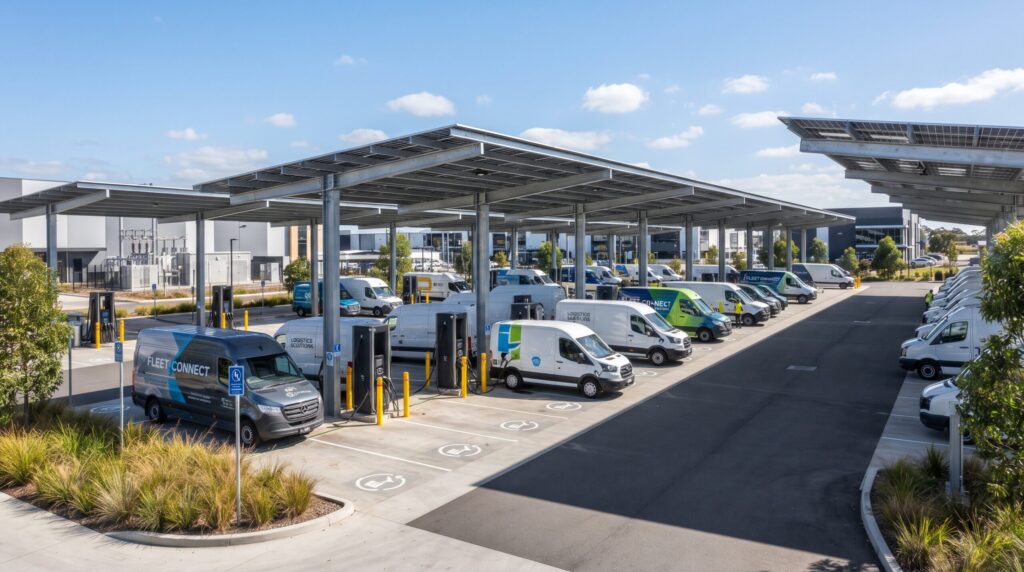
Commercial fleet operators can establish contract rate agreements with travel plaza networks to secure priority charging access for logistics vehicles.
Structured fleet access agreements guarantee reliable charging availability for commercial transport vehicles operating along key shipping routes.
Integrating commercial fleet charging with retail traveler amenities maximizes revenue potential per square foot of commercial real estate.
Proactive asset management ensures commercial charging hubs remain profitable, operational, and resilient over multi-decade lifecycles.
Preventative Maintenance Protocols Protect Highway Infrastructure Assets
Maintaining high uptime across public highway charging corridors requires rigorous preventative maintenance routines.
Public fast chargers located at highway travel plazas experience heavy physical use and constant environmental exposure.
Routine field inspections must focus on evaluating physical wear across liquid-cooled charging cables and heavy-duty connectors.
Technicians must regularly inspect sacrificial contact pins inside charging handles to prevent localized electrical resistance spikes.
Replacing worn contact pins prevents thermal build-up during high-amperage charging sessions, avoiding premature cable thermal shutoffs.
Cooling fluid levels inside liquid-cooled cable assemblies must be checked and replenished periodically to maintain proper heat dissipation.
Air intake filters on power cabinet ventilation systems require quarterly cleanings to ensure unrestricted airflow over internal inverter modules.
Dust accumulation inside power enclosures degrades electrical insulation and increases internal operating temperatures.
Field technicians should perform annual thermal imaging scans across all primary electrical connections, breaker panels, and busbar joints.
Infrared scans identify loose terminal torques and high-resistance electrical hot spots before hardware damage occurs.
Verifying proper torque specifications on high-voltage wire terminals prevents arcing hazards caused by ground vibrations from nearby highway traffic.
Inspecting exterior cabinet seals prevents rain, melting snow, and corrosive road salt from penetrating sensitive control boards.
Applying protective dielectric coatings to exposed metal terminals protects structural hardware against accelerated atmospheric corrosion.
Automated insulation resistance testing ensures that high-voltage safety interlocks function correctly before energizing vehicle connection points.
Maintaining strict compliance with original equipment manufacturer service schedules protects hardware warranty coverage for site owners.
Establishing fast-response service-level agreements with certified electrical contractors guarantees swift physical repair turnarounds.
Carrying critical spare parts on-site, including replacement cables and power modules, minimizes total station downtime during unexpected hardware faults.
High network reliability protects customer brand perception and maintains steady retail foot traffic inside partner travel plazas.
Consistent hardware upkeep extends the useful life of capital equipment, maximizing total return on investment for commercial site hosts.
Systematic maintenance frameworks safeguard regional highway charging networks, ensuring dependable zero-emission mobility across critical travel routes.
Conclusion
Expanding Ultra-Fast Charging Stations across highway travel plazas establishes a vital foundation for long-distance electric mobility.
Modernizing commercial site layouts with hardened building envelopes and scalable power distribution platforms protects high-voltage assets.
Strategic partnerships between network operators like ChargePoint and travel plaza brands like Onvo close key corridor charging gaps while driving retail monetization.
Adopting proactive preventative maintenance strategies ensures long-term hardware reliability, safeguarding capital investments and supporting resilient transportation infrastructure.