Eaton Smart Breakers revolutionize home charging by letting homeowners install fast Level 2 EV charging without expensive service upgrades.
Many suburban homes built with standard 100A or 150A panels lack the capacity for high-power electric car charging.
These intelligent switches fit right into your existing breaker box to balance heavy electrical loads automatically and safely.
Disclaimer: This post may contain affiliate links. If you click through any of the links in the article and make a purchase or submit a request for an installer quote, we may earn a small commission or referral fee at no extra cost to you.
Table of Contents
How Eaton Smart Breakers Revolutionize Home Charging Without Utility Upgrades
Eaton smart breakers revolutionize home charging infrastructure by delivering built-in energy management right at your residential breaker panel.
Traditional Level 2 home chargers demand a dedicated 40A or 50A circuit that many older home panels cannot support.
Upgrading your main utility service from 100A to 200A often costs between $2,500 and $5,000 in panel work.
Utility transformer delays and local trenching permits can also stall home charger installations for weeks or months.
Eaton solves this costly bottleneck by turning the circuit breaker itself into an intelligent, connected energy monitor.
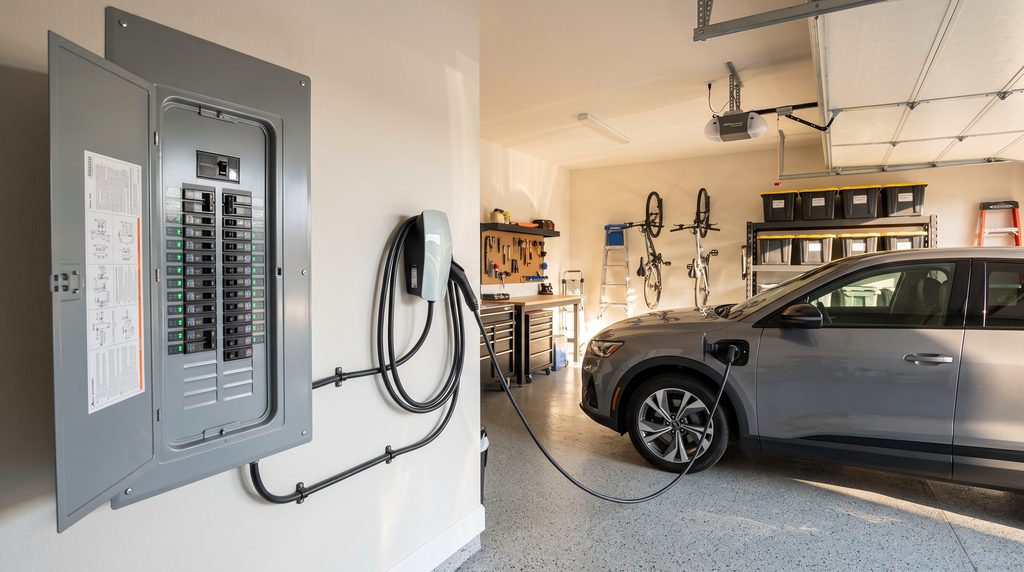
Instead of mounting a bulky external load-management box on your garage wall, the smart breaker sits inside your existing panel.
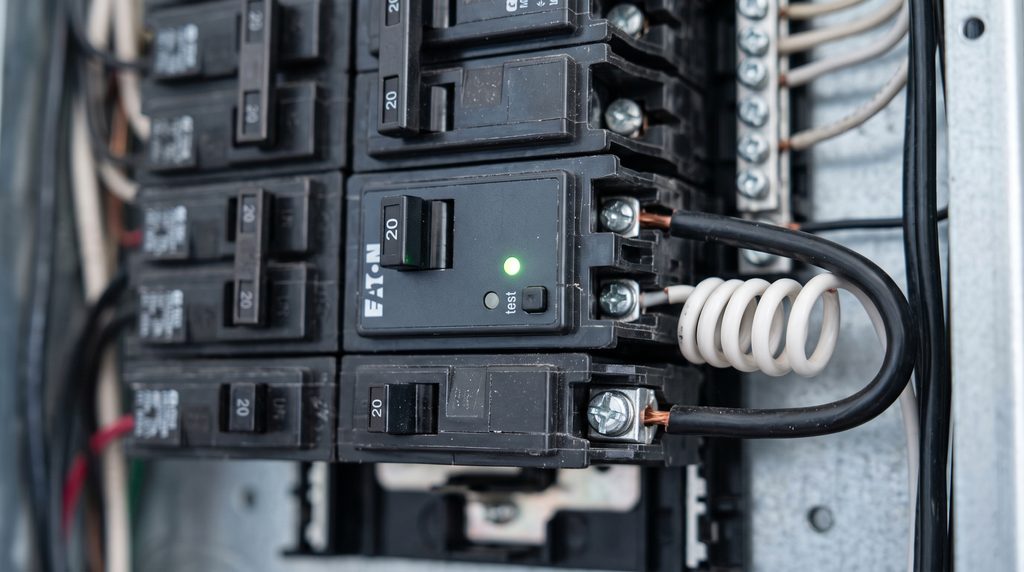
The unit tracks real-time household electrical current draw across your main service feeder lines with revenue-grade metering precision.
When your electric clothes dryer, oven, or central heat pump turns on, the breaker detects the sudden power spike.
It automatically communicates with your EV charging station to throttle back charging speeds before total household consumption exceeds safe limits.
Once those heavy appliances finish their heating cycles, the breaker safely dials your EV charging speed back up to maximum.
This continuous load management complies with National Electrical Code Article 625 standards for active energy management systems.
Homeowners get full 32A charging output without ever tripping their main breaker or risking dangerous panel overheating.
Renters sharing garage spaces can also track exact kilowatt-hour consumption to settle electric bills with landlords transparently.
💡 Buyer’s Toolkit:
Always confirm your home load center is an Eaton BR series panel before ordering smart breakers. Standard
smart breakers require matching panel bus bar slots, and installing a whole-home surge protector guards those
digital controls against sudden voltage spikes.internal components.
Smart App Controls And Solar Integration For Lower Electric Bills
Controlling your garage charging schedule through a smartphone app unlocks serious savings under residential time-of-use utility rates.
Most electric utilities charge peak electricity prices during late afternoon and early evening when grid demand spikes.
Eaton companion apps let drivers schedule charging to start late at night when electric rates drop to their lowest.
You can set customized charging profiles that prioritize clean midday power if your home features rooftop solar panels.
Homeowners with grid-tied solar can feed surplus rooftop generation directly into their vehicle battery rather than the utility grid.
Apartment tenants utilizing portable solar blankets on sunny patios can pair them with small storage stations to supplement daily range.
Smart circuit monitoring also provides detailed historical energy charts that show exactly how much your daily commute costs.
These transparent consumption logs make household budgeting straightforward and eliminate mystery jumps on your monthly electric bill.
⚡ Deal & Installer Alert:
Planning to add a fast Level 2 charger to your garage without a costly panel upgrade? Check current discounts on smart
home energy hardware and get matched with certified local residential electricians for free installation quotes.
Reliable Safety Features And Long-Term Hardware Value
Smart circuit breakers offer advanced thermal detection and ground-fault protection to keep home charging safe season after season.
Traditional thermal breakers can gradually weaken over years of repeated heavy 32A or 40A continuous charging cycles.
Eaton digital breakers feature internal temperature sensors that monitor terminal lug heat and disconnect power before wire insulation degrades.
Integrated 20mA ground-fault circuit interruption prevents electrical shock hazards even if rain or damp slush enters outdoor charging handles.
Over-the-air firmware updates ensure your panel hardware adapts smoothly as utility smart grid programs and charging standards evolve.
Investing in smart breaker hardware protects your vehicle battery investment while maximizing the electrical capacity of your existing home.
Conclusion
Upgrading your garage with Eaton smart breakers revolutionize home charging infrastructure by delivering safe, intelligent power at a fraction of the cost.
You bypass the stress, high labor costs, and long utility wait times associated with heavy 200A panel replacements.
Whether you tap into rooftop solar or off-peak utility power, smart breaker tech makes daily home charging simple and affordable.