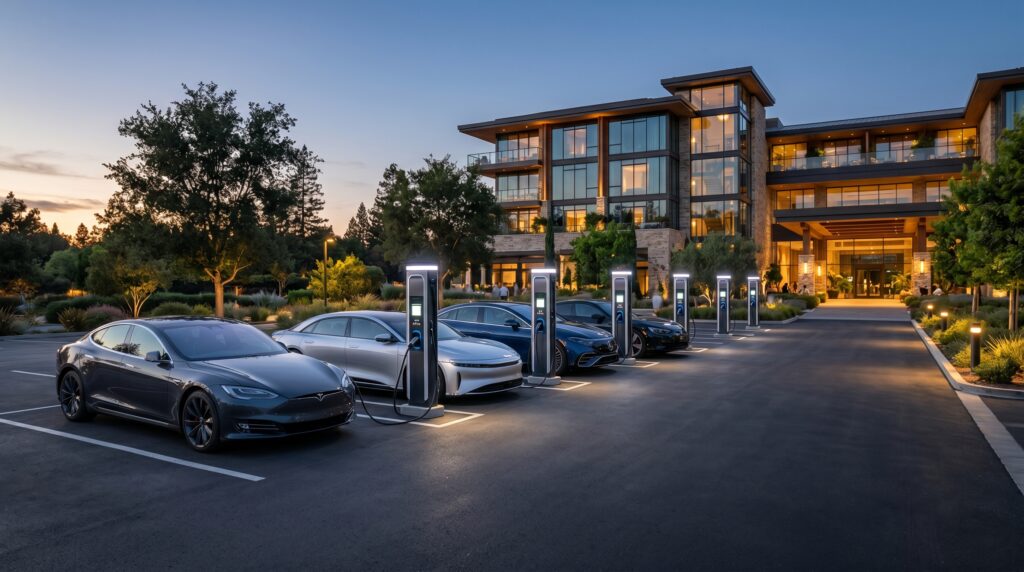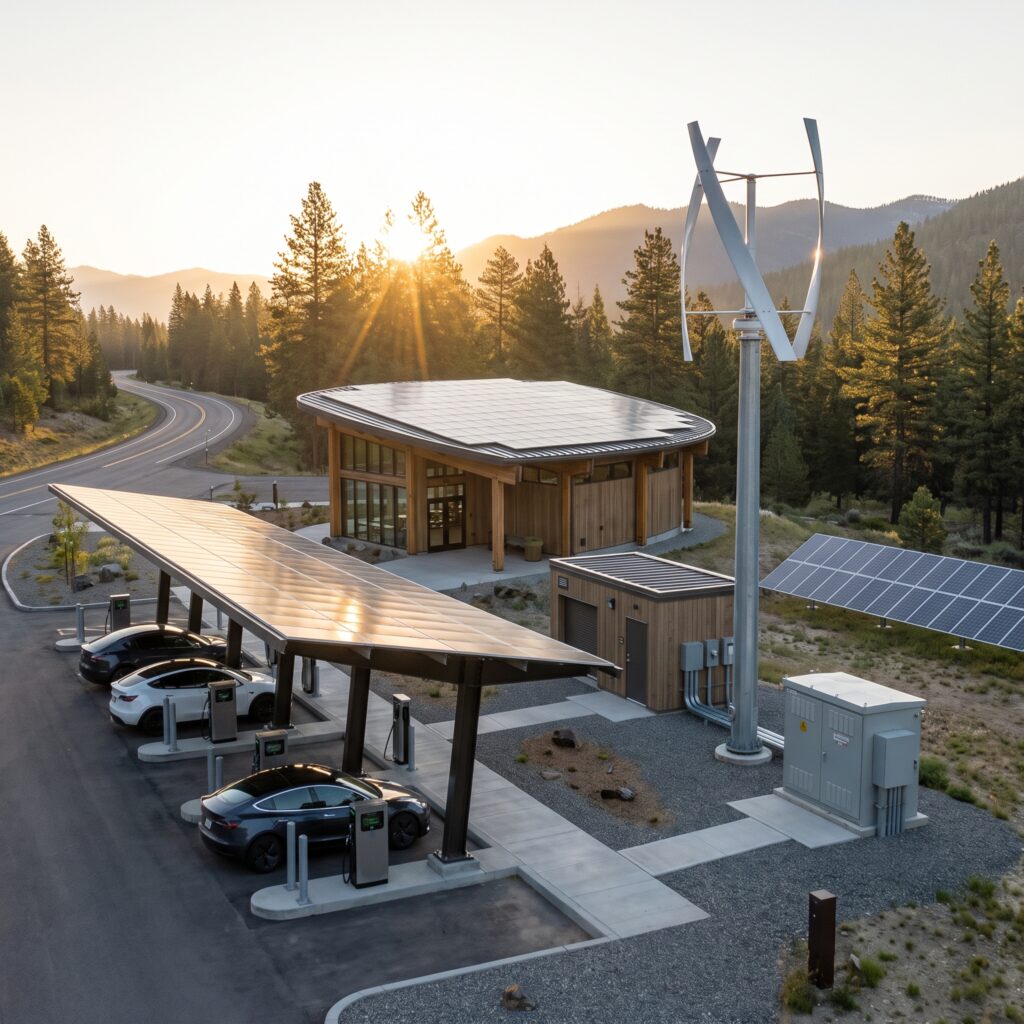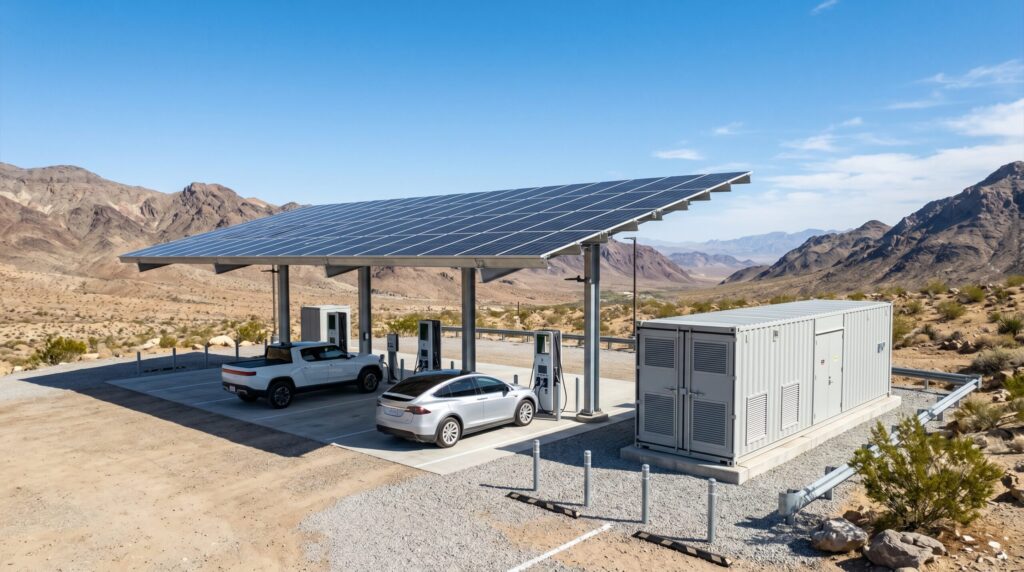
Off-grid EV charging infrastructure requires a specific engineering design to manage high power loads at remote travel destinations.
Upgrading deep wilderness systems without a clear architectural strategy can quickly lead to excessive capital expenditures and massive technical failures across independent solar microgrid local networks.
Disclaimer: This post contains affiliate links. If you click through and make a purchase or submit a request for a quote, we may earn a small commission or referral fee at no extra cost to you.
Deploying Off-grid EV Charging Infrastructure in Remote Wilderness Corridors
Deploying robust off-grid EV charging infrastructure forces travel destination developers and regional transit operators to build independent power grids from scratch.
Remote tourist locations and highway rest stops often lack access to traditional public utility high-voltage power lines.
Building a standalone charging site requires the integration of high-yield commercial solar arrays, large battery storage systems, and specialized power electronics.
These isolated microgrids must reliably step up direct current battery power into standard three-phase 480V alternating current networks to feed fast chargers.
This technical transformation requires deploying rugged switchgear assemblies, heavy-duty distribution transformers, and smart electronic inverter networks.
Protecting these critical power assets from extreme wilderness weather conditions and wildlife interference is essential for continuous operations.
Systems engineers always house this core power distribution hardware within specialized, weather-hardened modular outdoor enclosures.
These enclosures utilize high-density structural insulated panels to create an insulated thermal barrier against intense mountain frost or desert heat.
Maintaining a controlled internal environment prevents the premature thermal breakdown of sensitive electronic control boards and charging computers.
Moisture infiltration from heavy rain or melting snow represents another severe hazard that can cause sudden short-circuit failures inside high-voltage cabinets.
Utilizing precision engineering principles during the manufacturing of the enclosure shells ensures that gasket seals remain completely airtight over decades of service.
The physical placement of these enclosures must allow enough open space for field technicians to safely perform routine maintenance and safety audits.
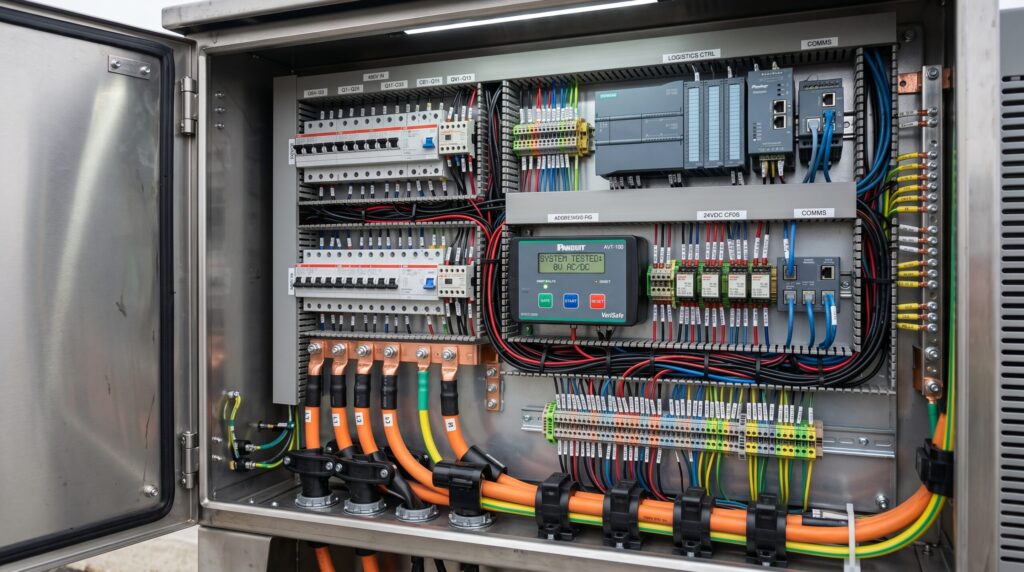
Engineers must also implement ruggedized cable entry systems that seal the exact entry points where thick power conductors pass through the enclosure walls.
Using heavy-wall heat shrink tubing with internal adhesive layers creates an environmental seal against moisture ingress at these critical connection seams.
Furthermore, proper high-voltage cable management inside the enclosure prevents physical stress from pulling on terminal blocks.
Specially engineered high-voltage cable clamps constructed from glass-filled nylon offer excellent mechanical support while dampening physical vibrations.
These clamps feature compressible rubber inserts that cradle the cable jacket without applying excessive pinching force to internal insulation layers.
Managing remote charging station logistics requires these internal structural components to remain functional under constant environmental strain.
Every single component from the grounding busbar to the individual terminal kits must adhere to rigorous heavy-duty industrial specifications.
The physical routing of conductors within the site layout directly influences overall electrical efficiency and voltage drop metrics.
Long runs of low-voltage cabling introduce significant resistive losses that diminish the net power delivered to the vehicle plug.
Engineers minimize these line losses by placing the core distribution enclosures as close to the actual charging stalls as physically possible.
When site constraints force longer conduit runs, increasing the cross-sectional area of the copper conductors represents the standard engineering remedy.
Terminating these large-diameter conductors requires heavy-duty copper compression lugs designed to maximize metal-to-metal surface contact.
These compression power lugs feature generous internal bevels that prevent conductor strands from bending backward during insertion.
An inspection window on the barrel of the lug allows field technicians to visually verify full cable insertion before deploying hydraulic crimping tools.
Once crimped, the connection must be wrapped in flame-resistant corrugated loom tubing to shield the assembly from accidental abrasive wear.
Managing these heavy conductors inside tight enclosure spaces demands highly structured wire basket routing channels and standard DIN rail configurations.
Organized routing layout choices directly impact the time required for field technicians to isolate circuits during emergency interventions.
Safety protocols dictate that technicians must conclusively verify the absence of electrical voltage before touching any internal metallic components.
Integrating automated absence of voltage testers directly into the enclosure facade allows operators to verify dead circuits without opening the main doors.
These automated testers perform self-checking routines to ensure the testing mechanism itself remains fully functional before delivering a safety reading.
This advanced safety integration minimizes arc-flash exposure hazards for plant maintenance personnel during preventative maintenance schedules.
Technical Specifications and Envelope Integrity
- Wind-Velocity Ratings: Structural enclosures housing the core power electronics are precision-engineered to withstand continuous wind forces exceeding 150 miles per hour without suffering structural panel deflection.
- Structural Standards: All outdoor modular switchgear housings must comply strictly with National Electrical Manufacturers Association Type 4X industrial standards and local National Electrical Code requirements.
- Envelope Core Components: The utilization of structural insulated panels combined with precision-engineered framing members creates a rigid structural envelope that completely isolates high-voltage electrical assets from external environmental hazards.
The integration of structural insulated panels inside the enclosure framework prevents internal condensation cycles from forming during rapid ambient cooling phases.
Moisture condensation inside high-voltage switchgear can initiate surface tracking currents that eventually lead to destructive phase-to-phase electrical faults.
Eliminating these moisture cycles extends the useful service life of industrial circuit breakers and power electronic switches by several years.
Preventative design must focus on every weak link within the physical infrastructure layer to guarantee the site achieves a high operational uptime.
💡 Pro Tip: Implement a monthly visual inspection of all external enclosure intake filters in dusty or sandy off-grid travel corridors to prevent particulate accumulation from restricting airflow and causing thermal overloading inside the main power cabinet.
Cost-Benefit Analysis: Upfront CapEx vs Long-Term Risk Mitigation
Formulating an execution plan for high-power remote networks requires balancing immediate capital expenditure against long-term risk mitigation.
Many developers make the mistake of reducing initial capital expenditure by choosing standard commercial-grade enclosures over industrial-grade structural variants.
This short-sighted cost reduction strategy exposes the multi-megawatt infrastructure asset to severe environmental hazards and premature structural failure.
Standard sheet-metal cabinets lack the structural reinforcement necessary to survive heavy physical impacts from wilderness service vehicles or falling debris.
A single minor collision from a maintenance truck can distort a low-cost cabinet shell enough to compromise its weather-stripping seals completely.
Once these environmental seals fail, driving rain and wind-borne dust particles contaminate the internal busbars and power distribution blocks.
The resulting operational downtime can cost a remote travel hub thousands of dollars per day in lost charging revenue and stranded travelers.
Specifying precision engineering solutions and hardened structural insulated panels during the design phase eliminates this operational vulnerability completely.
The upfront cost premium associated with ruggedized industrial enclosures is rapidly amortized by avoiding just a single unscheduled shutdown event.
Insurance providers also recognize the risk reduction value of deploying heavily fortified infrastructure designs across remote charging station logistics networks.
Facilities that utilize hardened structural configurations often qualify for reduced commercial property insurance premiums compared to unfortified sites.
Furthermore, integrating advanced energy management software into the site infrastructure requires highly stable localized data networks.
The communication gateways and satellite internet routers that coordinate this software require the same environmental protections as the high-voltage switchgear.
Fluctuations in internal enclosure temperatures can cause sensitive network communication routers to lock up or experience severe packet drop issues.
When data connection drops occur, the intelligent load-balancing routines of the local microgrid system can fail instantly.
This failure forces the charging network to default to a restricted fallback power state to prevent overloading the local stationary battery banks.
Restricted charging states extend vehicle replenishment times, which directly disrupts the travel schedules of commercial highway transport vehicles.
Investing in robust climate-controlled enclosures ensures that network hardware remains within optimal operational temperature envelopes year-round.
Financial Comparison Matrix
- Upfront Capital Expenditure (CapEx): Allocating capital for premium precision-engineered structural insulated panel enclosures, heavy-duty copper compression lugs, and integrated automated voltage testing hardware increases the initial infrastructure build budget by approximately 15 percent.
- Long-Term Risk Mitigation: Implementing a hardened structural envelope eliminates catastrophic weather-related component failures, reduces annual insurance premiums by up to 12 percent, and prevents thousands of dollars in operational downtime losses caused by environmental grid contamination.
The operational longevity of the physical charging equipment is intimately tied to the stability of the underlying electrical infrastructure layer.
Corroded grounding connections or loose bonding hardware can introduce subtle electrical noise into the sensitive control circuitry of the chargers.
This electrical noise can trigger intermittent communication errors between the charging station and the vehicle’s onboard battery management system.
Identifying these intermittent faults during field troubleshooting is notoriously difficult and time-consuming for remote service technicians.
Using premium copper bonding straps and heavy-duty mechanical connectors prevents these grounding anomalies from developing inside the system over time.
Every preventative measure implemented during the initial construction phase pays dividends throughout the multi-decade lifecycle of the energy asset.
Conclusion
Building a successful off-grid EV charging infrastructure requires moving far beyond the simple installation of standardized roadside charging dispensers.
Remote site operators must treat the entire deployment as a highly complex standalone industrial power plant integration task.
Utilizing precision engineering, robust structural insulated panels, and heavy-duty wire management components protects the core capital investment from external hazards.
The integration of these hardened infrastructure choices ensures the long-term reliability of both the physical hardware and the overriding microgrid control software.
Firms that prioritize upfront infrastructure durability over superficial cost-cutting measures will successfully insulate their operations from extreme environment volatility.
Executing a flawless high-voltage design today establishes the structural foundation required to seamlessly support remote travel corridors over the coming decades.