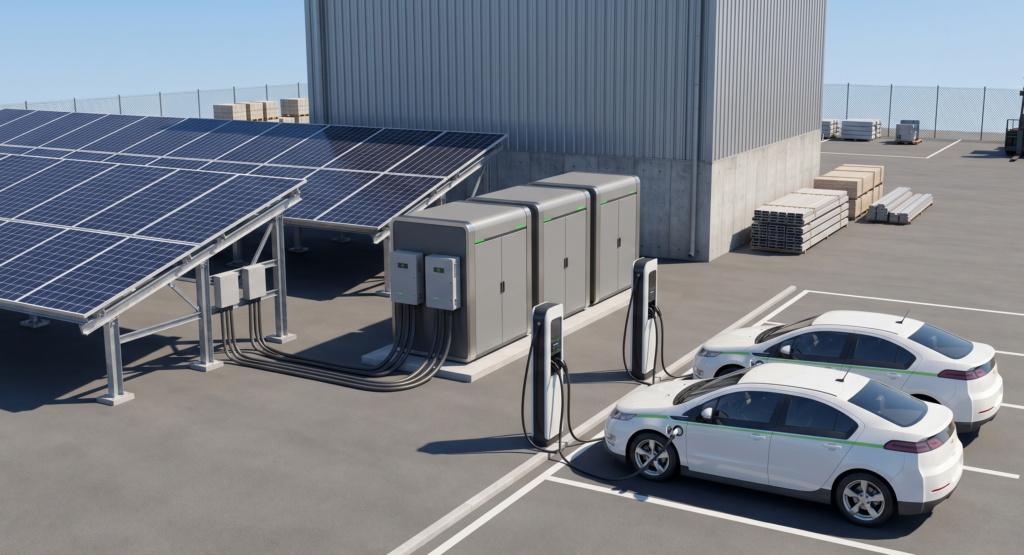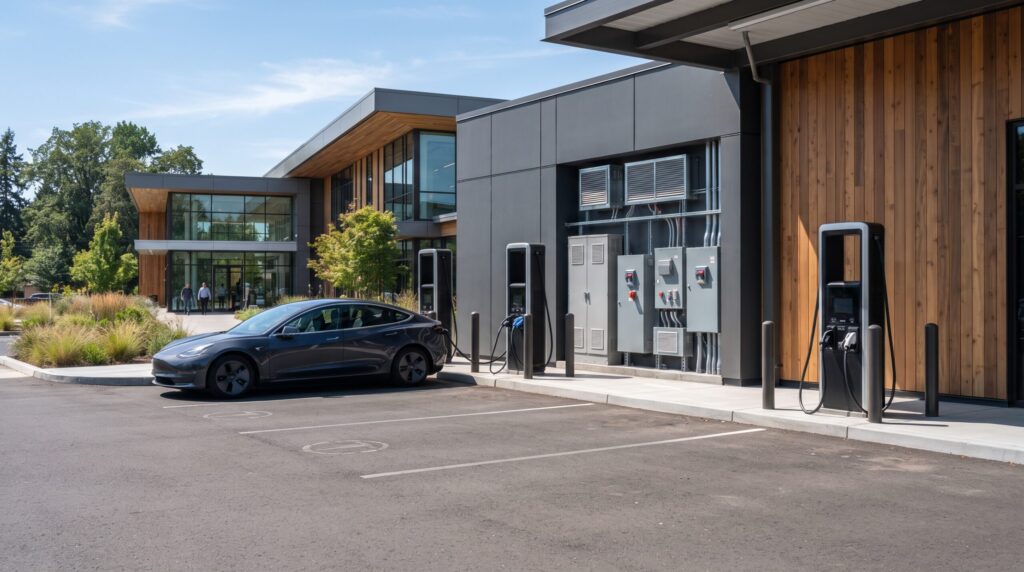
DC fast charging infrastructure is rapidly transforming commercial real estate assets into high-performance energy hubs across the country… This rapid development requires facility managers, commercial developers, and high-end energy professionals to understand the engineering complexities of deploying high-power electric vehicle supply equipment.
Disclaimer: This post contains affiliate links. If you click through and make a purchase or submit a request for a quote, we may earn a small commission or referral fee at no extra cost to you.
Table of Contents
Designing Reliable DC Fast Charging Infrastructure
Commercial developers must recognize that installing direct current fast charging hardware requires robust upgrades to the local structural layout.
The deployment of commercial-grade electric vehicle supply equipment bypassing the onboard vehicle charger demands deep optimization of the site grid interface.
Traditional facility setups often fail to accommodate the extreme electrical strain introduced by modular high-power cabinets without extensive structural planning.
Integrating central power units necessitates a deep analysis of site parking geometry, underground utility lines, and vehicular flow patterns.
Engineers must calculate the total thermal dissipation requirements of liquid-cooled systems to prevent rapid hardware degradation over the operational lifecycle.
Planners should realize that the first few high-power dispensers function as an essential framework for gathering data on dwell times and load behavior.
Selecting standard Combined Charging System connectors ensuring compatibility with modern 800-volt vehicle architectures provides a future-proof foundation for public networks.
Securing necessary utility connection approvals demands close collaboration between civil engineering firms, property management teams, and grid operators.
Restricted metropolitan locations require careful placement of isolated utility rooms to manage structural space limitations while maintaining compliance.
Upgrading local electrical infrastructure helps property owners secure long-term asset value as national medium and heavy-duty electric vehicle adoption accelerates.
Utilizing dedicated high-voltage utility lines prevents unexpected voltage sags across the primary distribution panels of adjacent commercial buildings.
Properly sealing underground conduit pathways protects high-capacity wiring networks from water infiltration and structural shifting over time.
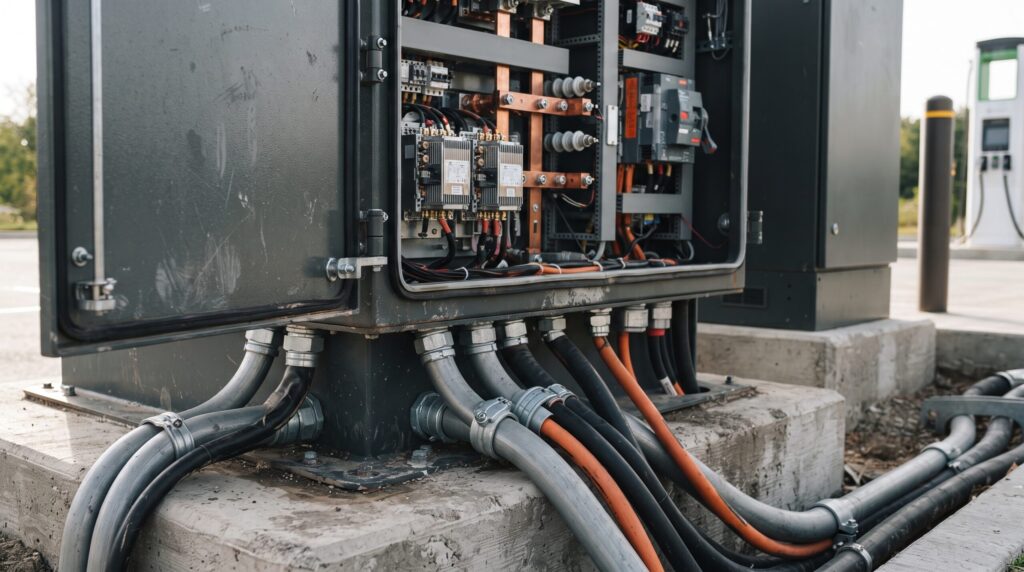
Ensuring high equipment uptime necessitates strict adherence to standard structural design codes and electrical separation guidelines.
Advanced digital energy management software provides real-time oversight of individual charging ports to prevent system failures during heavy usage.
Physical impact barriers must surround all high-profile dispenser units to isolate sensitive internal electronics from accidental vehicle collisions.
Protecting these critical assets against extreme environmental conditions requires specialized structural insulated panels capable of resisting severe weather.
Precision engineering ensures that the outer building envelope remains impervious to heavy moisture intrusion, chemical exposure, and ambient heat absorption.
Minimizing equipment downtime depends heavily on proactive component testing, structural reinforcement checks, and early electrical distortion discovery.
Implementing modular system layouts allows site operators to expand total charging capacities seamlessly as local consumer utilization scales up.
Choosing durable materials for outer protective enclosures slows down physical wear and tear caused by high atmospheric salt or extreme humidity.
Technical Specifications and Envelope Integrity
- Wind-Velocity Ratings: Enclosures and structural canopies must be certified to withstand continuous wind forces up to 150 mph to satisfy stringent coastal building regulations.
- Structural Standards: All concrete foundation pads and anchor bolt configurations must comply with the International Building Code (IBC) Section 1609 for structural wind loads.
- Envelope Core Components: Advanced structural insulated panels (SIPs) featuring expanded polystyrene cores combined with precision-engineered aluminum housings protect internal switchgear from environmental thermal spikes.
Regularly inspecting secondary containment seals shields the sensitive primary power distribution blocks from micro-particle dust accumulation.
Maintaining precise alignment of the structural support framework stops unnecessary mechanical strain on heavy high-voltage line connections.
💡 Pro Tip: When planning concrete foundation pads for heavy direct current fast chargers, integrate a pre-fabricated sub-base drainage channel to divert surface water pooling away from the main structural insulated panels and electrical conduit entry points.
Upfront Capital Expenditure vs Long-Term Risk Mitigation
Balancing the substantial upfront capital expenditure against future financial security represents a vital step for commercial asset managers.
Investing in top-tier electrical equipment significantly reduces the likelihood of catastrophic component failures that halt daily operations.
High initial investments in structural insulated panels and precision engineering create a dependable barrier against volatile weather patterns.
Commercial operators frequently uncover that cheaper structural materials lead to elevated maintenance costs and premature hardware replacement cycles.
Deploying intelligent power management platforms minimizes exposure to severe peak demand surcharges imposed by regional utility companies.
These smart systems continuously track building power draws, adjusting the output of charging ports to maintain total electricity usage below expensive thresholds.
Mitigating high utility demand fees allows commercial properties to protect their operational margins during periods of high grid stress.
Securing robust extended warranties for high-output power modules acts as a vital safeguard against unexpected hardware restoration costs.
Insurance underwriters frequently offer reduced commercial property premiums to facilities that demonstrate superior structural risk prevention measures.
Minimizing long-term operational risks ensures that the charging network delivers consistent financial returns over its projected ten-year lifespan.
Holistic engineering designs eliminate the need for costly retrofits when expanding site electrical capabilities in the future.
Financial Comparison Matrix
- Upfront Capital Expenditure (CapEx): The procurement of high-power direct current hardware, advanced structural insulated panels, heavy-duty transformers, and precision-engineered concrete layouts averages $150,000 to $300,000 per station site.
- Long-Term Risk Mitigation: Implementing premium physical protection and smart load balancing yields up to an 85% drop in utility demand charge exposure while extending overall equipment longevity by three to five years.
Optimizing system configuration paths helps commercial enterprises capture strong returns while advancing their corporate environmental targets.
Proactively managing grid interaction risks ensures uninterrupted power availability for both visitors and commercial fleet operations.
Conclusion
Building resilient infrastructure remains the single most important factor for maximizing the long-term profitability of commercial direct current systems.
By prioritizing high-grade structural insulated panels and precision engineering methods, property managers successfully eliminate the operational vulnerabilities that commonly threaten high-voltage networks.
Transitioning toward smart energy ecosystems safeguards valuable commercial assets while lowering overall operating expenses.
Investing in high-performance configurations guarantees that modern properties stay competitive as global transportation systems transition rapidly toward full electrification.
Deploying robust DC fast charging infrastructure now positions forward-thinking commercial real estate developers to dominate the regional clean energy market.