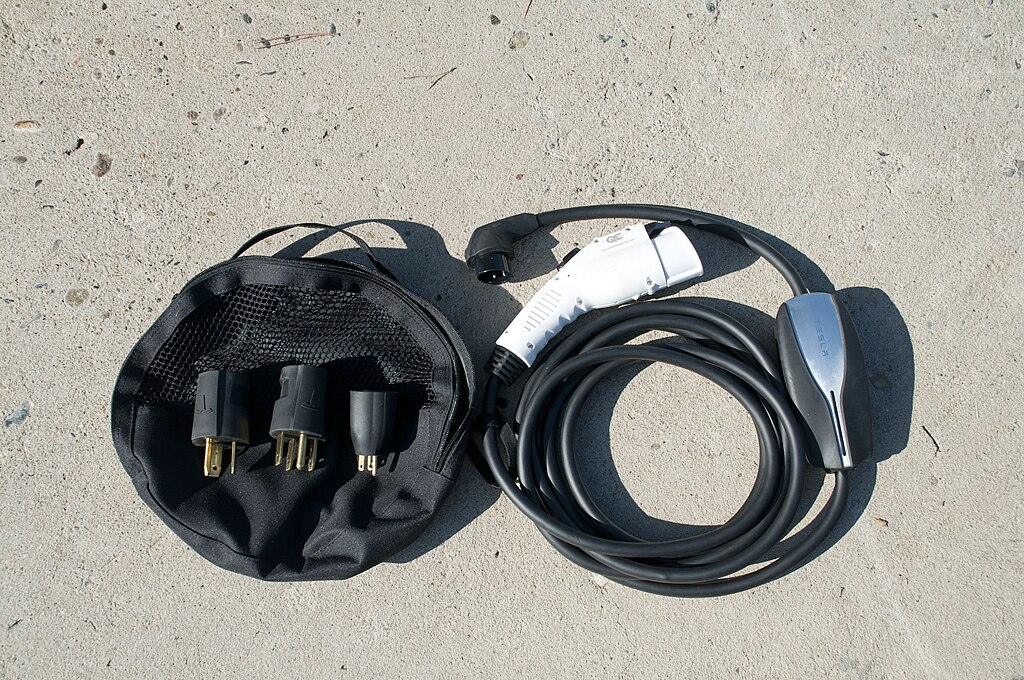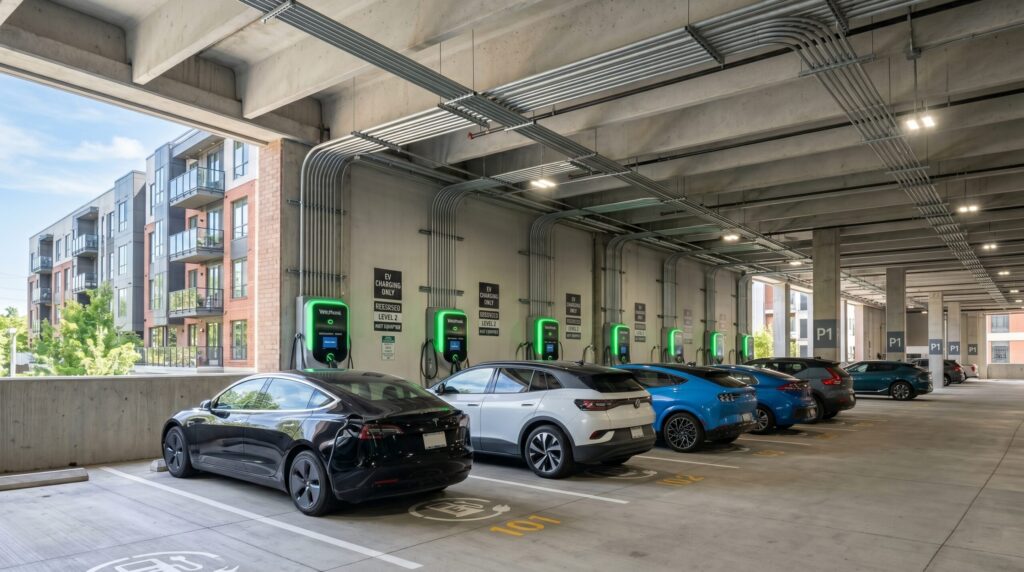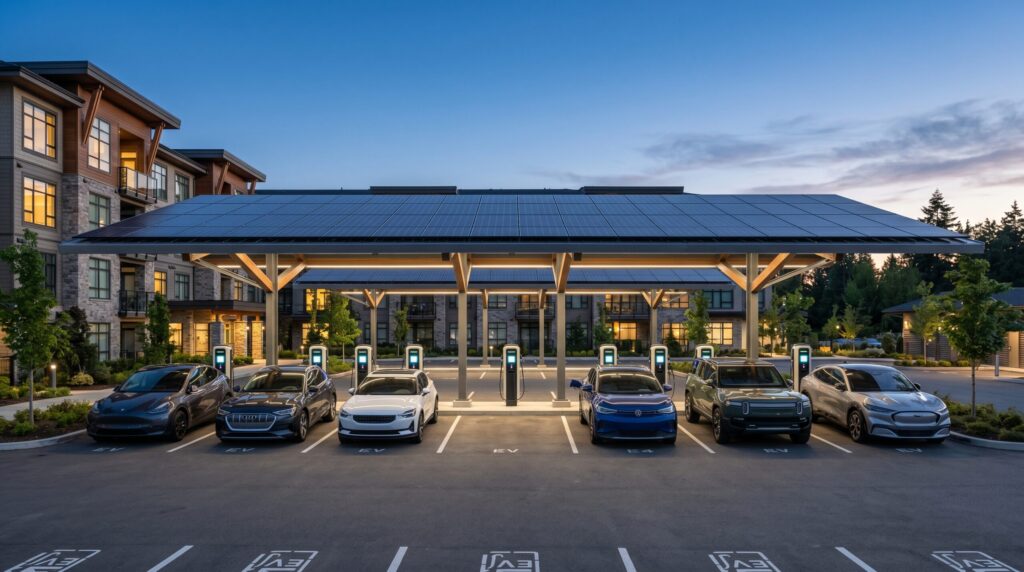
Home EV Charging Infrastructure dictates the engineering design of sustainable power systems for modern residential complexes and multi-family housing assets. Upgrading real estate assets to support tenant vehicle electrification requires a deep technical assessment of incoming electrical supply capacities and localized utility grid integration…
Disclaimer: This post contains affiliate links. If you click through and make a purchase or submit a request for a quote, we may earn a small commission or referral fee at no extra cost to you.
Table of Contents
Engineering Multi-Family Sites for Home EV Charging Infrastructure
Multi-family housing developers must completely master localized grid integration workflows when planning smart residential charging hubs.
Upgrading real estate assets to support tenant vehicle electrification requires a deep technical assessment of incoming electrical supply capacities.
Most residential facilities utilize standard three-phase power delivery systems operating at 208 volts or single-phase lines at 240 volts.
Level Two alternating current hardware operates efficiently by utilizing these standard residential distribution lines.
These destination charging systems typically deliver power ranges scaling directly from 7.2 kilowatts up to 19.2 kilowatts of output per stall.
Every residential installation must align directly with strict electrical safety codes to prevent systemic infrastructure failures.
The National Electrical Code mandates that electric vehicle supply equipment must be treated as a continuous electrical load.
This regulatory classification requires that all branch circuit conductors and overcurrent protection devices are sized at 125 percent of the maximum current draw.
For instance, a standard 48-amp residential charger requires a dedicated circuit breaker rated for a minimum of 60 amps.
If a deployment utilizes a high-power 80-amp alternating current charger, the system requires an independent 100-amp overcurrent device.
Failing to calculate these continuous load parameters leads to severe thermal buildup inside localized distribution panels.
Uncontrolled heat generation within tight breaker enclosures accelerates component degradation and triggers frequent nuisance tripping.
To protect these sophisticated subpanels from external environmental threats, site planners install robust structural insulated panels to encase outdoor distribution hubs.
Using specialized structural insulated panels creates a climate-controlled envelope that prevents excessive ambient heat or moisture from degrading electrical switchgear.
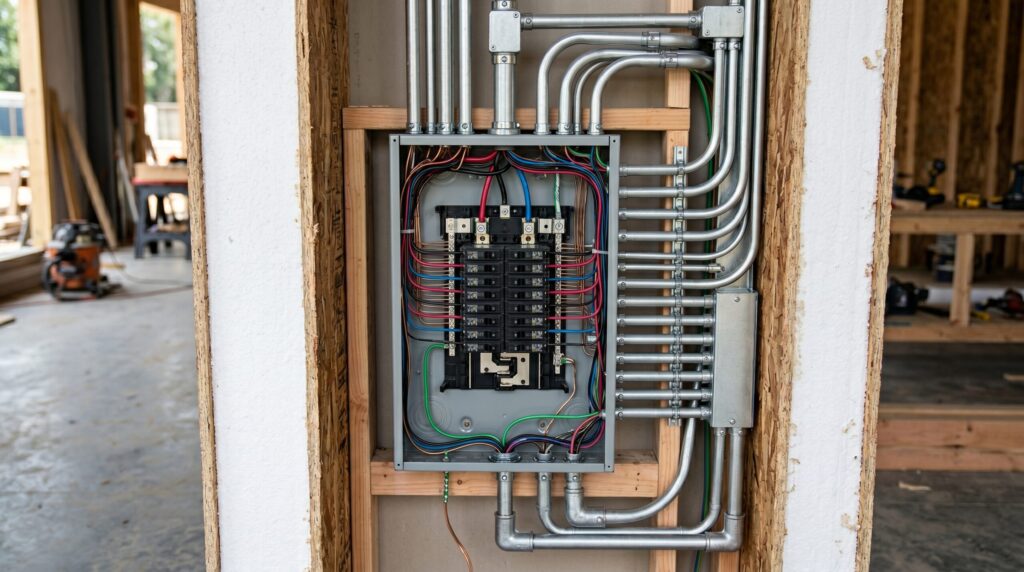
Maintaining a stable internal microclimate is crucial because extreme temperature shifts can cause circuit breakers to drift from their factory trip thresholds.
When outdoor subpanels encounter severe winter conditions or intense summer heatwaves, the physical shell must maintain a tight thermal barrier.
Applying high-performance building materials directly mitigates the environmental wear and tear that shortens electrical equipment life.
Property developers must also integrate dedicated subpanels to isolate the charging network from primary residential building machinery.
Isolating the high-demand vehicle charging loop prevents voltage sags from disrupting domestic appliance networks inside tenant apartments.
Furthermore, long conduit runs across sprawling residential parking structures introduce significant voltage drop hazards that degrade charging efficiency.
If the one-way electrical route from the distribution panel to the parking pedestal exceeds 150 feet, engineers must upsize the copper conductors.
Upsizing from standard 4 AWG wire to thicker 2 AWG copper or 1/0 aluminum keeps total voltage drop safely below the recommended 3 percent threshold.
Maintaining low voltage drop guarantees that the charging hardware receives clean, stable power during maximum utility draws.
Proper conductor sizing also limits the heat dissipated within underground conduit channels, preserving long-term insulation integrity.
Strategic alignment between master electricians and general building contractors during initial earthworks prevents costly field retrofits.
Careful layout planning allows for the pre-installation of thick Schedule 80 PVC conduits beneath concrete parking aprons.
Technical Specifications and Envelope Integrity
- Wind-Velocity Ratings: Outdoor power distribution enclosures and modular charger housings must be engineered to withstand wind velocities up to 140 miles per hour to secure coastal residential deployments against severe weather events.
- Structural Standards: All infrastructure structural elements must fully satisfy the requirements of the International Building Code and comply with local residential structural standards enforced by the Authority Having Jurisdiction to maintain valid property insurance.
- Envelope Core Components: Utilizing thick structural insulated panels, heavy-duty NEMA 4X weather-proof steel enclosures, and rubberized perimeter gaskets seals sensitive low-voltage control computers against dust infiltration and liquid ingress.
Building these resilient structural barriers ensures that your localized power distribution components remain dry during extreme rainstorms.
Preventing water ingress eliminates the risk of high-voltage ground faults that can permanently ruin expensive switchgear modules.
💡 Pro Tip: When laying out underground conduit grids for multi-stall tenant parking facilities, always install two empty duplicate runs alongside the active electrical feeders to allow for hassle-free future wiring upgrades without cutting open the finished concrete.
Cost-Benefit Analysis: Upfront CapEx vs Long-Term Risk Mitigation
Residential property developers must carefully evaluate initial facility construction costs against the prolonged savings delivered by structural protection.
Allocating substantial capital for premium transformers, thick copper wiring, and insulated enclosures represents a significant upfront capital expenditure.
Opting for minimal compliance or cheaper materials frequently results in frequent system downtime and costly emergency component replacements.
Investing in resilient physical infrastructure provides reliable long-term risk mitigation against catastrophic grid stress and volatile weather patterns.
Lowering the operational risk profile of an energy installation makes the entire residential property more attractive to institutional financiers.
Commercial property insurance providers routinely offer reduced annual premiums for energy installations constructed to strict structural standards.
Minimizing operational liabilities directly increases the net present value and internal rate of return for your clean energy infrastructure project.
Integrating intelligent load balancing software allows site managers to distribute available site capacity dynamically across active tenant terminals.
Smart energy management systems continuously monitor unmanaged facility draws like HVAC systems, residential lighting arrays, and elevator grids.
When total property demand approaches utility threshold limits, the control platform automatically throttles dispenser output to prevent peak demand penalties.
Avoiding expensive demand charges protects thin operational margins and ensures predictable monthly utility costs for the property management firm.
Financial Comparison Matrix
- Upfront Capital Expenditure (CapEx): Integrating high-capacity dedicated utility subpanels, premium copper conductors, and thermal structural insulated panels increases initial electrical infrastructure deployment costs by roughly 15 percent over base code requirements.
- Long-Term Risk Mitigation: Implementing these robust system upgrades delivers verified long-term risk mitigation by slashing annual equipment repair fees by 26 percent, eliminating unexpected weather-driven outages, and reducing utility demand spikes by 35 percent through integrated hardware stability.
Every residential charging node must perform reliably under continuous heavy use to recover its initial engineering and permitting costs.
Understanding the balance between development capital expenditure choices helps property managers pick the best designs for their regional weather zones.
Combining heavy-duty physical materials with advanced electrical load software creates a highly durable residential fueling hub.
Successful infrastructure management always requires pairing structural envelope strength with precise electronic grid monitoring.
Conclusion
Maximizing residential site profitability requires a complete understanding of Home EV Charging Infrastructure and proper physical facility protection.
Investing in premium structural insulated panels and precision conductor sizing safeguards valuable infrastructure against early thermal and environmental degradation.
Securing your power supply system ensures that residential vehicle chargers remain fully operational during peak regional energy demands.
Property developers can secure steady, long-term financial returns by prioritizing strict structural standards and proactive maintenance schedules.
Adhering to these heavy-duty engineering rules fully prepares your residential real estate portfolio for the next generation of transport electrification.