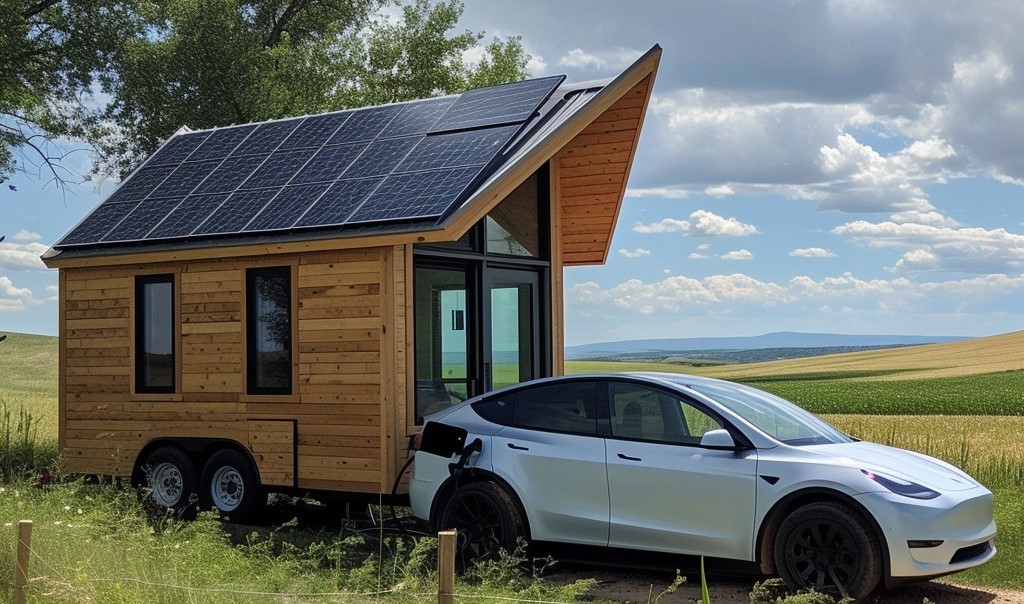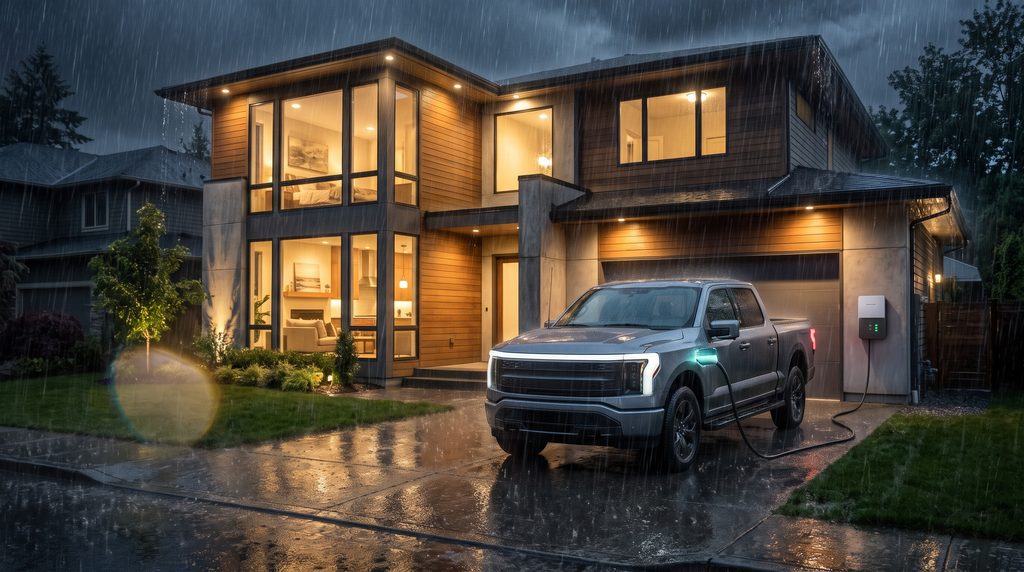
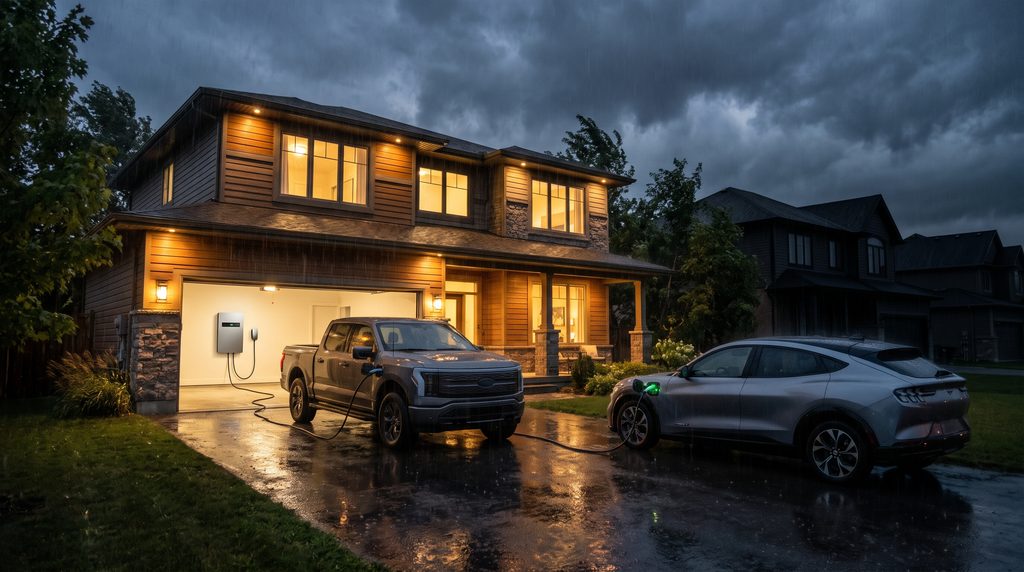
Tesla Powershare home backup technology turns your electric vehicle into a massive whole-home emergency generator when severe weather knocks out the electrical grid.
Experiencing an unexpected power outage should never force your family to endure freezing temperatures, spoiled groceries, or dark living rooms.
Harnessing your parked vehicle’s high-capacity battery pack provides reliable residential energy security without the noisy fumes of traditional gas generators.
Disclaimer: This post may contain affiliate links. If you click through any of the links in the article and make a purchase or submit a request for an installer quote, we may earn a small commission or referral fee at no extra cost to you.
Table of Contents
Tesla Powershare Home Backup Essentials For Whole-House Emergency Power
Investing in Tesla Powershare home backup hardware unleashes the colossal energy reservoir already parked in your driveway or garage.
Traditional residential standby batteries provide roughly 13.5 kilowatt-hours of usable electricity, which can drain rapidly during extended outages.
By comparison, a Cybertruck battery holds over 123 kilowatt-hours of clean electricity, while a Model Y Long Range packs roughly 75 to 81 kilowatt-hours.
That immense mobile capacity holds enough energy to power an average suburban home for three or more consecutive days without sacrifice.
Tesla Powershare home backup utilizes advanced bidirectional electronics to deliver up to 11.5 kilowatts of continuous 240-volt split-phase power.
That robust electrical output easily starts heavy household loads like central air conditioners, well pumps, water heaters, and large kitchen appliances.
When a grid failure strikes, the system automatically detects the outage and islands your home panel in a fraction of a second.
Power flows smoothly in reverse from your vehicle through the wall connector straight into your home’s main distribution breakers.
You bypass the constant maintenance, smelly fuel storage, and ear-splitting racket associated with conventional fossil-fuel combustion generators.
Having seamless vehicle-to-home protection safeguards your family during severe winter ice storms, coastal hurricanes, and strained summer grid brownouts.
💡 Buyer’s Toolkit:
Always check your vehicle screen under Software > Additional Vehicle Information to verify that your vehicle displays
“Powershare Support: Enabled” before purchasing hardware. While Cybertruck includes standalone Powershare Gateway
capability, Model Y and Model 3 vehicles require integration with an installed Powerwall 3 and a Wall Connector
to unlock active home backup.
Hardware Architecture: Powershare Gateway Versus Powerwall 3 Systems
Navigating the equipment requirements for Tesla Powershare home backup depends strictly on which specific vehicle model you park in your garage.
For Cybertruck owners, home backup operates seamlessly through a dedicated Powershare Gateway paired directly with a Universal Wall Connector.
The Powershare Gateway handles automated grid disconnection, continuous neutral-ground bonding, and whole-home circuit management without requiring a stationary battery pack.
This streamlined gateway configuration drastically reduces hardware purchase costs for truck owners who just want dependable storm resilience.
Meanwhile, eligible Model Y and Model 3 vehicles expand residential backup by functioning as an intelligent energy extender for a Powerwall 3.
In this paired architecture, the stationary Powerwall 3 controls immediate islanding and manages circuit voltage while your car replenishes the system.
When the Powerwall senses elevated household demand, it draws extra kilowatt-hours directly from your connected vehicle’s battery.
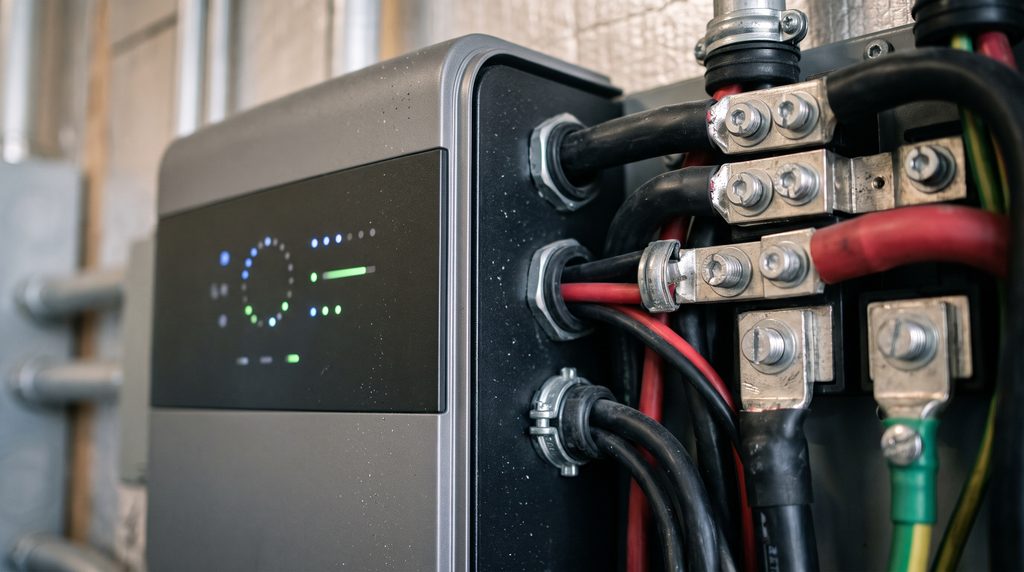
The combined output keeps high-draw HVAC units running steadily through multi-day blackouts that would easily overwhelm standalone home batteries.
Connecting your vehicle requires either a standard Gen 3 Wall Connector or the Universal Wall Connector equipped with an integrated J1772 adapter.
The Universal Wall Connector remains the smartest long-term investment because it charges non-Tesla electric vehicles at full 48-amp speeds as well.
Professional installation by a certified residential electrician typically costs between $1,500 and $3,500 depending on panel proximity and permit requirements.
While that upfront investment requires planning, it adds permanent equity to your real estate while providing total off-grid security.
⚡ Deal & Installer Alert:
Ready to protect your family from severe storm blackouts by turning your electric vehicle into a silent whole-home power
station? Check current manufacturer incentives on certified Universal Wall Connectors starting at $660, or submit your zip
code to get free, zero-obligation estimates from licensed residential EV backup electricians today.
Setting Battery Reserve Thresholds And Maximizing Solar Integration
Operating your Tesla Powershare home backup safely requires establishing clear battery reserve limits inside your Tesla mobile smartphone app.
You can set your vehicle discharge cutoff slider to maintain at least 20% or 30% battery capacity during an active emergency.
Reserving that base charge ensures your car always retains enough driving range to run critical family errands or navigate evacuation routes.
Homeowners with residential rooftop solar arrays enjoy an even greater operational advantage during extended regional utility failures.
During bright daytime blackout hours, your rooftop solar panels generate clean alternating current to run household loads and recharge the vehicle.
Once the sun dips below the horizon, your vehicle automatically reverses current to carry the house comfortably through the night.
This continuous solar microgrid cycle provides indefinite residential power independence during catastrophic weather events or rural infrastructure collapses.
Apartment renters and off-grid campers without full-home gateway setups can adopt these exact backup principles using portable gear.
Carrying a heavy-duty portable power station from EcoFlow, Bluetti, or Anker supplies valuable 120-volt emergency backup for essential appliances.
Pairing portable power stations with compact folding solar blankets ensures you can generate and store free clean power anywhere you travel.
Taking control of your energy ecosystem transforms electric vehicle ownership into a self-reliant, resilient lifestyle that protects your household budget.
Conclusion
Embracing Tesla Powershare home backup delivers the ultimate combination of residential storm security, financial peace of mind, and modern convenience.
Always hire a certified local residential electrician to install your gateway hardware and verify proper municipal utility disconnect codes.
Pairing your bidirectional vehicle setup with rooftop solar panels or portable solar gear maximizes your clean energy emergency resilience.
Setting your emergency discharge cutoff to 20% protects high-voltage battery health while preserving reliable driving range for unexpected travel.
Transforming your daily commuter vehicle into an automated residential power plant guarantees absolute energy freedom whenever the power grid fails.