Deciding whether charging an EV cheaper than gas is true comes down to where you plug in, your local utility rates, and your daily driving habits.
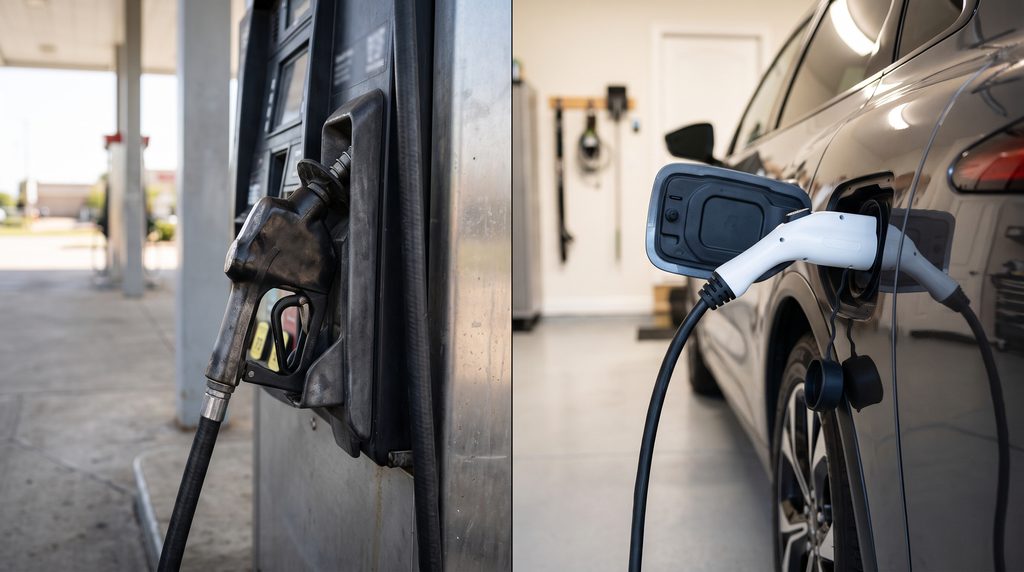
Standing at a traditional gas station watching digital pump totals spin out of control leaves many prospective drivers wondering if electric cars genuinely save real money.
Breaking down the hard numbers reveals that charging an EV cheaper than gas delivers massive annual savings when you control your garage charging setup.
Disclaimer: This post may contain affiliate links. If you click through any of the links in the article and make a purchase or submit a request for an installer quote, we may earn a small commission or referral fee at no extra cost to you.
Table of Contents
The Math Behind Fuel Costs: Cents Per Mile Compared
Proving that charging an EV cheaper than gas works requires looking past pump totals and evaluating the exact cents spent per driving mile.
A typical modern gas-powered sedan or small crossover averages roughly 30 miles per gallon under mixed driving conditions.
With gasoline hovering around $3.60 per gallon, running that combustion vehicle costs roughly 12 cents for every single mile you travel.
If your household commutes an average of 12,000 miles each year, your annual gasoline fuel expenses easily top $1,440.
By contrast, an efficient electric crossover travels roughly 3.5 miles for every kilowatt-hour of electricity consumed from its battery pack.
The national average residential electricity rate sits around 18 cents per kilowatt-hour across standard utility territories.
Dividing that 18-cent power rate across 3.5 miles yields a real-world driving cost of roughly 5.1 cents per mile.
That means powering that same 12,000-mile yearly commute from a home garage costs only about $612 in electricity.
That baseline difference puts more than $800 in hard annual cash back into your bank account from day one.
Furthermore, electric motors convert roughly 85% to 90% of their input energy directly into forward motion at the wheels.
Internal combustion engines waste over 70% of every drop of fuel as pure unrecoverable heat through exhaust pipes and radiators.
Understanding energy conversion efficiency explains why charging an EV cheaper than gas remains a permanent mathematical certainty for garage chargers.
💡 Buyer’s Toolkit:
Calculate your exact driving fuel cost in seconds using this simple formula. Divide your local electric rate per kilowatt-hour
by your vehicle’s average miles per kWh efficiency to find your true cost per mile, then compare that figure against
your local gas price divided by your current vehicle’s miles per gallon.
Home Overnight Charging Versus Public Highway Fast Charging
While home overnight power keeps costs low, relying entirely on commercial public chargers changes the financial equation dramatically.
Commercial direct-current fast-charging plazas face enormous commercial demand fees, real estate leases, and expensive station hardware maintenance.
To cover those massive operational expenses, networks like Electrify America and EVgo charge between 40 and 50 cents per kilowatt-hour.
Pulling power at a 48-cent highway fast charger raises your electric driving cost to nearly 14 cents per mile.
At that elevated commercial rate, fast charging an electric car costs slightly more than fueling a thrifty 35-mpg hybrid hatchback.
Drivers who commute without access to home or workplace charging often find themselves spending nearly identical amounts to gasoline.
However, the vast majority of suburban drivers conduct over 85% of their total vehicle replenishment overnight right in their private garage.
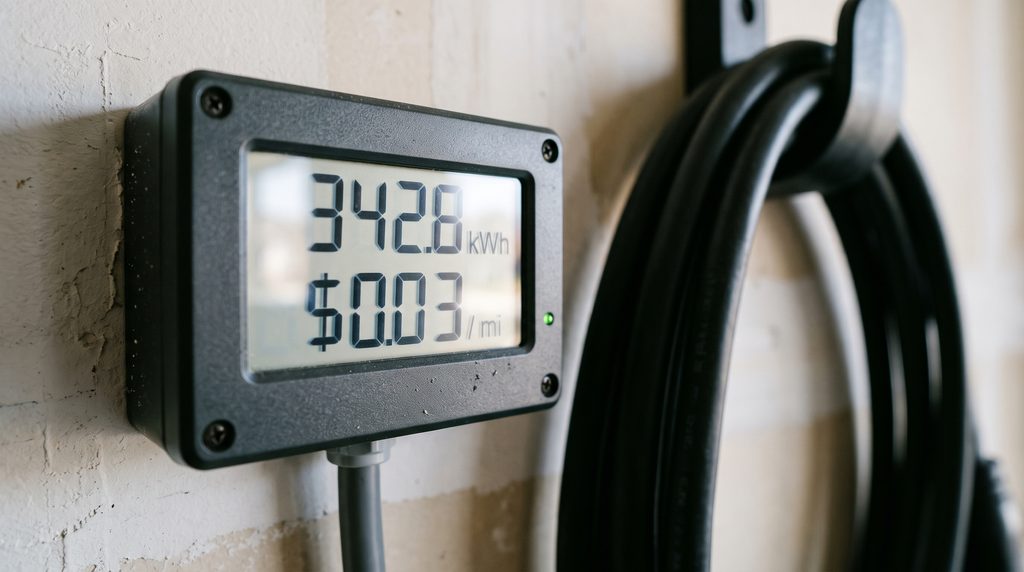
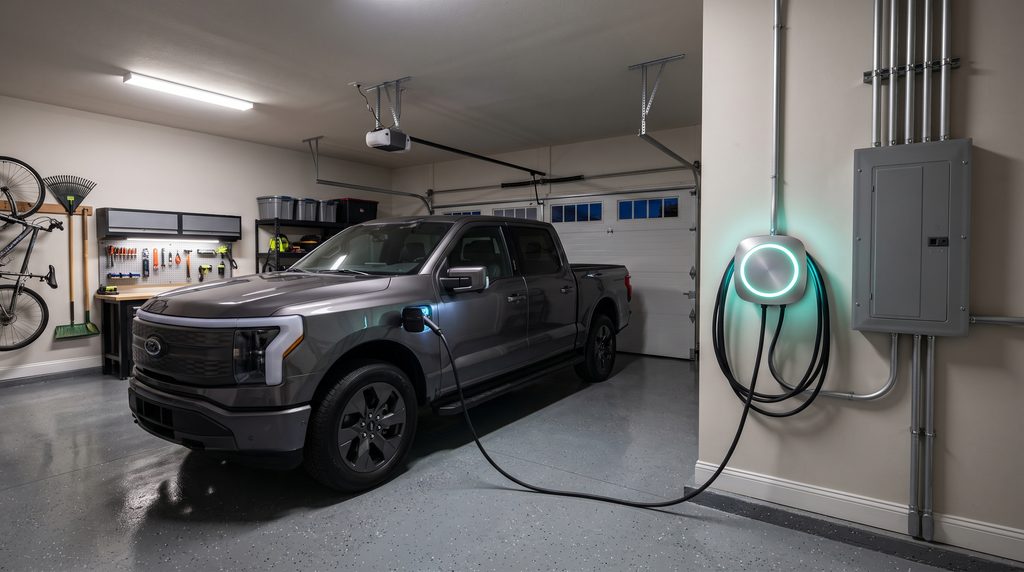
Installing a dedicated 240-volt Level 2 home charger transforms your electric car into an automated overnight refueling powerhouse.
Level 2 wall stations replenish between 25 and 45 miles of range every hour, easily restoring a full battery while you sleep soundly.
Hardware options like the Emporia EV Charger or Grizzl-E Classic retail between $399 and $450, paying for themselves in fuel savings within your first year.
Investing in your private home charging infrastructure unlocks the lowest possible electricity rates without waiting in line at commercial stations.
You eliminate frustrating weekly trips to the gas station while enjoying predictable, low-cost personal mobility right from your driveway.
⚡ Deal & Installer Alert:
Ready to leave volatile gas station price spikes behind and lock in ultra-low home charging rates in your garage?
Check current verified manufacturer discounts on top-rated Level 2 home wall chargers starting at $399, or submit
your zip code to get free, zero-obligation estimates from licensed residential electricians today.
Hacking Off-Peak Electric Rates And Solar Independence
Maximizing your savings to prove charging an EV cheaper than gas involves pairing your car with utility Time-of-Use pricing.
Most regional power companies offer dedicated EV time-of-use rate programs that drop overnight electricity prices down to 8 to 11 cents per kilowatt-hour.
Scheduling your vehicle or smart charger app to run between midnight and 6:00 AM drops your real-world driving cost to just 2.5 to 3 cents per mile.
At that bargain rate, driving that same 12,000-mile year costs roughly $360, unlocking over $1,000 in annual fuel savings compared to gasoline.
Suburban homeowners with rooftop residential solar arrays push their operational transportation costs down even further toward absolute zero.
Smart solar-divert software channels excess daytime solar generation directly into your car battery rather than feeding the grid for pennies.
Apartment dwellers and frequent campers can also capture clean energy savings using portable power stations paired with folding solar blankets.
Brands like EcoFlow, Bluetti, and Anker manufacture heavy-duty power stations that store free solar power for emergency buffer range and outdoor adventures.
Relying on residential solar generation completely insulates your household transportation budget from geopolitical fossil-fuel price shocks.
Mastering smart charging habits allows you to travel hundreds of thousands of miles while pocketing substantial lifelong savings.
Conclusion
Confirming that charging an EV cheaper than gas holds true gives prospective electric car owners complete financial confidence in their vehicle upgrade.
Always consult a certified local residential electrician to verify breaker panel capacity before installing a dedicated 240-volt garage outlet.
Pairing your charging hardware with off-peak utility programs or rooftop solar panels slashes your transportation expenses down to pennies per mile.
Setting regular daily charging thresholds to 80% capacity safeguards your vehicle’s lithium battery chemistry while protecting factory warranty coverage.
Waking up every morning to a fully fueled commuter vehicle at a fraction of the cost of gas unlocks true energy freedom for your daily drive.