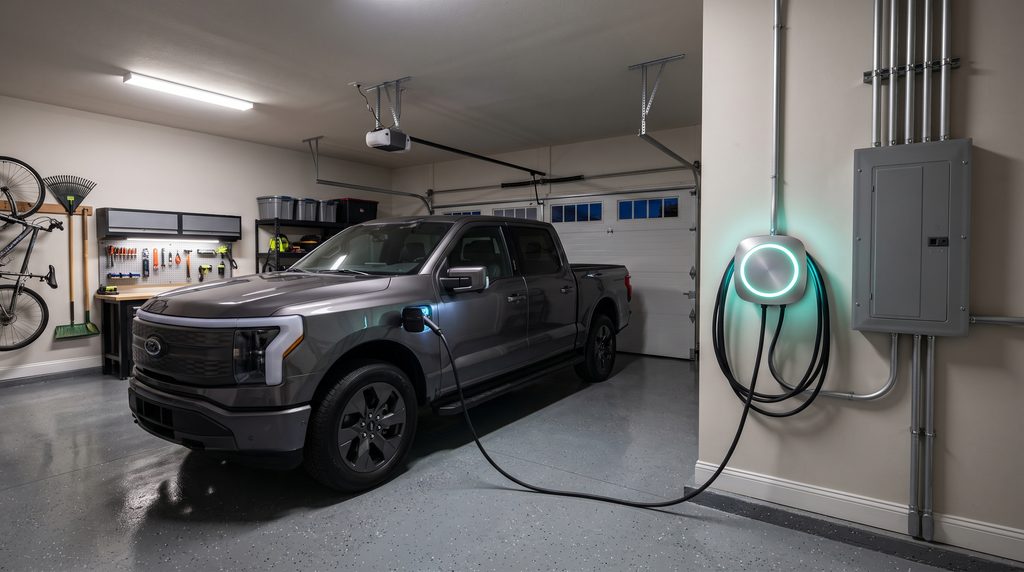
Smart home EV charging load management lets everyday homeowners install rapid Level 2 chargers without spending thousands on panel replacements.
Plugging in your commuter vehicle should bring effortless daily convenience rather than constant anxiety over tripping your main breaker.
Understanding smart residential power balancing protects your household wiring while unlocking substantial monthly utility savings in your private garage.
Disclaimer: This post may contain affiliate links. If you click through any of the links in the article and make a purchase or submit a request for an installer quote, we may earn a small commission or referral fee at no extra cost to you.
Table of Contents
Smart Home EV Charging Load Management Essentials For Budget-Conscious Garages
Installing smart home EV charging load management solves the biggest electrical hurdle facing modern electric vehicle owners today.
Many older suburban homes operate on 100-amp or 150-amp main service panels with zero room for new heavy-duty circuits.
Traditional electrical contractors often inspect these older breaker boxes and immediately recommend an expensive $2,500 main service panel upgrade.
That staggering price tag catches first-time buyers off guard and delays their plans for convenient overnight charging.
However, your existing electrical service actually possesses plenty of spare kilowatt capacity during normal sleeping and working hours.
The real challenge happens during peak evening dinnertime when stoves, electric water heaters, and central air conditioners run simultaneously.
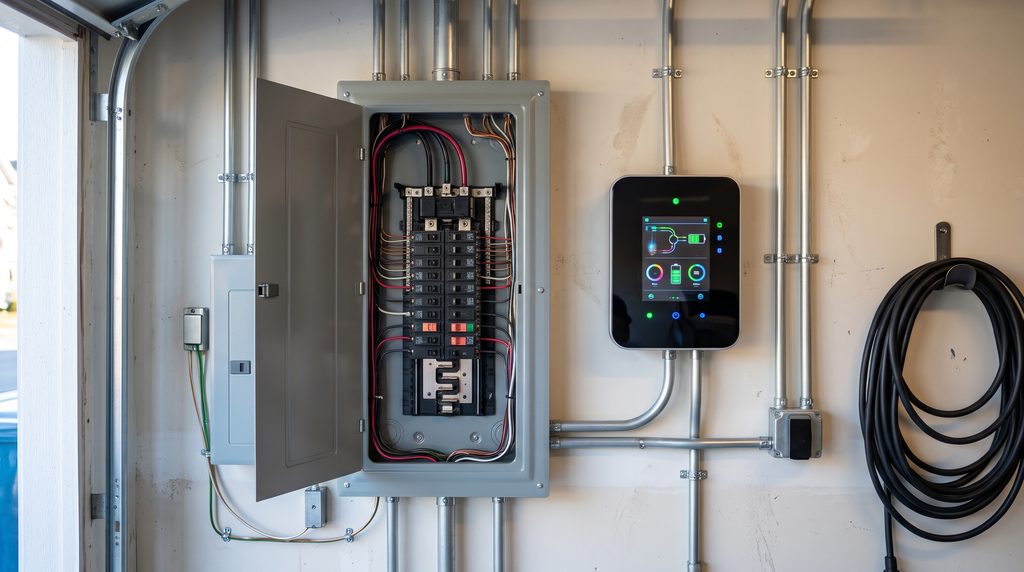
Smart home EV charging load management continuously reads this whole-house energy draw using non-invasive current monitoring sensors.
These intelligent systems monitor your total household amperage hundreds of times every minute to maintain complete safety.
When your central air conditioning or oven switches on, the load management system automatically throttles vehicle charging power downward.
Once household demand subsides later in the evening, the system seamlessly ramps your vehicle back up to full speed.
This automated balancing allows everyday drivers to safely pull rapid 32-amp or 40-amp speeds on constrained electrical boxes.
Most importantly, you bypass massive utility service delays while keeping your home fully compliant with National Electrical Code Article 625 standards.
💡 Buyer’s Toolkit:
Always confirm that any dynamic load management hardware meets UL 2594 safety certifications and qualifies under
NEC Article 625 provisions. Units like the Emporia Pro equipped with dual 200-amp current sensors satisfy local
municipal electrical inspector requirements by preventing physical breaker overloads automatically.
Slash Installation Expenses With A Smart 240-Volt Circuit Splitter
Another brilliant way to sidestep heavy electrical work is installing an automated 240-volt smart splitter like the NeoCharge.
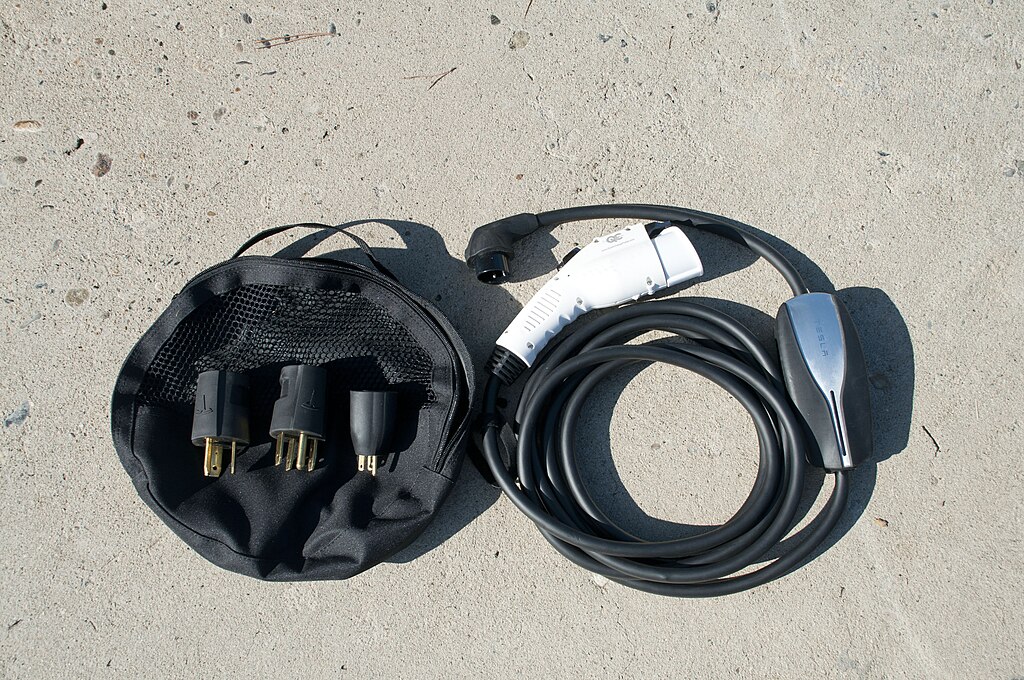
A smart splitter plugs directly into an existing 240-volt NEMA 14-30 or NEMA 10-30 clothes dryer outlet.
It splits that single dedicated high-voltage circuit between your electric clothes dryer and your portable Level 2 EV charging cord.
The device features intelligent priority switching that automatically directs full power to your laundry appliance whenever it starts running.
While your clothes dry, EV charging safely pauses without blowing the household breaker or overheating your wall wiring.
As soon as the laundry cycle finishes, the smart splitter automatically restores full continuous charging to your vehicle.
This clever plug-and-play solution completely eliminates electrician labor fees, wall trenching, and municipal permitting requirements for budget-focused renters.
Renters and condo residents simply unplug the portable splitter when moving and take their entire charging setup along.
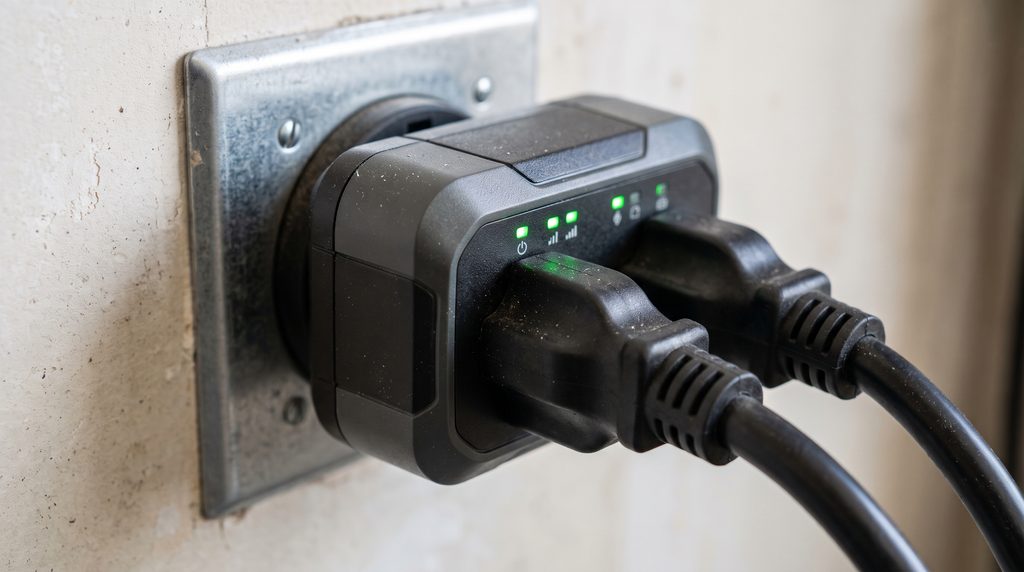
Operating a 24-amp charging connection on a shared 30-amp dryer circuit restores roughly 18 to 22 miles of range per hour.
That charging rate easily replenishes an average daily work commute in under three hours of quiet overnight charging.
Pairing smart home EV charging load management with an automated splitter delivers maximum garage utility at a fraction of rewiring costs.
You avoid structural drywall modifications while enjoying reliable Level 2 replenishment speeds right in your assigned parking bay.
⚡ Deal & Installer Alert:
Eager to unlock fast Level 2 home charging without paying $2,500 for a service panel replacement?
Check current manufacturer discounts on top-rated dynamic smart chargers starting at $449, or submit your zip code
to receive free, zero-obligation estimates from licensed residential EV electricians in your neighborhood today.
Hacking Time-Of-Use Utility Rates With Automated Charging Schedules
Pairing smart home EV charging load management with utility time-of-use scheduling drives your real-world fuel costs down to pennies.
Most power utility companies charge peak electricity prices between 4:00 PM and 9:00 PM when residential grid demand peaks.
Plugging in your vehicle right after work means paying peak electrical rates while placing strain on your home breaker.
Smart home EV charging load management apps allow you to plug in your car and automatically delay charging until midnight.
Your vehicle sits safely connected, quietly waiting until local power rates drop to their cheapest super-off-peak tier.
This simple scheduling routine saves commuters hundreds of dollars every single year compared to unmanaged charging habits.
Furthermore, integrating your smart charger with rooftop residential solar panels captures clean, free daytime energy for your battery.
Smart load controllers detect when your home solar inverter produces excess electricity beyond your regular household consumption.
The system dynamically channels that clean surplus energy straight into your car battery rather than feeding the utility grid.
Renting a townhouse does not prevent you from enjoying off-grid backup power advantages either.
Compact portable power stations from brands like EcoFlow, Bluetti, and Anker accept folding solar blankets to store free energy.
While portable solar generators cannot fully recharge an empty automotive battery pack, they supply essential emergency buffer miles anywhere.
Maintaining controlled, moderate charging speeds also keeps your battery pack cool, preserving expensive high-voltage lithium cells for years.
Taking charge of your household energy flow transforms electric vehicle ownership into a remarkably cost-effective, self-reliant lifestyle.
Conclusion
Investing in smart home EV charging load management delivers the ultimate combination of garage convenience, electrical safety, and long-term savings.
Always have a licensed residential electrician inspect your main breaker lugs to confirm proper wire torque and safe panel condition.
Pairing your dynamic charging setup with off-peak utility scheduling or home solar panels slashes your monthly electric fuel bills.
Setting regular charging limits to 80% capacity safeguards your lithium battery chemistry while protecting the original manufacturer warranty coverage.