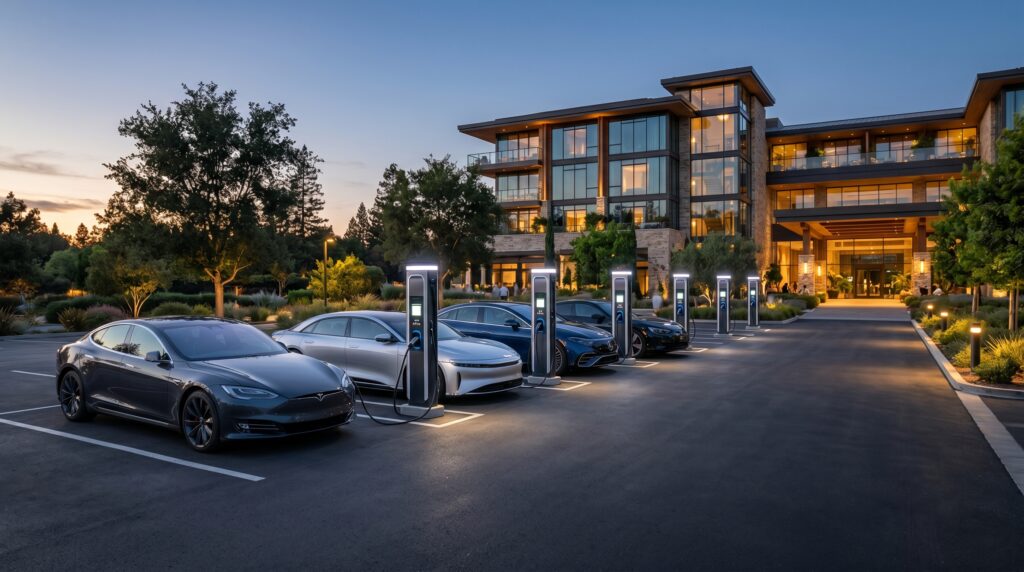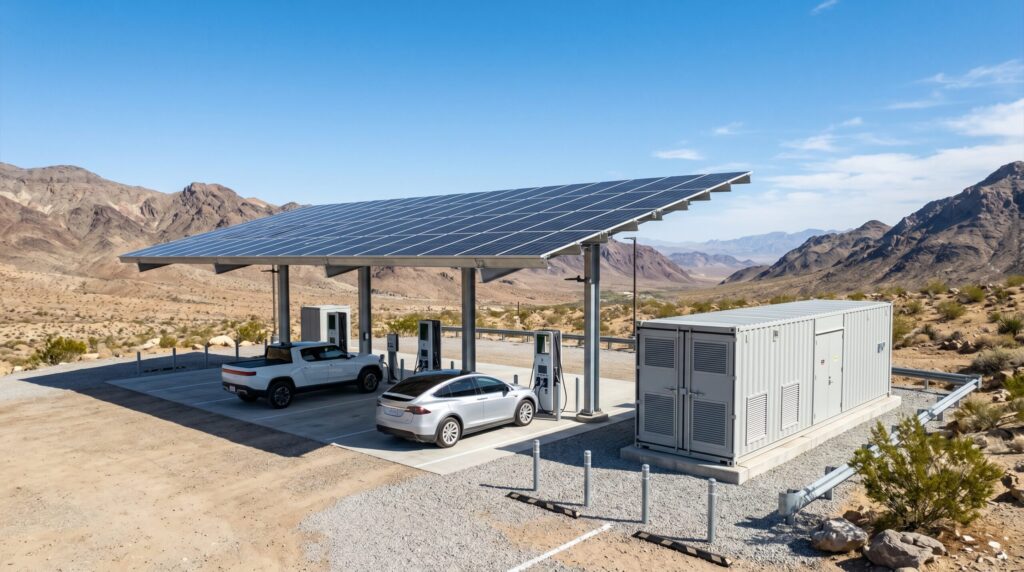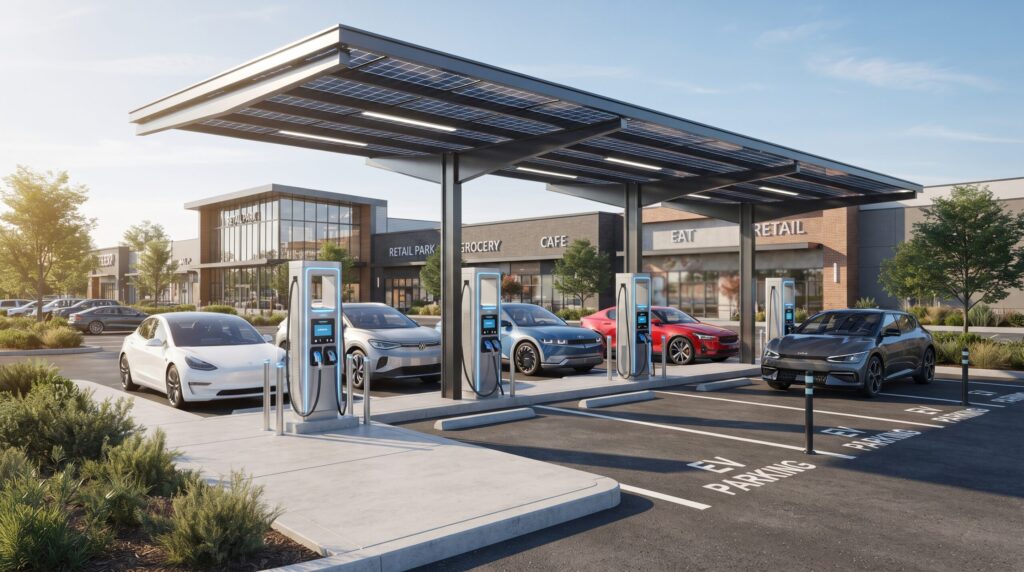
Corridor EV Charging Network expansion reached milestone scale during second quarter 2026 as transit hub developers accelerated direct current installations along major travel routes. Leading operators deployed thousands of new fast charging stalls while retiring legacy hardware to protect reliability…
Disclaimer: This post contains affiliate links. If you click through and make a purchase or submit a request for a quote, we may earn a small commission or referral fee at no extra cost to you.
Table of Contents
Corridor EV Charging Network Expansion Demands Hardened Asset Protection
Corridor transit operators and commercial destination developers facing accelerating electric vehicle adoption must treat high-power highway charging hubs as critical infrastructure requiring hardened building envelopes and long-term risk mitigation strategies.
During the second quarter of 2026, public network operator EVgo demonstrated this rapid growth by adding 99,000 new customer accounts, pushing its total registered user base past 1.8 million drivers.
This surge in registered drivers directly increases physical utilization rates and mechanical stress on high-traffic highway hardware.
To service this travel demand, the operator expanded its active footprint to 5,380 operational fast charging stalls across more than 1,230 corridor and retail destinations, marking a 24% year-over-year increase in active plugs.
However, high throughput exposes destination site hosts to significant financial risk if equipment experiences unexpected downtime during peak travel windows.
Deploying high-voltage corridor hardware without structural protections like reinforced concrete pads, heavy-duty crash bollards, and weather-resistant canopy shelters leads to premature capital expenditure loss.
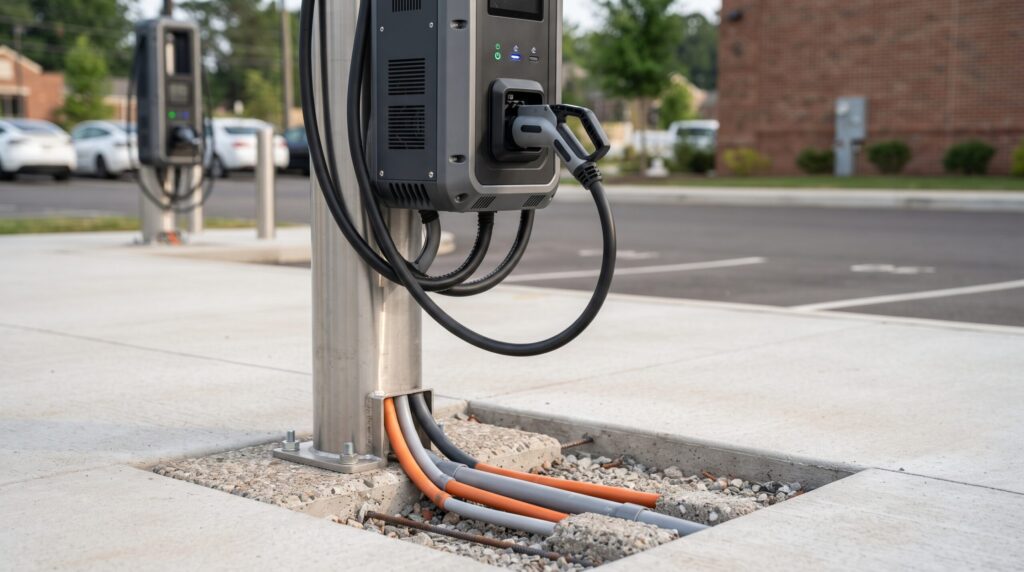
Destination charging developers can mitigate physical exposure and high utility demand penalties by integrating precision engineering standards into early site design.
Implementing structural insulated panels for adjacent power distribution shelters alongside high-grade wind-velocity rated canopies shields power cabinets from environmental degradation and extreme heat events.
Strategic hub placement near high-density highway off-ramps ensures continuous user throughput while reducing physical vulnerability to heavy vehicle movements.
📋 Commercial Property & Fleet Notice: Prevent premature hardware failure and unmitigated utility demand charges by booking a professional commercial site load assessment and engineering audit today.
Deploying A Modular DC Fast Charger Architecture Along High-Traffic Corridors
Modern travel plaza energy management requires highway operators to transition away from low-capacity legacy dispensers toward high-current, modular DC fast charger hardware platforms.
During the second quarter of 2026, network operators installed 280 new DC fast charging stalls while simultaneously executing 175 legacy hardware removals under targeted equipment refresh programs.
This aggressive decommissioning of outdated chargers highlights the operational hazard of maintaining low-capacity charging units along long-distance corridors.
Legacy chargers suffer from frequent connector wear, slow delivery speeds, and excessive maintenance overhead, which erodes operational expenditure efficiency.
By upgrading to a modular DC fast charger configuration, transit hubs gain dynamic power sharing capabilities that allocate megawatt-level capacity based on vehicle battery intake capabilities.
Advanced station engineering allows high-voltage charging systems to maintain maximum current delivery across diverse electric passenger and commercial transport platforms.
These technical improvements enable highway plazas to service more vehicles per day without triggering immediate utility grid transformer overhauls.
Calculating The Commercial EV Charger Installation Cost For Destination Plazas
Evaluating the initial commercial EV charger installation cost requires transit developers to balance upfront civil engineering expenses against predictable long-term energy throughput revenue.
Total network throughput across fast charging corridors reached 99,000,000 kWh during the second quarter of 2026, representing a 13% year-over-year increase in delivered power.
Individual highway stalls averaged a daily throughput of 276 kWh per day, reflecting steady utilization across prime interstate and travel plaza locations.
A major driver of long-term site monetization is the strategic deployment of up to 20 high-power stalls per location through joint roaming and hardware partnerships.
For example, new corridor deployments incorporating Tesla V4 Supercharger hardware under EVgo branding bring universal NACS connector access directly to travel plazas and highway dining centers.
These high-density layout designs significantly reduce the per-stall civil construction and trenching cost during initial site work.
Integrating universal J3400 NACS connectors ensures immediate support for diverse EV fleets, expanding the overall addressable driver traffic.
Furthermore, destination operators can leverage non-dilutive federal corridor grants and OEM funding offsets, which cover millions in net capital expenditures during network construction.
Utility Interconnect Management And Revenue Forecasting For Highway Hubs
High-volume transit plazas and destination centers must manage utility grid connections proactively to prevent severe demand penalties during peak holiday driving periods.
Major highway charging networks currently manage approximately 600 MW of connected power capacity across their regional site networks.
Crucially, roughly 45% of this connected capacity remains unutilized during off-peak hours, offering a major financial recovery opportunity for site developers.
Corridor operators can monetize this unutilized grid capacity by integrating automated demand response systems and stationary energy storage arrays.
Discharging onsite battery units during high-traffic travel spikes prevents extreme utility penalties and stabilizes local feeder circuits.
Full-year revenue expectations between $400,000,000 and $430,000,000 across major operators validate the financial strength of optimized corridor sites.
Comprehensive preventative maintenance schedules, thermal scanning of high-voltage enclosures, and active cable management preserve hardware lifespans past ten years.
Conclusion
Rapidly expanding travel corridors present transit developers and commercial property owners with an exceptional opportunity to capture high-margin revenue through strategic station deployment.
Partnering with specialized engineering and procurement contractors ensures high-voltage site plans include structural protection, modular power routing, and scalable grid connections.
By replacing legacy infrastructure with high-current hardware and utilizing federal corridor funding, destination operators safeguard their capital investment while establishing sustainable energy assets.
Maintaining a resilient Corridor EV Charging Network preserves real estate asset values and ensures seamless long-distance travel for millions of electric vehicle drivers.