Residential Smart Charging Networks are expanding rapidly across the United Kingdom through strategic partnerships designed to simplify home infrastructure installation workflows. The new collaboration between technology provider Humax and software specialist Jumptech optimizes dealership vehicle handovers while ensuring rapid electrical deployment and strict regulatory compliance…
Disclaimer: This post contains affiliate links. If you click through and make a purchase or submit a request for a quote, we may earn a small commission or referral fee at no extra cost to you.
Table of Contents
Residential Smart Charging Networks Demand Hardened Building Envelopes
The rapid acceleration of electric vehicle adoption across the United Kingdom requires a massive deployment of high-performance residential hardware to handle overnight charging loads.
To streamline this critical infrastructure rollout, Humax has formed a major strategic partnership with installation platform specialist Jumptech.
This commercial collaboration focuses initially on delivering seamless home hardware deployments directly through automotive dealership networks before expanding into retail and fleet-at-home delivery channels.
By integrating the automated system, car dealerships can completely bypass the traditional administrative burdens associated with coordinating domestic electrical upgrades.
The platform provides sales teams with an immediate mechanism to connect car buyers with certified local electrical contractors at the exact moment of vehicle purchase.
This integrated approach significantly accelerates the physical deployment of advanced hardware platforms like the Humax EQ7 and the high-capacity Humax MX7 smart chargers.
These smart charging systems operate at seven point four kilowatts on single-phase domestic power supplies, drawing a continuous thirty-two amperes of current from the residential grid.
Managing these substantial electrical loads over extended multi-hour charging windows requires property developers to implement advanced safety features directly at the physical installation site.
Humax chargers feature built-in protective earth neutral fault protection to eliminate the need for costly and destructive ground rod installations around the residential perimeter.
However, the physical mounting of these electrical distribution assets still demands strict structural integration with the residential building envelope.
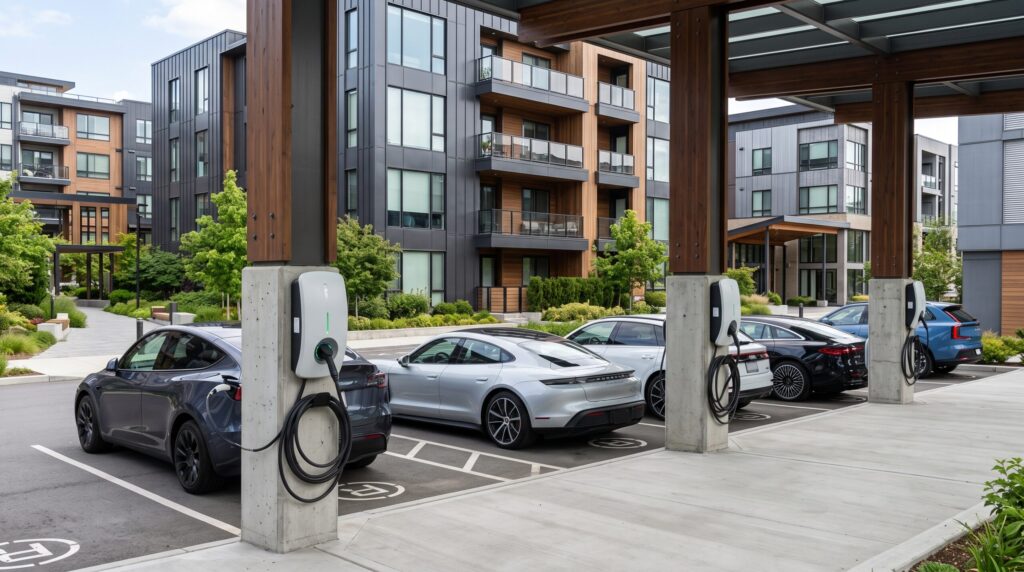
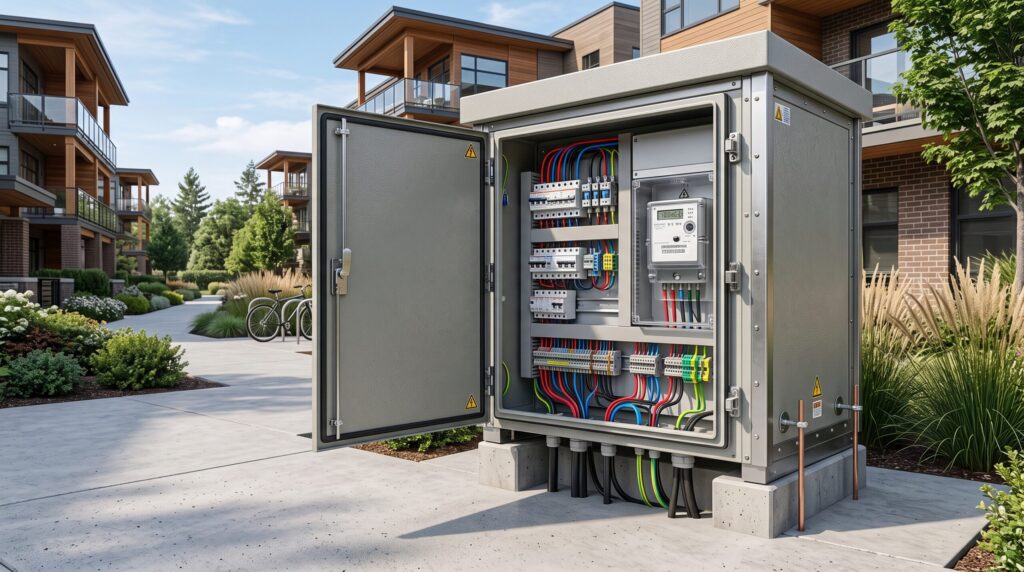
When installing clusters of smart chargers across multi-family residential developments or luxury apartment complexes, centralized power control hubs must be securely housed against harsh climate conditions.
Industrial developers use high-performance structural insulated panels to build dedicated outdoor utility enclosures that shield central sub-panels and smart load balancing hardware.
These structural insulated panels protect the delicate computer components, communication gateways, and high-voltage circuit breakers from severe moisture infiltration and extreme ambient temperature drops.
By isolating the central electrical distribution arrays within a climate-controlled enclosure, residential asset managers effectively prevent premature hardware failures.
The physical longevity of an outdoor residential charging point depends directly on the structural stability of the underlying building materials and mounting substrates.
Continuous mechanical stress occurs when drivers repeatedly pull, wrap, and unplug heavy Type 2 Mennekes charging cables during daily operation.
If chargers are anchored to weak or uninsulated exterior cladding, the localized structural tension can crack the building facade over time and allow water to leak into the interior walls.
Utilizing precision engineering principles during the initial site survey allows contractors to select optimal load-bearing anchor points along the building exterior.
Furthermore, multi-family properties must design their charging layouts to protect high-voltage cable runs and distribution conduits from external impact or weather degradation.
The combined execution of advanced installation management software and rugged physical architecture represents the true future of scaled domestic decarbonization.
Protecting multi-car charging infrastructure from unpredictable weather events requires building operators to adhere strictly to regional structural engineering regulations.
Centralized power distribution cabinets and protective charging canopies must be engineered to withstand severe wind forces and structural loading parameters.
Using premium building materials during the civil works phase guarantees that all mechanical footings and electrical service entrances remain fully stable over decades of use.
These structural standards safeguard the long-term reliability of the localized power delivery network and prevent expensive emergency hardware replacements.
Additionally, the integration of advanced insulation panels helps maintain stable interior microclimates for the automated grid-communication controllers located in the utility yard.
Technical Specifications and Envelope Integrity
- Wind-Velocity Ratings: All external charging shelters, solar canopies, and localized utility sub-station enclosures must be engineered to meet a minimum wind-velocity rating of 150 miles per hour to ensure complete structural survival during severe UK winter storms.
- Structural Standards: Structural foundations, concrete equipment pads, and wall-mount installation systems must comply fully with BS 7671 electrical codes and localized structural standards to manage continuous mechanical strain and high-voltage safety requirements.
- Envelope Core Components: High-performance structural insulated panels with a dense polyurethane or expanded polystyrene core provide the essential thermal isolation required to prevent internal condensation and safeguard electronic communication sub-panels.
Maintaining continuous grid connectivity and high equipment uptime requires property managers to execute systematic asset protection strategies.
Onsite facility teams must establish routine physical audits to inspect the structural integrity of the charger mountings and look for signs of loose electrical enclosures.
Ensuring that the charging plugs remain securely locked within weather-sealed holsters when not in use stops rainwater from corroding the critical copper contact pins.
Over time, exposed terminals can develop micro-corrosion that increases electrical resistance, decreases total efficiency, and triggers automated safety shutdowns.
💡 Pro Tip: Property managers should design a dedicated maintenance routine that mandates quarterly infrared thermal imaging scans of all residential distribution sub-panels to detect localized heat spikes before they cause equipment damage.
Total Cost of Ownership Optimization via Automated Installation Systems
Deploying large volumes of residential smart infrastructure requires a highly strategic approach to managing initial capital expenditure while maximizing long-term performance.
A comprehensive financial analysis reveals that utilizing automated installation software completely alters the total cost of ownership curve for modern property portfolios.
The Jumptech platform utilizes advanced automated workflows to streamline the entire installation pipeline from the initial digital home survey to final electrical commissioning.
This automated process drastically shortens project delivery timelines by up to twenty-five days and increases customer conversion rates by fifty percent.
The platform automatically submits required Distribution Network Operator notifications within minutes, removing a critical administrative bottleneck that historically delayed infrastructure rollouts.
By accelerating these regulatory approvals, property developers can deploy functional charging networks much faster, avoiding extended construction delays and lower initial asset utilization.
Mitigating financial risk also requires commercial developers to leverage available government grant programs like the Office for Zero Emission Vehicles initiatives.
These federal incentive programs offer substantial financial rebates that drastically offset the upfront capital expenditure required for multi-point residential upgrades.
Financial Comparison Matrix
- Upfront Capital Expenditure (CapEx): Initial capital investment involves acquiring OZEV-approved smart chargers, performing necessary main fuse upgrades, pouring reinforced concrete utility pads, and constructing weather-sealed electrical housings utilizing structural insulated panels.
- Long-Term Risk Mitigation: Long-term financial risk mitigation is achieved by automating Distribution Network Operator approvals to prevent project delays, using smart load management to avoid expensive peak grid penalties, and lowering maintenance costs through precision engineering.
Transitioning to automated infrastructure management provides an effective shield against fluctuating electrical installation costs and regional labor shortages.
The long-term financial performance of a residential charging asset relies heavily on the continuous optimization of its internal software systems and physical components.
By investing in rugged, high-quality architectural materials during the initial construction phase, property owners protect their multi-thousand-pound electrical investments from external damage.
The overall return on investment for multi-family residential upgrades is tied directly to keeping the individual charging bays accessible, operational, and safe for all residents.
As major technology brands continue to scale up these deployment programs, the residential real estate market is moving quickly toward mandatory charging access.
Conclusion
The new partnership between Humax and Jumptech represents a massive evolution in how the United Kingdom deploys high-volume residential smart charging networks.
Achieving complete operational success requires a balanced focus on advanced workflow automation software and highly resilient physical property engineering.
By installing high-performance structural insulated panels and adhering to strict building regulations, property managers protect sensitive electrical components from long-term environmental degradation.
Implementing automated digital surveys and streamlined compliance processing eliminates expensive field friction while dramatically lowering the total cost of ownership.
As electric vehicles become the standard choice for modern drivers, integrating these smart charging platforms secures lasting property relevance and strong financial returns.