Heavy-Duty EV Fleet Deployment has reached a historic tipping point as commercial operators rapidly transition away from traditional diesel infrastructure to maximize uptime.
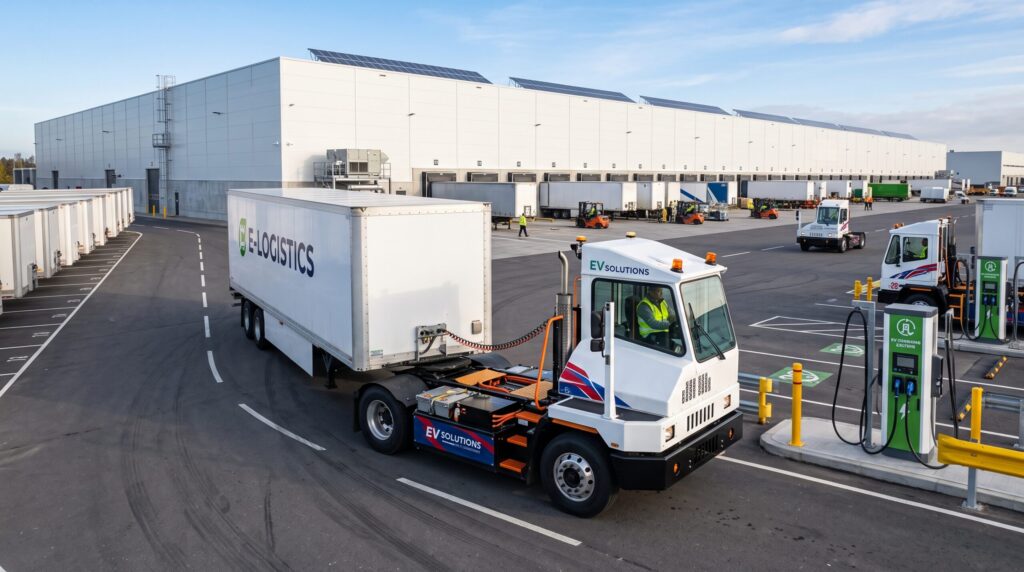
Orange EV has successfully deployed its 2,000th electric terminal truck, delivering this milestone unit directly to Coca-Cola Canada Bottling Ltd. for heavy-duty…
Disclaimer: This post contains affiliate links. If you click through and make a purchase or submit a request for a quote, we may earn a small commission or referral fee at no extra cost to you.
Table of Contents
Heavy-Duty EV Fleet Deployment Validates Commercial Yard Scale
Commercial and industrial logistics networks are experiencing a fundamental shift as heavy-duty EV fleet deployment transitions from isolated pilot programs into full-scale industrial standardization.
The successful deployment of Orange EV’s 2,000th electric terminal truck to Coke Canada Bottling marks a major production milestone and proves the long-term operational viability of heavy-duty electric transport assets.
This historic delivery expands the beverage manufacturer’s zero-emission yard hostler fleet across critical high-throughput facilities located in British Columbia and Quebec.
The rapid market penetration of these purpose-built electric vehicles is underscored by a track record of more than 12 million key-on operating hours and 33 million accumulated service miles.
Fleet managers across North America are prioritizing this transition because the predictable duty cycles of logistics hubs, ports, and intermodal distribution yards are perfectly suited for fleet electrification.
Orange EV has now successfully deployed heavy-duty electric trucks within more than 370 commercial fleets operating across 41 U.S. states, four Canadian provinces, and the Caribbean.
Industrial site operations require extreme equipment availability, and these purpose-built electric yard trucks have maintained an impressive average uptime rate of approximately 97 percent across all active deployments.
Every single diesel-powered yard hostler replaced by an electric alternative removes an estimated 80 to 90 tons of carbon dioxide emissions annually, making this a highly impactful corporate sustainability upgrade.
The ongoing commercial expansion includes massive procurement deals, such as a recently announced record-setting single order for 600 electric terminal trucks from a major logistics provider.
By eliminating reliance on internal combustion engines, commercial enterprise operators are insulating their logistics operations from volatile diesel fuel pricing and complex engine maintenance overhead.
The manufacturing lineup addresses distinct industrial applications, utilizing the advanced e-TRIEVER platform for warehouse distribution and the high-capacity HUSK-e platform for severe port environments.
As material handling hubs continue to scale up their procurement, the focus must shift directly toward establishing robust facility building envelopes and dedicated grid charging infrastructure.
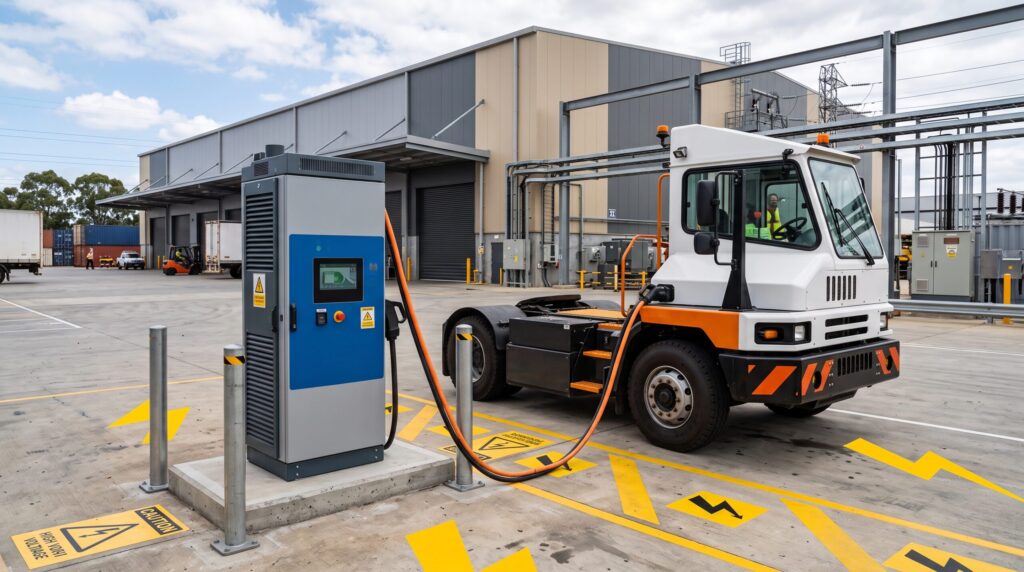
Operating a large-scale electric fleet requires comprehensive facility engineering upgrades that safeguard both the power delivery assets and the physical facility perimeter.
Industrial facility managers must integrate specialized structural standards and high-performance building materials to support heavy-duty charging hardware installations.
Large-scale DC fast charging stations generate substantial localized thermal stress and require resilient structural mounting points to withstand continuous mechanical strain from heavy power cables.
By utilizing structural insulated panels within nearby equipment enclosures, industrial developers can protect delicate power management components from extreme outdoor temperature swings.
These architectural upgrades protect the central electrical distribution arrays that feed high-power energy streams to the terminal truck fleets.
Furthermore, terminal trucks operating in extreme climates require physical facilities that protect maintenance personnel and charging assets from harsh weather events.
Technical Specifications and Envelope Integrity
- Wind-Velocity Ratings: Engineering specifications for industrial charger enclosures and surrounding structures must meet a minimum wind-velocity rating of 150 miles per hour to withstand severe weather events and prevent structural asset damage.
- Structural Standards: Heavy-duty charging pads and facility foundations must comply strictly with ASCE 7 structural standards and localized commercial building codes to handle the significant weight and physical stress of Class 8 terminal vehicle maneuvering.
- Envelope Core Components: Advanced structural insulated panels and precision-engineered housing systems provide high-performance thermal insulation and structural resistance, protecting sensitive site assets, distribution transformers, and charging control sub-panels from severe sub-zero Canadian winters.
Managing a zero-emission yard requires strict adherence to preventative asset maintenance protocols to keep the equipment operating at its maximum 97 percent uptime potential.
Fleet service operators must conduct regular checks on vehicle battery management systems and monitor the degradation of structural electrical components.
The physical connection points between the industrial charging station and the electric vehicle experience continuous physical wear during multi-shift logistics operations.
Ensuring long-term fleet asset protection requires systematic training for yard hostler operators to prevent accidental damage during high-throughput docking maneuvers.
💡 Pro Tip: Industrial fleet operators should install heavy-duty overhead cable suspension booms at all DC fast charging stalls to eliminate ground friction wear and safeguard charging cables from being accidentally crushed by terminal tractor tires.
EV Fleet Power Management Decreases Total Cost of Ownership
Optimizing EV fleet power management represents a critical step for commercial logistics managers looking to successfully balance upfront capital expenditure against long-term risk mitigation.
A thorough financial evaluation of heavy-duty fleet electrification reveals that modern precision engineering completely transforms facility cost structures over time.
Commercial terminal truck fleets require highly sophisticated electrical infrastructure upgrades, including the installation of high-capacity transformers and multi-stall industrial charging banks.
Implementing intelligent energy management software allows fleet directors to orchestrate vehicle charging schedules, effectively avoiding expensive peak-demand utility surcharges.
By integrating automated energy load balancing, an industrial site can safely charge dozens of electric yard hostlers simultaneously without exceeding the local utility company’s physical grid allocation.
Enterprise organizations can leverage government incentive programs, such as the federal iMHZEV program in Canada, to offset initial infrastructure deployment costs.
The combination of advanced smart charging platforms, automated infrastructure monitoring, and structural facility protection ensures long-term operational predictability for modern supply chains.
Upfront Costs vs. Long-Term Risk
- Upfront Capital Expenditure (CapEx): Initial capital investment includes procuring purpose-built electric terminal vehicles, constructing concrete utility pads, installing 150 kilowatt DC fast chargers, and deploying structural insulated panels for climate-controlled electrical sub-stations.
- Long-Term Risk Mitigation: Ongoing financial savings are achieved by eliminating diesel fuel cost volatility, reducing mechanical breakdown disruptions, minimizing insurance premium liabilities through advanced asset protection, and capturing significant preventative maintenance savings over a standard ten-year equipment lifespan.
Transitioning to electric operations provides a robust shield against global fossil fuel supply shocks and changing environmental regulatory penalties.
The financial performance of these industrial transport assets directly depends on the continuous reliability of the localized power delivery network.
By investing in high-quality structural infrastructure during the initial build phase, commercial enterprises protect their multi-million dollar vehicle assets from operational downtime.
The bottom-line profitability of high-volume beverage distribution and freight logistics centers relies heavily on keeping terminal trucks moving continuously without unscheduled service stops.
As more global brands follow the blueprint established by Coke Canada Bottling, the commercial transportation sector is rapidly moving toward an entirely electrified model.
Conclusion
The historic delivery of the 2,000th electric yard hostler proves that industrial heavy-duty transport electrification is no longer an experimental project but a proven reality.
Logistics hubs and commercial developers must take proactive steps to upgrade their facilities with the required electrical infrastructure and advanced building materials to support large-scale vehicle fleets.
Investing in high-performance energy infrastructure, intelligent power balancing systems, and resilient structural building envelopes ensures complete long-term operational security.
By executing a strategic transition toward zero-emission yard logistics, forward-thinking logistics operations can achieve superior supply chain predictability while driving down total operating costs.
Adopting these commercial upgrades allows fleet managers to secure maximum vehicle uptime, elevate facility efficiency, and lead the modern transport industry into a highly sustainable future utilizing heavy-duty EV fleet deployment.