Electrical requirements for level 2 and dc fast charging stations demand strict engineering evaluations for modern commercial facilities.
Property managers must evaluate electrical panels, available utility voltage parameters, and transformer constraints.
Proper infrastructure planning prevents expensive installation overhauls while safely maximizing power delivery fleet assets…
Disclaimer: This post contains affiliate links. If you click through and make a purchase or submit a request for a quote, we may earn a small commission or referral fee at no extra cost to you.
Table of Contents
Electrical Requirements for Level 2 and DC Fast Charging Stations: Engineering the Building Envelope
Commercial properties must prioritize electrical safety and long-term asset protection when deploying high-capacity charging technology.
Integrating electric vehicle supply equipment requires deep knowledge of the National Electrical Code standard known specifically as NEC Article 625.
Under these regulations, engineers must classify electric vehicle charging hardware as a continuous load on the building distribution network.
A continuous load means the system can run at maximum power capacity for three hours or longer without interruption.
Therefore, circuit breakers and structural wiring components must be rated at a minimum of 125 percent of the maximum continuous current output of the charger.
Level 2 fleet setups typically function on either 208-volt three-phase systems in commercial districts or 240-volt split-phase systems.
These level 2 systems generally supply between 6.2 kilowatts and 19.2 kilowatts of power directly to the vehicle.
The physical vehicle converts this incoming alternating current power into direct current electricity using its internal onboard rectifier.
Conversely, commercial public hubs and heavy logistics operations require direct current fast charging systems to achieve rapid energy turnover.
Direct current systems operate at significantly higher voltages ranging from 400 volts to over 1000 volts direct current.
These heavy industrial chargers bypass the onboard vehicle converter to push between 50 kilowatts and 360 kilowatts directly into the vehicle battery cells.
Deploying this hardware places a huge strain on the building electrical service, which often necessitates upgrading existing distribution switchgear.
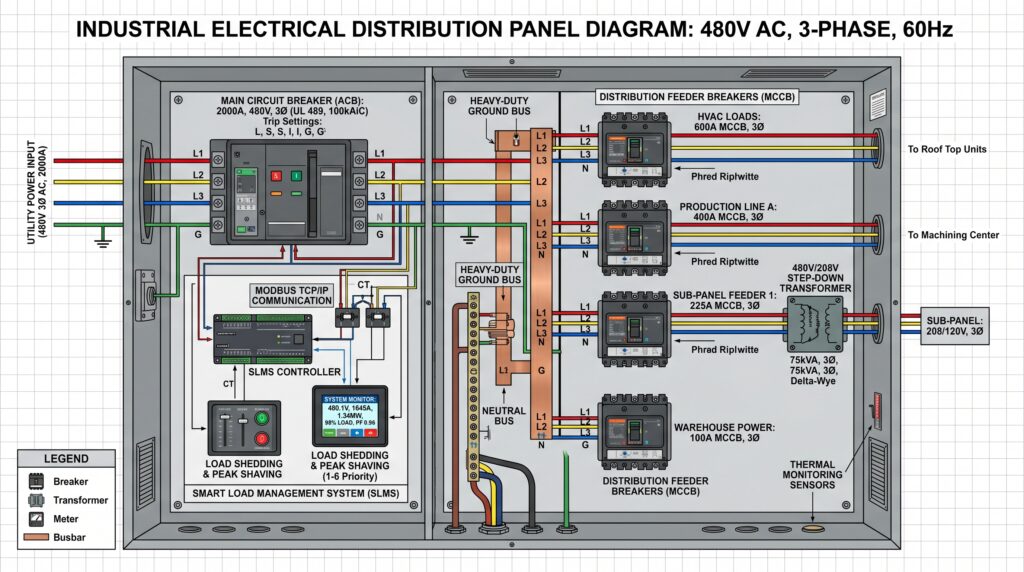
A standard commercial facility must tap into a three-phase 480-volt utility line to sustain multiple fast charging terminals simultaneously.
If the property lacks a dedicated three-phase connection, installers must coordinate directly with the power utility to step up local line capacities.
The entire deployment zone must also feature robust structural defenses to keep these high-voltage assets safe from environmental wear and physical impact.
Protecting these physical capital assets requires careful site planning and the use of premium construction materials.
Moisture entry and seismic movement pose severe threats to heavy switchgear cabinets and localized subpanels.
Using structural insulated panels can help isolate sensitive communication lines and automated monitoring systems within an outdoor enclosure.
The electrical enclosures must carry high National Electrical Manufacturers Association ratings to withstand severe weather events.
Unprotected conduit runs can experience rapid degradation if exposed to high wind currents or intense solar radiation over time.
Engineers must also lay deep concrete foundations with integrated grounding grids to disperse accidental ground faults safely.
Preventative maintenance remains the most reliable strategy to ensure these high-voltage connections operate safely for decades.
Technicians should complete annual infrared thermography scans on all main breakers to identify hidden thermal hot spots early.
Loose terminal blocks can cause severe voltage drops and dangerous electrical arcing if left unserviced.
Operating an active fleet facility requires continuous data streams regarding transformer temperature profiles and oil insulation levels.
Implementing a automated real-time alerts system can notify building engineers the exact millisecond an insulation failure occurs.
Furthermore, integrating physical steel bollards around each dual-port dispenser prevents accidental vehicle impacts during tight parking maneuvers.
Technical Specifications and Envelope Integrity
- Wind-Velocity Ratings: Engineering designs must withstand sustained wind forces up to 150 miles per hour to secure outdoor structural canopies.
- Structural Standards: All concrete pads and metal equipment enclosures must comply with local commercial building codes and ASCE 7 structural design guidelines.
- Envelope Core Components: Heavy-duty structural insulated panels, NEMA 4X weather-rated steel enclosures, and precision-engineered sub-base mounts work together to keep delicate electrical breakers completely isolated from external environmental hazards.
Managing multiple high-power electrical feeds requires intelligent energy distribution networks to avoid crippling peak-demand surcharges.
Smart charging systems can adjust real-time current levels to match the current capacity limits of the building.
If a building experiences sudden spikes from heating or cooling equipment, the vehicle charging rate drops instantly to protect the system.
This dynamic power sharing allows properties to install high-capacity chargers without triggering immediate and costly utility transformer upgrades.
Integrating stationary battery energy storage arrays provides an excellent buffer against local electrical grid instability.
These commercial battery modules accumulate cheaper energy during off-peak night hours and discharge it during high-demand daytime windows.
💡 Pro Tip: Always specify premium copper conductors instead of cheaper aluminum wiring for all continuous load connections exceeding 100 amps to reduce long-term thermal expansion risks and eliminate premature loose-terminal failures at the breaker block.
Upfront Capital Expenditure vs Long-Term Risk Mitigation
Balancing the initial installation expenses against future operational savings is a critical step for commercial real estate developers.
Investing in robust electrical infrastructure represents a major upfront capital expenditure that can yield exceptional long-term financial returns.
A full facility audit helps property owners understand their starting electrical threshold before purchasing expensive charging hardware.
Failing to audit the main panel can lead to unexpected circuit overloads, frequent equipment trippings, and costly emergency repair bills.
High-quality materials can lower the total cost of ownership by extending the service life of cables, connectors, and internal computer relays.
Investing early in advanced load management programs also helps businesses avoid extreme demand fees from the local power company.
These peak demand penalties can quickly double a property’s monthly utility statement if multiple vehicles begin fast charging at the same time.
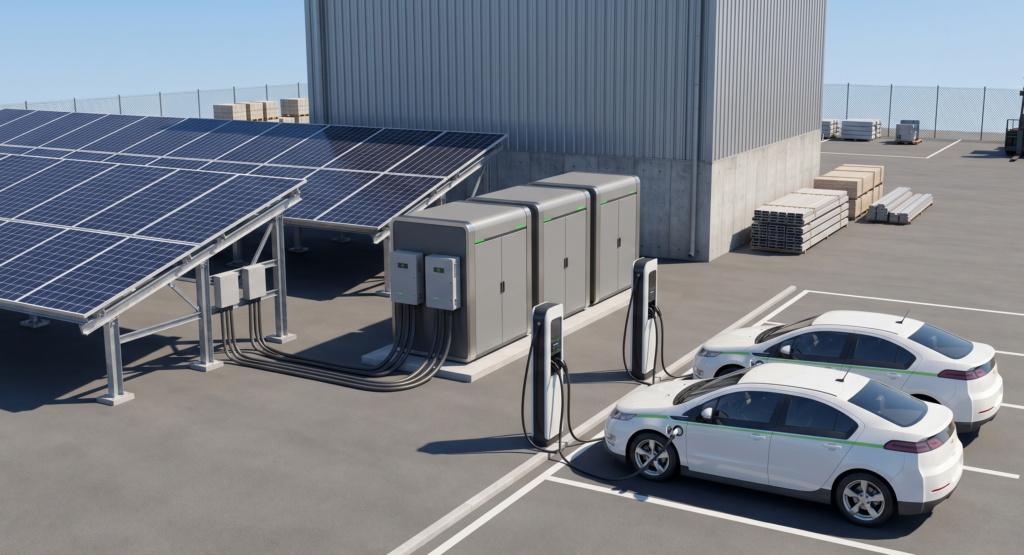
Deploying on-site solar carports further enhances this financial equation by providing clean power directly to the facility.
Solar generation offsets a large portion of the daily grid consumption while sheltering parked vehicles from extreme heat.
Reducing the internal temperature of a vehicle helps minimize the energy needed to cool the cabin before driving.
Proper physical shielding also keeps the charging plugs cooler, which helps maintain high power transmission speeds.
Investing in robust infrastructure sends a strong signal to insurance providers that the facility takes asset protection seriously.
Properties with integrated arc-fault protection and smart thermal monitoring can often qualify for lower commercial property insurance premiums.
Minimizing operational disruptions ensures that delivery fleets remain on schedule, which directly protects the company’s bottom line.
Financial Comparison Matrix
- Upfront Capital Expenditure (CapEx): Initial investments cover heavy-duty copper feeders, upgraded three-phase 480V transformers, smart load management software licenses, and protective structural insulated panels for the main subpanel enclosures.
- Long-Term Risk Mitigation: Strategic savings are realized by preventing catastrophic transformer overloads, lowering commercial insurance premiums, avoiding expensive utility peak-demand surcharges, and extending the hardware lifecycle to over fifteen years.
As state regulations continue to evolve, properties must adapt their energy strategies to remain competitive in the commercial marketplace.
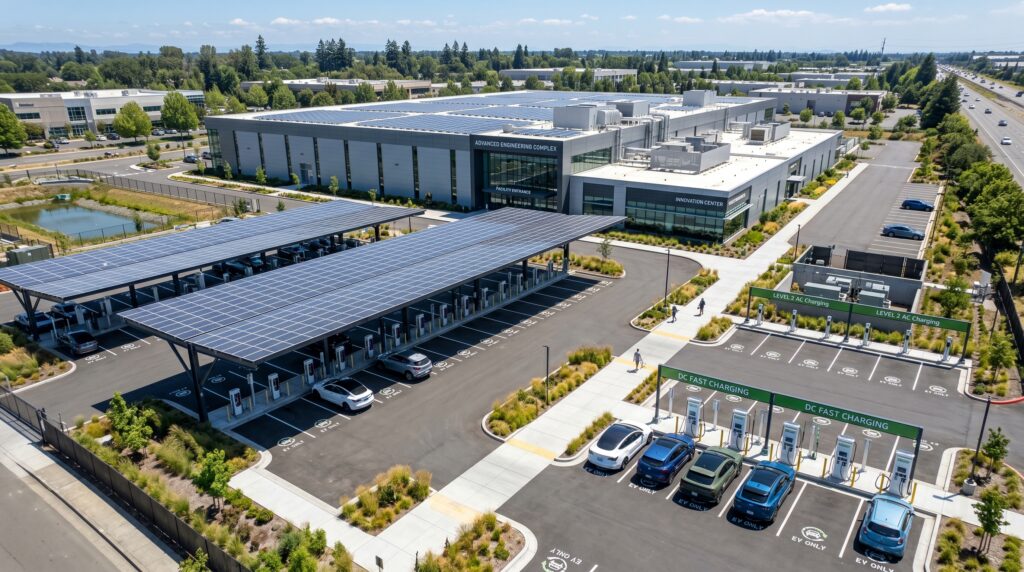
Many jurisdictions now require new commercial developments to dedicate a specific percentage of parking spaces to electric vehicles.
Building spaces with pre-installed conduit lines reduces future upgrade costs by up to eighty percent compared to retrofitting old concrete.
Anticipating these infrastructure shifts allows property managers to scale their installations smoothly as tenant demand increases.
Proactive engineering choices protect the initial capital investment while positioning the asset as a sustainable regional logistics hub.
Conclusion
Understanding the unique electrical requirements for level 2 and dc fast charging stations is essential for safeguarding long-term commercial investments.
Proper panel evaluation, continuous maintenance, and advanced load distribution software protect vital building systems from high-voltage stress.
Investing in heavy-duty components reduces operational risks and helps properties maintain compliance with evolving regional building laws.
Commercial facility directors must continue to choose precision-engineered solutions to secure their infrastructure against future energy challenges.
Focusing on complete building integration ensures your commercial electrical requirements for level 2 and dc fast charging stations provide reliable service for years to come.