Home EV charging setup decisions determine whether powering your daily commute feels smooth, predictable, and remarkably affordable.
Plugging your vehicle in overnight should feel just as effortless as charging your phone on your nightstand.
Understanding your residential power options lets you skip crowded public stations and build real energy independence at home.
Disclaimer: This post may contain affiliate links. If you click through any of the links in the article and make a purchase or submit a request for an installer quote, we may earn a small commission or referral fee at no extra cost to you.
Table of Contents
Home EV Charging Setup Essentials For Reliable Overnight Power
Choosing the right home EV charging setup starts with understanding how your daily driving habits align with your existing electrical service.
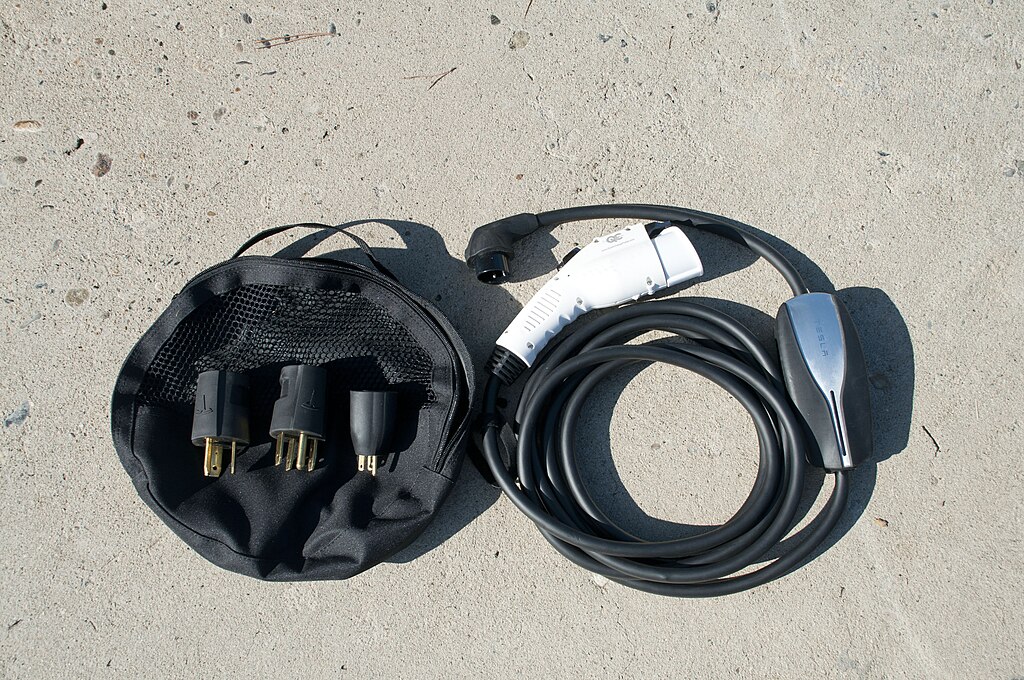
Level 1 charging relies on a standard 120-volt household wall outlet that delivers between 1.2 and 1.9 kilowatts of continuous power.
That basic plug adds roughly 3 to 5 miles of driving range per hour of charging, which easily covers a short 30-mile daily round trip.
Many new electric car owners begin with this simple trickle-charge approach because it requires zero upfront electrical upgrades and costs nothing extra to start.
However, larger electric SUVs and long-range commuter cars demand significantly more energy to stay road-ready every single morning.
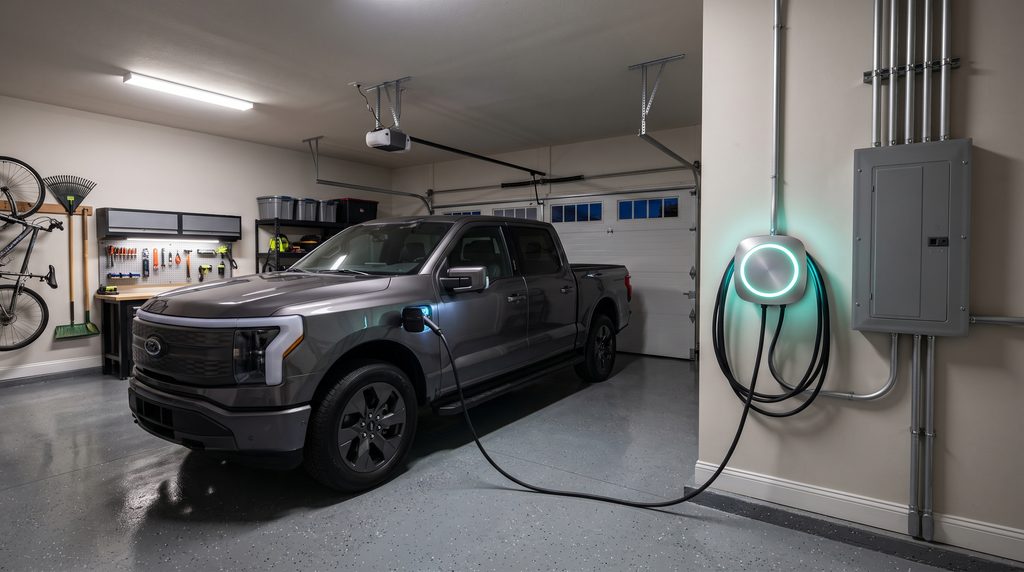
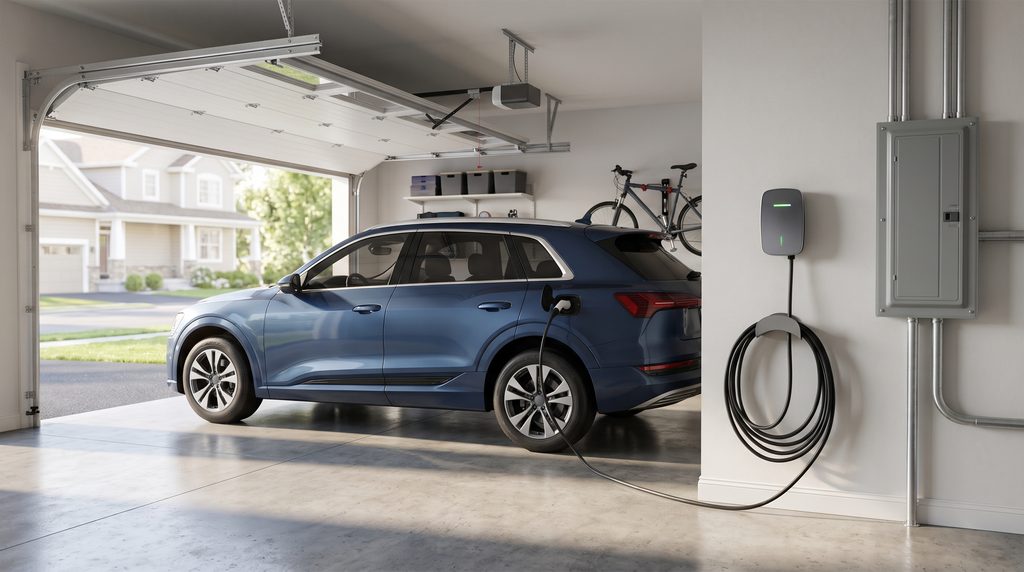
Upgrading to a dedicated 240-volt Level 2 home EV charging setup changes your overall driving routine immediately by unlocking substantially faster replenishment times.
These stations operate on 240-volt circuits delivering between 3.8 and 11.5 kilowatts, restoring 25 to 45 miles of range each hour.
That speed allows an empty battery to fully recharge in just 4 to 8 hours while you sleep soundly.
This reliable turnaround gives busy families and commuters total peace of mind without any reliance on commercial infrastructure.
💡 Buyer’s Toolkit:
Always apply the National Electrical Code 80% continuous load rule when planning your home circuit. If you purchase
a 40-amp Level 2 charger, your garage requires a dedicated 50-amp circuit breaker, while a 48-amp hardwired
station requires a dedicated 60-amp breaker and heavy-duty 6 AWG copper wiring.
Balancing Electrical Panel Load With A Smart Level 2 Home Charger
Every successful home EV charging setup begins with evaluating your existing main service panel capacity.
While most newer suburban homes feature 200-amp panels that effortlessly handle an additional 50-amp breaker, older homes often run on 100-amp panels already shared by central air conditioners, electric water heaters, and clothes dryers.
Adding a heavy continuous power draw to a tight panel risks nuisance trips during peak evening hours, which leads many drivers to believe an expensive $2,500 service upgrade is mandatory.
Fortunately, installing a smart Level 2 home charger equipped with automatic load management keeps your entire household safe without rewiring your main service.
These dynamic units use clip-on current sensors inside your breaker box to monitor whole-house electricity draw in real time.
When high-draw appliances like your oven or heat pump turn on, the smart charger throttles back its charging current automatically.
Once household demand subsides, the system seamlessly ramps power back up to maximum speed.
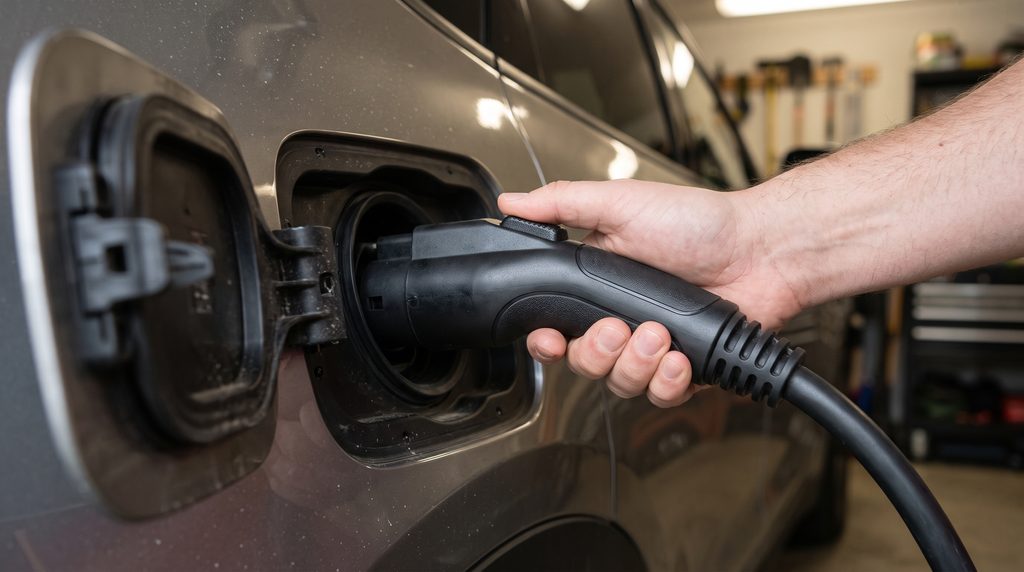
Another budget-friendly alternative for renters and older homes is an automated 240-volt smart splitter like the NeoCharge.
A smart splitter plugs straight into an existing 240-volt dryer outlet, allowing your dryer and EV to share a single circuit without any risk of overloading the wiring.
The device automatically pauses EV charging whenever laundry is running and resumes power once the cycle finishes, saving you thousands on home EV charger installation cost.
Pairing a smart splitter with off-peak utility scheduling guarantees your car charges at the lowest possible rates without touching a single breaker.
⚡ Deal & Installer Alert:
Ready to install a high-speed Level 2 charging station in your garage without unexpected electrical headaches?
Check current manufacturer rebates on top-rated home chargers starting at $399, or submit your zip code to
get free, zero-obligation estimates from licensed residential electricians in your local area today.
Maximizing Your Home EV Charging Setup With Residential Solar Power
Pairing a dedicated home EV charging setup with residential solar panels turns your private garage into an independent fueling station.
Rooftop solar arrays naturally produce their highest alternating current output during peak daylight hours.
Instead of sending that surplus green energy back to the grid for minimal utility credits, smart chargers route it straight into your car battery.
This direct midday routing drives your everyday charging expenses down close to zero over the course of the driving year.
Living in an apartment or rental home does not exclude you from capturing these clean solar benefits either.
Portable power stations from brands like EcoFlow, Bluetti, and Anker easily connect to folding solar blankets set up on balconies or driveways.
While a portable solar generator cannot fully recharge a massive vehicle battery, it supplies valuable emergency buffer miles when you need them most.
Carrying that compact portable solar gear also gives outdoor campers and road-trippers total peace of mind far away from utility lines.
Relying on self-generated clean power ultimately shields your household budget from unpredictable peak utility rates.
Developing thoughtful daily charging habits protects your wallet while preserving long-term vehicle battery health across hundreds of thousands of miles.
Conclusion
Investing in a smart home EV charging setup delivers the ultimate combination of garage convenience, electrical safety, and long-term driving value.
Always consult a certified local electrician to verify panel capacity before mounting your high-speed charging station.
Pairing your home charger with rooftop panels or portable solar gear maximizes your clean energy utility savings.
Setting your regular charging limit between 20% and 80% protects high-voltage battery health and keeps manufacturer warranties intact.
Waking up every single morning with a fully charged battery unlocks total energy freedom for your daily commute.