Understanding Level 2 charging times explained gives electric vehicle owners the practical knowledge needed to choose the right charging speeds without overpaying for unnecessary electrical upgrades.
Staring at complicated garage wiring options, breaker sizes, and charging speeds often leaves first-time buyers overwhelmed by conflicting contractor advice.
Understanding real-world recovery speeds, circuit breaker ratings, and copper wire gauges ensures your private garage setup delivers effortless overnight convenience safely.
Disclaimer: This post may contain affiliate links. If you click through any of the links in the article and make a purchase or submit a request for an installer quote, we may earn a small commission or referral fee at no extra cost to you.
Table of Contents
Level 2 Charging Times Explained: Amperage Versus Hourly Range
Evaluating Level 2 charging times explained begins by understanding how different electrical currents translate directly into driving miles recovered per hour.
Unlike sluggish 120-volt Level 1 cords that only trickle 3 to 5 miles of range per hour, 240-volt Level 2 stations deliver substantial power.
A entry-level 16-amp Level 2 charger draws roughly 3.8 kilowatts of continuous electricity from your electrical panel.
That modest 16-amp current replenishes approximately 12 to 15 miles of driving range for every hour your vehicle remains plugged in.
Stepping up to a standard 32-amp charging station pulls 7.7 kilowatts, boosting your recovery speed to roughly 25 to 30 miles per hour.
At 32 amps, an ordinary commuter car with a 60-kilowatt-hour battery pack easily charges from 20% to 80% in less than five hours.
For larger electric pickup trucks and long-range SUVs packing 100-kilowatt-hour batteries, higher currents dramatically cut down waiting times.
A 40-amp charging connection pulls 9.6 kilowatts, delivering around 32 to 36 miles of range per hour to handle massive batteries easily.
The maximum residential Level 2 rate reaches 48 amps, which channels a blazing 11.5 kilowatts directly into compatible onboard vehicle inverters.
That maximum 48-amp connection restores up to 45 miles of range every hour, fully replenishing even the largest battery packs overnight.
Knowing your true daily mileage needs prevents you from overpaying for top-tier speeds when moderate currents satisfy your commute completely.
💡 Buyer’s Toolkit:
Always apply the National Electrical Code 80% continuous load rule when matching your desired charging speed to circuit
breakers. Because electric vehicle charging runs continuously for multiple hours, your continuous charging current cannot
exceed 80% of the breaker’s total rating. A 32-amp charger requires a dedicated 40-amp breaker, a 40-amp charger demands
a 50-amp breaker, and a maximum 48-amp station mandates a 60-amp breaker.
Plug-In NEMA Outlets Versus Hardwired Stations: Wire Gauge Facts
Choosing the best Level 2 charging times explained hardware setup requires deciding between a flexible plug-in unit and a permanent hardwired station.
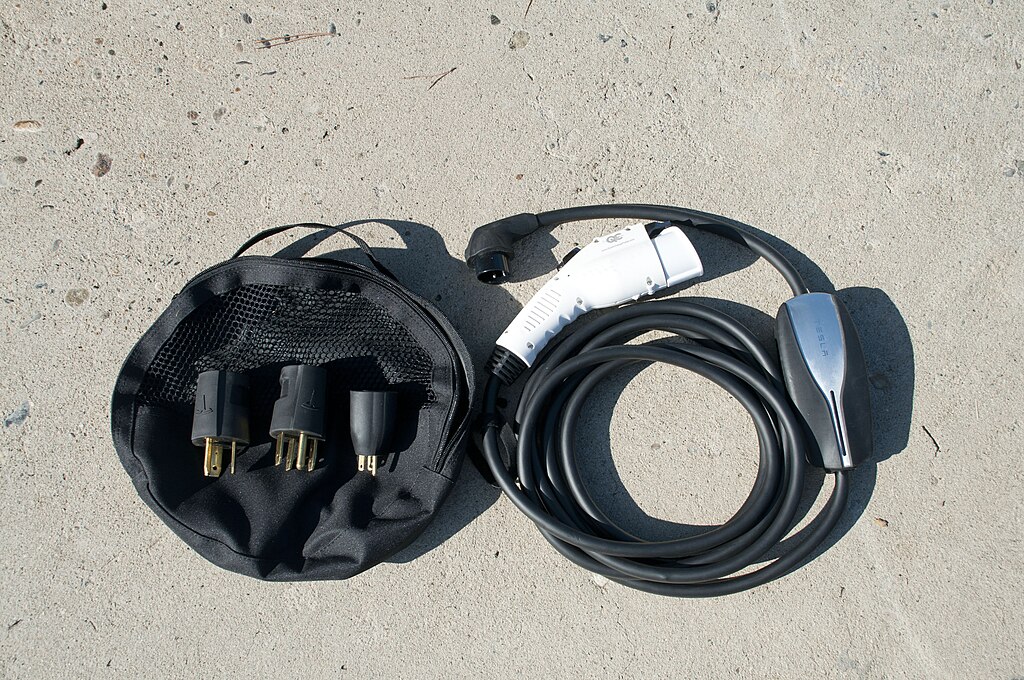
Many homeowners choose to install a 240-volt NEMA 14-50 wall receptacle to accommodate portable charging cords easily.
However, electrical safety codes limit plug-in portable charging cords to a maximum continuous draw of 40 amps on a 50-amp circuit.
In fact, many mobile cords come factory-limited to 32 amps to prevent thermal strain on commercial wall outlets.
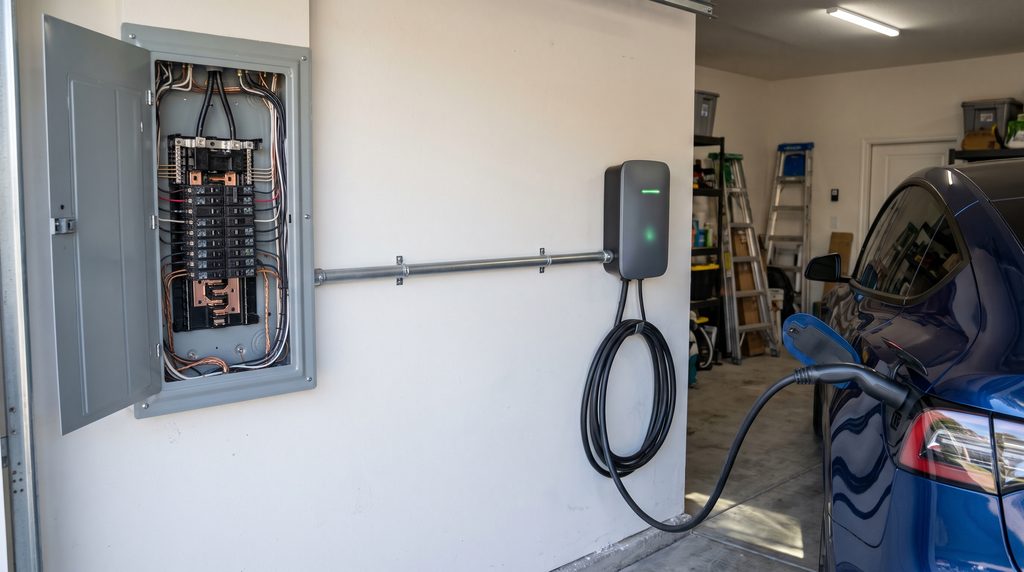
If you desire the ultimate 48-amp charging speed, the National Electrical Code requires you to hardwire the station directly into the junction box.
Hardwiring eliminates the mechanical plug connection entirely, removing a notorious resistance point that can overheat under continuous high-amperage draw.
Selecting the correct copper wire gauge for that installation is critical to prevent dangerous heat buildup inside your garage walls.
Common residential Romex or NM-B cable carries strict thermal limitations that catch many amateur installers off guard.
Under building codes, 6 AWG NM-B Romex cable is rated for 55 amps in the 60-degree Celsius column.
Because 55 amps cannot support the 60-amp breaker required for 48-amp continuous charging, standard 6 AWG Romex is technically prohibited for full 48-amp hardwired stations.
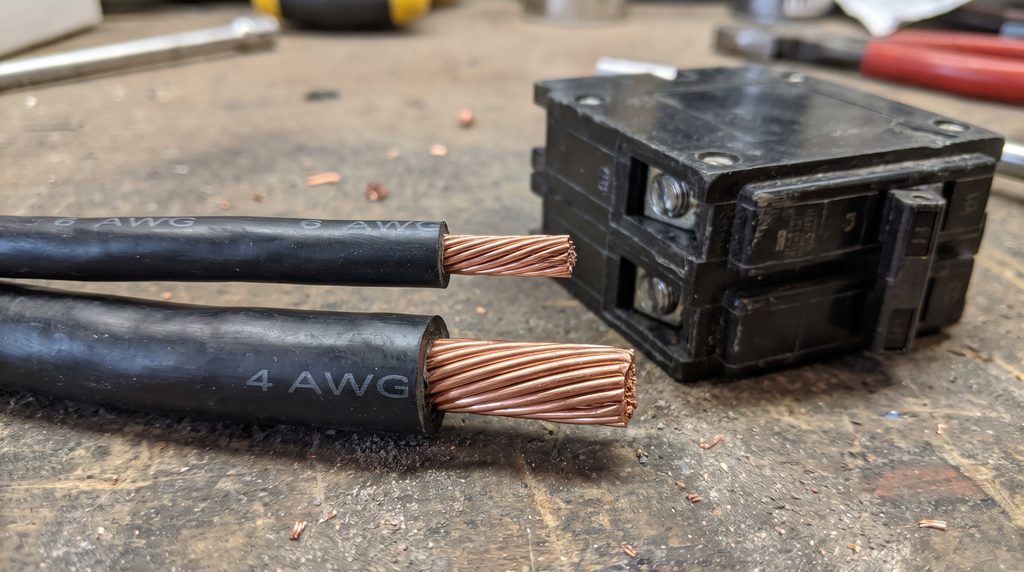
To safely feed a 48-amp hardwired charger on a 60-amp breaker, electricians pull individual 6 AWG THHN copper conductors through protective conduit.
THHN copper wiring features high-temperature 75-degree and 90-degree insulation that safely supports full 60-amp circuit loads.
If your garage layout requires running NM-B Romex through finished walls without conduit, building codes require stepping up to heavier 4 AWG copper wire.
While 4 AWG copper wire costs slightly more per foot, it guarantees code compliance, runs cooler, and virtually eliminates voltage drop along long runs.
Hiring an experienced residential electrician ensures your heavy wiring, conduit sizing, and terminal torque settings satisfy strict local inspection codes.
⚡ Deal & Installer Alert:
Ready to install a fast Level 2 home charging station without second-guessing breaker sizing or electrical permits? Check
current verified discounts on top-rated hardwired and plug-in smart chargers starting at $399, or submit your zip code
to get free, zero-obligation estimates from licensed residential EV electricians in your neighborhood today.
Hacking Off-Peak Hours And Solar Charging Optimization
Optimizing your Level 2 charging times explained routine allows you to take full advantage of narrow off-peak utility pricing windows.
Many power utility companies restrict their cheapest super-off-peak electric rates to a tight five-hour or six-hour overnight window.
Plugging in with a slow Level 1 charger cannot replenish your battery before expensive morning peak rates take effect.
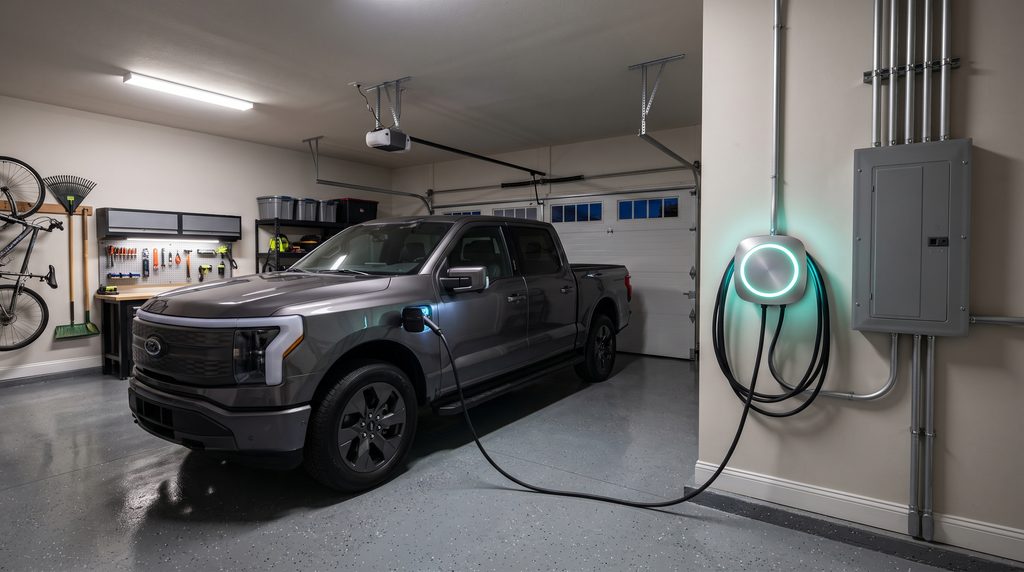
Operating a high-speed 32-amp or 48-amp Level 2 station ensures your car absorbs its entire daily power requirement within that cheap off-peak window.
For suburban homeowners with residential rooftop solar panels, higher Level 2 amperage offers exceptional daytime flexibility as well.
Smart chargers equipped with solar-divert features dynamically match vehicle charging current to real-time rooftop solar production.
When bright midday sunshine produces heavy surplus generation, a smart Level 2 station ramps up amperage to capture 100% free clean energy.
Townhouse dwellers and backcountry campers can also supplement their power strategies by packing versatile portable power stations.
Heavy-duty power stations from brands like EcoFlow, Bluetti, and Anker accept folding solar blankets to store free energy anywhere you go.
While a portable solar generator cannot deliver 48-amp garage speeds, it supplies essential emergency buffer range when standard utility power disappears.
Mastering amperage, wire gauges, and automated scheduling turns your home garage into an ultra-efficient, cost-effective fueling hub.
Investing in properly sized electrical equipment protects your vehicle’s expensive battery pack while delivering decades of dependable daily driving.
Conclusion
Understanding Level 2 charging times explained provides the ultimate combination of garage convenience, electrical safety, and long-term driving value.
Always hire a licensed residential electrician to confirm your main breaker panel capacity and verify wire gauge requirements before installation.
Pairing your Level 2 charging station with off-peak utility scheduling or residential solar panels maximizes your monthly electric fuel savings.
Setting your regular daily charging cutoff between 20% and 80% protects high-voltage battery health and keeps vehicle manufacturer warranties intact.