Megawatt charging commercial EVs demands massive electrical power distribution, careful hardware selection, and serious upfront capital planning to protect company balance sheets. Fleet operators must balance high battery pack charging speeds against rapid cell degradation, utility peak-demand charges, and severe grid interconnection delays…
Disclaimer: This post contains affiliate links. If you click through and make a purchase or submit a request for a quote, we may earn a small commission or referral fee at no extra cost to you.
Table of Contents
Megawatt Charging Commercial EVs Requires Rugged Power Hardware
Commercial fleet electrification requires moving far beyond light-duty Level 2 chargers or standard low-output DC fast chargers.
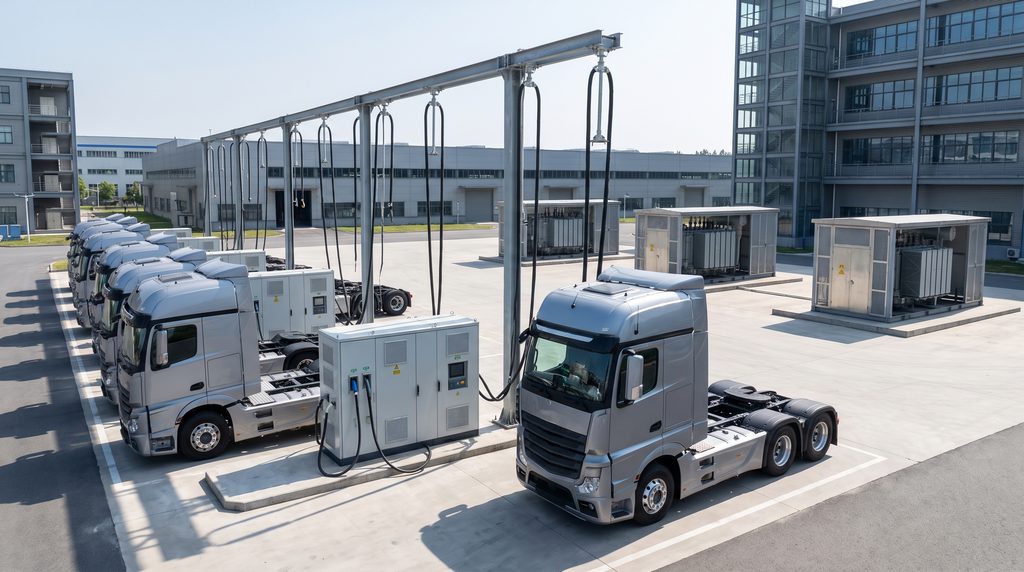
Megawatt charging commercial EVs delivers continuous direct current power at rates exceeding 1,000 kilowatts directly into heavy-duty vehicle battery packs.
This extreme electrical transfer bypasses smaller onboard vehicle converters to slash turnaround times during critical logistics windows.
Fleet logistics managers face severe operational disruption if class 8 trucks sit idle for multiple hours during peak dispatch schedules.
Industrial power management giants like Eaton demonstrate that high-power charging demands integrated vehicle hardware and rugged electrical switchgear.
Uncontrolled electrical spikes during ultra-fast energy transfer can destroy fragile battery cells and ruin expensive commercial vehicles.
Fleet depots must install high-capacity substation transformers, switchboards, and protective enclosures to handle thousands of amperes safely.
Without heavy-duty electrical protection, an internal short circuit can trigger catastrophic thermal events across an entire vehicle bay.
Industrial sites require robust structural standards to anchor heavy dispensers and power conversion cabinets securely to reinforced concrete foundations.
Depot planners frequently enclose primary switchgear rooms in durable materials like structural insulated panels to ensure climate control and precision engineering around sensitive power electronics.
These structural insulated panels, known as SIPs, isolate high-voltage power conversion equipment from extreme outside ambient temperatures and driving rain.
Enclosure designs must also achieve certified wind-velocity ratings to withstand severe coastal storms and harsh industrial yard environments without losing structural integrity.
Proper physical enclosures safeguard multi-million-dollar capital investments against routine physical impacts, environmental dust, and corrosive moisture.
Failing to harden the building envelope around switchgear installations voids manufacturer warranties and raises commercial property insurance premiums.
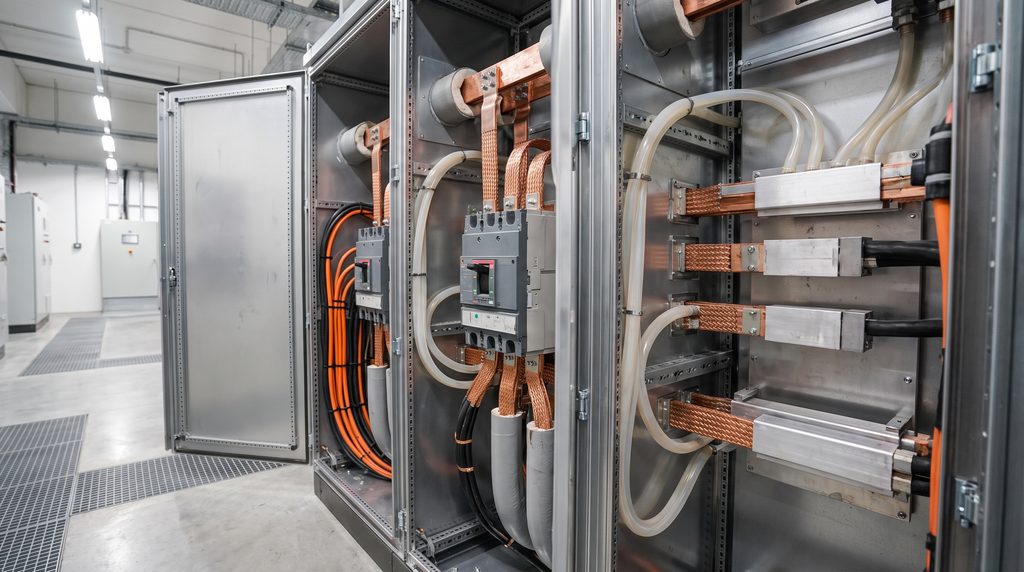
Engineering teams must calculate short-circuit interrupting ratings up to 70,000 amperes to prevent arc flash disasters during high-current operations.
The industry Megawatt Charging System, known as MCS, supports electrical currents reaching 2,000 amperes at up to 1,250 volts.
In contrast, standard Combined Charging System hardware, known as CCS, caps out near 500 kilowatts and cannot sustain rapid long-haul freight operations.
Upgrading depot infrastructure to meet these massive electrical loads requires comprehensive utility interconnection studies that often take months to complete.
Operators who delay these electrical engineering studies risk ordering multi-million-dollar electric truck fleets that cannot be energized upon arrival.
Unprepared logistics facilities frequently face utility demand penalties that can exceed $40,000 per billing cycle from unmanaged electrical spikes.
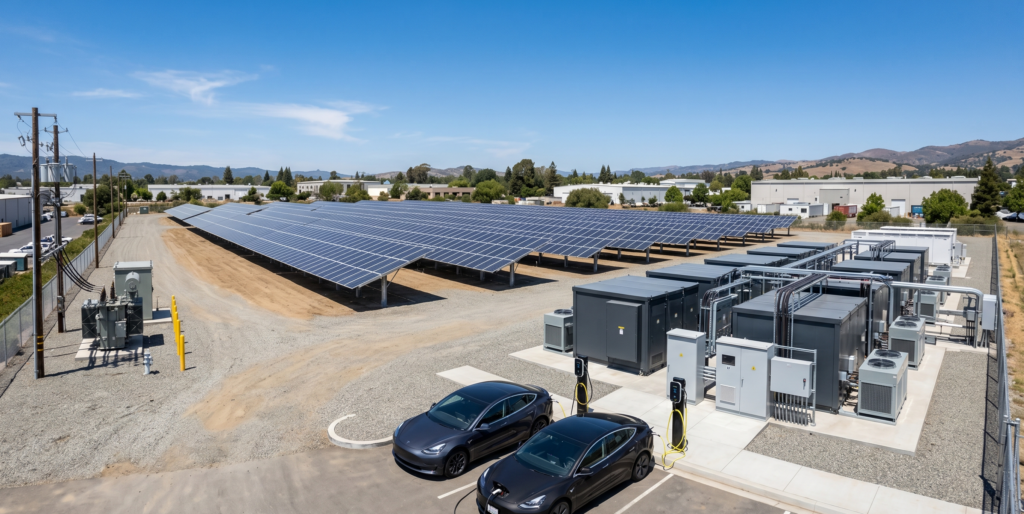
Depot operators can eliminate these financial spikes by coupling fast charging with on-site commercial battery energy storage systems and industrial solar canopies.
Automated power distribution units actively throttle incoming current to protect utility feeders from unmanageable strain during simultaneous fleet plug-in events.
Implementing active energy orchestration protects high-voltage assets while maintaining predictable operational expenses.
Thermal Stress and Battery Chemistry Limits
Every commercial lithium-ion cell functions best within a narrow temperature window between 15°C and 35°C.
Pushing high electrical currents into cold or overheating battery cells triggers accelerated electrode plating and permanent capacity degradation.
Heavy-duty commercial fleets increasingly adopt lithium iron phosphate chemistries, known as LFP, to maximize cycle durability and lower upfront battery cell costs.
Even advanced LFP chemistries require sophisticated liquid cooling systems inside both the vehicle pack and the offboard charging dispenser cables.
A long-haul electric tractor carrying a 400-kilowatt-hour battery pack demands intelligent pre-conditioning software before connecting to a 1,000-kilowatt plug.
Advanced route dispatch tools must coordinate battery pre-conditioning miles before the truck pulls up to the depot charging terminal.
Without precise thermal pre-conditioning, charge controllers throttle incoming power automatically, doubling vehicle downtime and destroying delivery schedules.
Integrating liquid-cooled charging cables prevents connector overheating and protects yard workers from handling dangerous surface temperatures during continuous fleet rotations.
📋 Commercial Property & Fleet Notice: Avoid unbudgeted utility peak penalties, interconnection bottlenecks, and premature hardware wear by scheduling an engineered commercial site assessment, equipment quote review, and CapEx recovery audit for your facility today.
Managing Modular Power Cabinet Architecture and Fleet Upgrades
Industrial charging depots rely heavily on a modular power cabinet design to convert high-voltage alternating current into stable direct current.
Splitting large charging installations into scalable, isolated electrical modules protects fleets against complete depot blackouts if an individual inverter fails.
Technicians can hot-swap a damaged inverter block inside a modular power cabinet without shutting down remaining vehicle charging lanes.
This modular power cabinet approach drastically cuts operational maintenance costs and keeps freight rolling on strict delivery windows.
Commercial fleet operators can scale their capital expenditures gradually by adding power conversion sub-racks as their electric truck inventory expands.
Deploying modular electrical rooms simplifies compliance with local building codes, fire separation clearances, and structural foundation requirements.
High-capacity electrical cabinets require specialized concrete pad foundations designed to support heavy magnetic transformer components and heavy busbars.
Engineers must specify sealed conduit runs and liquid containment piping to prevent cooling fluid leaks from damaging primary electrical switchboards.
Preventative maintenance schedules must include infrared thermography scans across all primary busbar terminations every six months to detect loose high-amp joints.
Routine thermal imaging protects site operators against catastrophic electrical failures that lead to total facility downtime and costly property insurance claims.
Facilities that fail to maintain documented preventive maintenance logs risk having their commercial insurance claims denied following an electrical fire.
Capital Expenditure Allocation and Fleet Electrification Consultation
Transitioning commercial yards to megawatt-level charging requires significant upfront capital expenditure across multiple infrastructure categories.
Procuring dedicated utility substations, automated switchgear, liquid-cooled dispensers, and civil foundation work can require project investments surpassing $2,000,000 per facility.
Fleet operators must balance these substantial capital investments against long-term fuel savings and lower drivetrain maintenance expenses.
A professional fleet electrification consultation identifies utility grant programs and state incentives that offset up to 80% of eligible electrical installation costs.
Experienced energy advisors audit daily route duty cycles to identify whether individual trucks actually require 1,000-kilowatt speeds or slower overnight power.
Local delivery trucks with eight hours of overnight depot dwell time can operate efficiently on standard 150-kilowatt DC dispensers.
Over-specifying electrical hardware on short-haul delivery routes burns critical investment capital without delivering measurable logistical improvements.
Conversely, long-haul interstate trucking routes operating under strict federal hours-of-service rules demand maximum megawatt charging throughput.
A structured fleet electrification consultation models exact battery state-of-charge curves against daily utility time-of-use tariff windows.
Automating charge schedules during low-rate overnight periods reduces operational electricity costs by as much as 60% compared to unmanaged charging.
Deploying on-site stationary battery storage systems alongside charging dispensers allows operators to shave expensive daytime electrical demand peaks.
These stationary storage buffers absorb excess energy from commercial solar arrays during sunny afternoons and discharge power during evening truck arrivals.
Coordinating on-site solar generation with stationary batteries protects logistics companies from volatile regional grid electricity pricing.
Smart charging microgrid controllers automatically balance power between the utility grid, stationary batteries, solar canopies, and connected vehicle fleets.
This multi-layered electrical microgrid approach ensures continuous fleet operations even during local utility power outages or grid brownouts.
Protecting logistics continuity safeguards commercial shipping contracts and guarantees that vital customer supply chains stay on schedule.
Interoperability Protocols and Asset Protection Standards
Operating mixed commercial fleets requires standardized communication protocols between different vehicle brands and high-power charging dispensers.
Proprietary charging interfaces limit fleet flexibility and create vendor lock-in that increases long-term hardware replacement costs.
The global Megawatt Charging System standard establishes universal mechanical connector geometries and digital safety handshake parameters.
Modern charging controllers utilize open communication standards like ISO 15118 to authenticate vehicles and process automated billing securely.
Standardized digital communication enables dynamic power sharing across connected dispensers, ensuring each truck receives optimal charging current.
Vehicle control units continuously report real-time internal battery temperatures and cell voltages to offboard power conversion units.
If internal pack temperatures exceed safe operational thresholds, the dispenser automatically reduces current output within milliseconds.
This rapid feedback loop prevents irreversible battery damage and preserves the residual resale value of expensive commercial vehicles.
Fleet managers can track charging metrics, energy consumption, and hardware diagnostic codes remotely through unified fleet telematics dashboards.
Real-time telemetry flags degraded charging cables, cooling pump faults, or inlet wear before physical hardware failures interrupt daily logistics operations.
Proactive hardware monitoring maximizes charging asset availability and ensures that logistics fleets operate at peak operational efficiency.
Conclusion
Megawatt charging commercial EVs offers logistics operators an unprecedented opportunity to accelerate heavy-duty fleet turnaround times and cut fossil fuel reliance.
Capturing these massive operational efficiencies requires rigorous upfront planning, hardened electrical distribution infrastructure, and comprehensive utility coordination.
Fleet operators who implement modular power systems, active thermal management, and smart microgrid controls protect their balance sheets against unnecessary utility penalties and rapid equipment degradation.
Partnering with experienced power management engineers ensures that your transition toward megawatt charging commercial EVs delivers maximum return on investment and permanent operational resilience.