Battery-assisted EV charging gives electric vehicle drivers reliable emergency range and off-grid power security wherever standard wall outlets are missing.
Heading into remote national forests or facing unexpected neighborhood blackouts should never trigger paralyzing range anxiety.
Carrying a heavy-duty portable power station provides an essential safety buffer that keeps your electric car mobile during unpredictable emergencies.
Disclaimer: This post may contain affiliate links. If you click through any of the links in the article and make a purchase or submit a request for an installer quote, we may earn a small commission or referral fee at no extra cost to you.
Table of Contents
Battery-Assisted EV Charging Essentials For Wilderness And Home Backup
Investing in battery-assisted EV charging solves one of the most persistent challenges for outdoor campers and off-grid travelers.
Standard electric car batteries hold massive amounts of energy, yet remote wilderness campsites rarely feature dedicated high-amperage electrical pedestals.
Relying entirely on distant highway fast chargers restricts where outdoor enthusiasts and weekend road-trippers can explore safely.
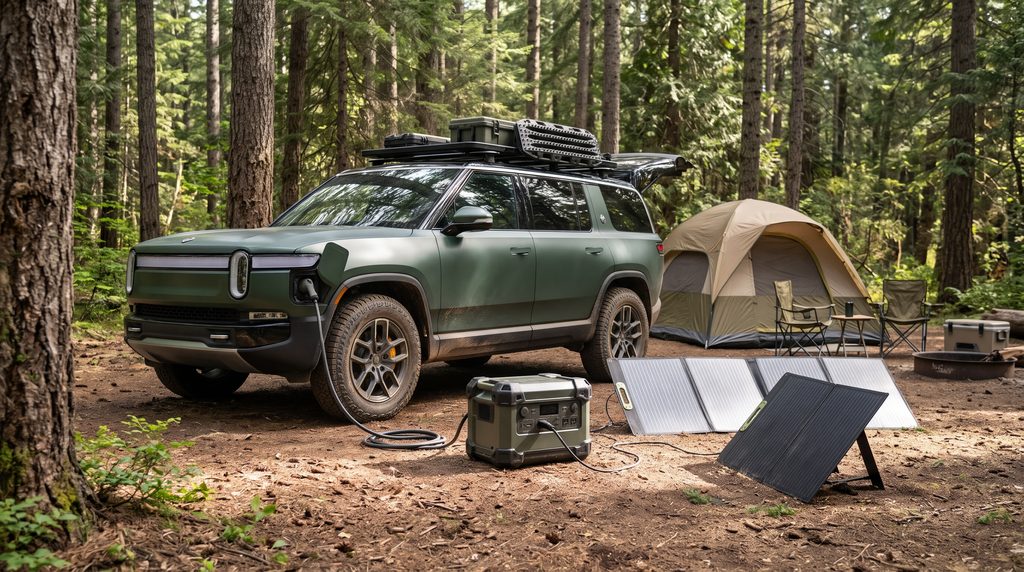
Modern high-capacity portable power stations bridge this off-grid divide by acting as mobile energy reservoirs for your vehicle.
Leading manufacturers like EcoFlow, Bluetti, and Anker build rugged units utilizing durable lithium iron phosphate battery chemistry.
These advanced LFP battery cells easily endure over 3,000 discharge cycles while retaining roughly 80% of their original storage capacity.
Units such as the EcoFlow Delta Pro or Anker SOLIX F3800 house massive internal inverters capable of running continuous high-wattage loads.
Connecting your vehicle’s factory Level 1 emergency charging cable into the station draws roughly 1,400 continuous watts.
That steady power draw adds between 3 and 5 miles of emergency driving range for every hour of active connection.
While that speed cannot replace a permanent garage wall charger, those extra miles frequently mean the difference between reaching a fast charger or needing a tow truck.
Having battery-assisted EV charging equipment stowed in your trunk provides total self-reliance during backcountry adventures or severe grid outages.
💡 Buyer’s Toolkit:
Most electric vehicles will display an immediate ground fault error and refuse to charge from a portable generator or power
station. Portable power units feature floating ground inverters, whereas vehicle onboard chargers require a bonded
neutral-ground connection for safety verification. Always pack an inexpensive $15 neutral-ground bonding plug to insert
into an empty AC outlet on your power station so your vehicle recognizes a secure ground.
Comparing Heavy-Duty Power Stations: EcoFlow Delta Pro Versus Anker SOLIX
Selecting the right hardware for battery-assisted EV charging requires evaluating continuous inverter capacity, battery storage size, and real-world portability.
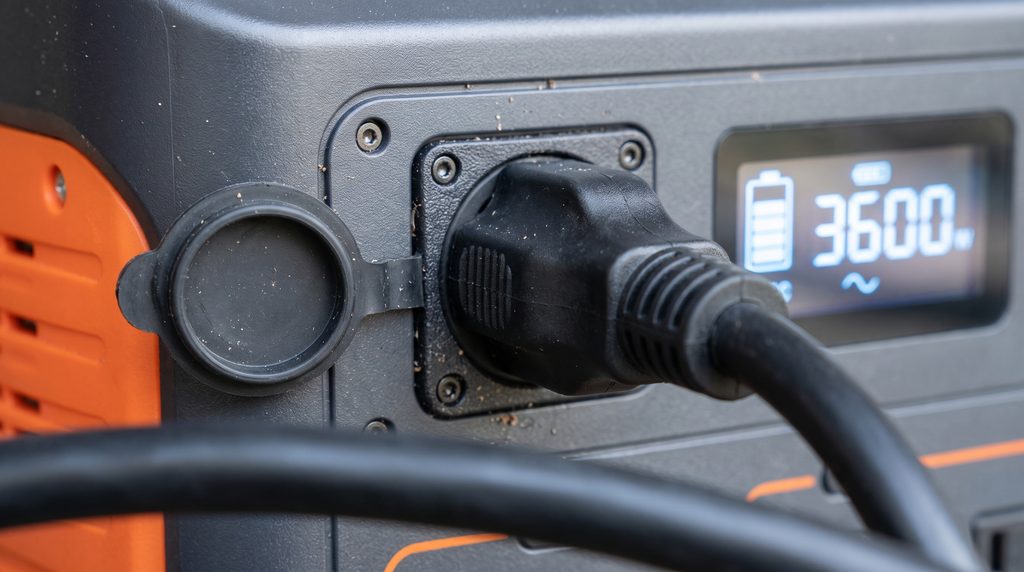
The EcoFlow Delta Pro retails around $2,299 and delivers 3,600 watts of continuous pure sine wave alternating current output.
With an integrated 3,600 watt-hour battery pack, the Delta Pro supplies enough stored energy to inject roughly 10 to 12 emergency miles into an electric car.
Its durable luggage-style telescoping handle and heavy-duty wheels make rolling the 99-pound unit across paved driveways and packed dirt manageable.
Competing closely in this high-output category is the Anker SOLIX F3800, priced near $2,499 with an expansive 3,840 watt-hour internal capacity.
The SOLIX F3800 features a dedicated NEMA 14-50 outlet capable of outputting native split-phase 240-volt power directly into compatible portable chargers.
That split-phase capability allows drivers to charge at faster Level 2 rates up to 25 amps when paired with appropriate current-limiting settings.
Both systems support modular expansion batteries, allowing homeowners to scale total storage capacity past 10 kilowatt-hours for extended emergencies.
For budget-focused campers seeking a lighter footprint, compact 2,000 watt-hour stations like the Bluetti AC200L offer practical utility for around $1,399.
While a smaller station only adds roughly 5 to 7 miles of reserve range, its manageable 60-pound weight fits comfortably in smaller vehicle trunks.
These versatile power stations also run 120-volt campsite appliances like induction cooktops, portable fridges, and heated blankets without touching vehicle energy reserves.
Deploying battery-assisted EV charging hardware turns your personal vehicle into an adaptable basecamp for weekend overland excursions.
You protect your vehicle’s primary traction battery for the drive home while enjoying silent, zero-emission electricity at remote campsites.
⚡ Deal & Installer Alert:
Planning an off-grid road trip or preparing your household for severe weather power blackouts? Check current
manufacturer rebates on top-rated LFP portable power stations starting at $999, or submit your details to consult
with certified off-grid solar specialists for custom home backup integration.
Capturing Free Energy With Folding Solar Blankets And Smart Buffering
Recharging your portable power station during extended off-grid stays requires pairing your battery with high-efficiency folding solar blankets.
Modern portable solar panels utilize advanced monocrystalline or TOPCon solar cells that achieve energy conversion efficiencies exceeding 23%.
Setting up 400 to 800 watts of portable solar panels on sunny days continuously replenishes your power station while you hike or relax.
The portable power station acts as an intelligent solar buffer, storing intermittent solar energy smoothly throughout the afternoon.
Directly connecting an electric car to solar panels is technically impractical because passing clouds cause charging sessions to shut down repeatedly.
Buffering through a portable battery eliminates this problem by providing clean, uninterrupted alternating current to your vehicle’s sensitive onboard inverter.
Suburban homeowners can also use this exact buffering strategy to harvest free sunlight from apartment balconies or backyard patios.
Storing surplus daytime solar generation inside an LFP battery allows you to top up your car in the evening without drawing expensive peak utility grid power.
This clever solar-buffering routine shields your monthly household budget from fluctuating electric rates while shrinking your carbon footprint.
Practicing smart battery buffering also minimizes thermal strain on your vehicle battery pack by maintaining gentle, controlled charging speeds.
Mastering portable energy management unlocks genuine driving freedom, proving that clean electric transportation works anywhere under the sun.
Conclusion
Carrying dedicated battery-assisted EV charging hardware provides unmatched peace of mind, emergency resilience, and off-grid independence for electric vehicle owners.
Always ensure your portable setup includes a certified neutral-ground bonding plug to prevent vehicle charging ground fault lockouts.
Pairing portable power stations with high-efficiency folding solar panels maximizes your clean energy utility savings during outdoor adventures.
Maintaining steady, moderate charging rates protects vehicle battery longevity while ensuring reliable performance through thousands of cycles.
Investing in versatile off-grid power gear turns every remote road trip into a completely confident, self-sustaining journey.