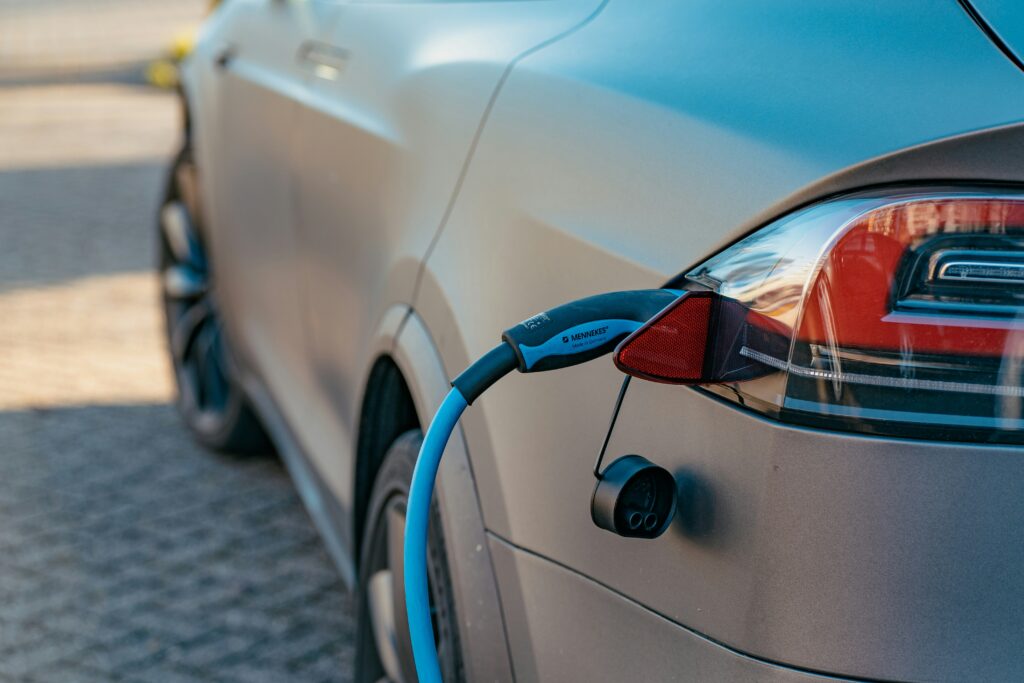
Plugging into the right EV charging plugs in North America should feel just as simple as charging your phone.
Yet staring at all the mismatched charging handles across modern driveways can quickly overwhelm any new driver.
Thankfully, sorting out your daily home and travel setup takes only a few minutes of practical planning.
Disclaimer: This post contains affiliate links. If you click through and make a purchase or submit a request for a quote, we may earn a small commission or referral fee at no extra cost to you.
Table of Contents
EV Charging Plugs In North America For Everyday Drivers
Every electric vehicle sold today relies on either the classic SAE J1772 plug, the CCS1 fast-charge combo, or the modern NACS J3400 standard.
That single charging port on your rear fender determines how quickly you top up your battery each night.
Most suburban garages feature a standard household 120V outlet that delivers basic Level 1 trickle charging.
Plugging your vehicle into a standard wall socket only adds around 3 to 5 miles of driving range per hour.
That slow pace works fine for short daily errands, but overnight road trips demand a much quicker turnaround.
Upgrading to a 240V Level 2 home charger completely transforms your morning routine by delivering up to 40 miles per hour.
Your car sits safely in the driveway while drawing steady, balanced alternating current straight from your home breaker panel.
Whether you park in a private two-car garage or use an outdoor carport, connector matching makes all the difference.
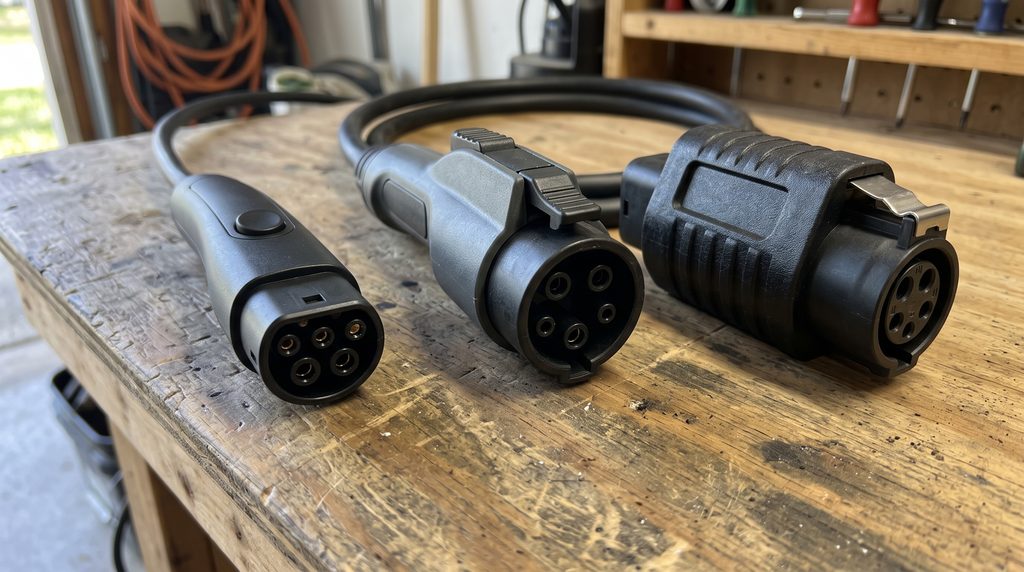
Drivers with older models often use the round five-pin J1772 connector that dominated home charging for over a decade.
Meanwhile, newer vehicles from Ford, Hyundai, Kia, and Rivian are rapidly transitioning to the slim NACS J3400 port.
This sleek plug handles both overnight home garage charging and ultra-fast highway stops using the exact same compact inlet.
Level 2 Home Charger Compatibility And Simple Adapter Solutions
You do not need to rewire your home or buy a new car just to enjoy universal plug compatibility.
A compact, UL-tested adapter instantly bridges the gap between older J1772 wall units and newer NACS vehicle charge ports.
Keeping a rugged adapter inside your center console gives you total freedom at destination hotels and neighborhood curbside stations.
Most quality home chargers like the Emporia EV Charger or Grizzl-E Classic retail between $350 and $550 online.
These wall-mounted units typically draw 32 to 48 amps of continuous current safely under National Electrical Code continuous load guidelines.
That electrical headroom ensures your home panel stays cool while your vehicle charges at maximum efficiency overnight.
Renting an apartment or townhome often prevents you from drilling holes or hardwiring high-amperage wall units into the garage wall.
Tenants can pair a portable Level 1 or Level 2 mobile charging cable directly with existing 240V dryer outlets.
You simply pack the mobile cord into your trunk whenever your lease ends, taking your complete charging setup with you.
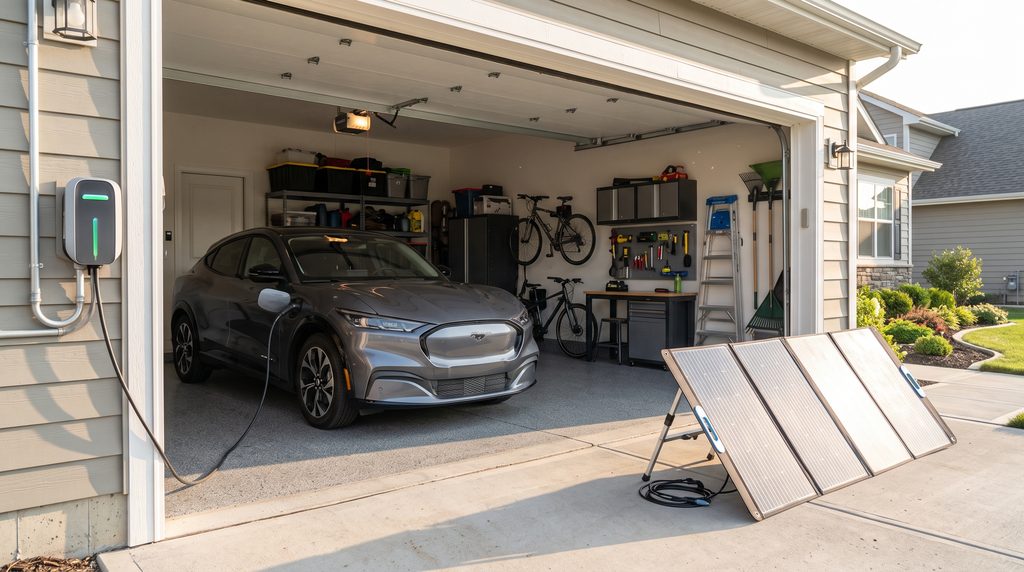
Balcony solar kits and portable folding solar panels offer another clever off-grid pathway for budget-conscious eco-drivers.
You can channel clean sunshine from lightweight balcony panels directly into a portable power station like an EcoFlow or Bluetti.
These lithium iron phosphate systems store solar energy safely inside your apartment during bright afternoon hours.
You can then run a trickle-charge line down to your parked car during off-peak hours for extra green commuting miles.
⚡Buyer’s Toolkit & Deal Alert:
Want to wake up to a full battery every morning without electrical guesswork and not sure where to start?
Get free, zero-obligation quote from a verified, licensed residential electrician in your local area
about installing a dedicated 240V charging circuit today.
Portable Solar Panels And Emergency Generator Charging
Taking your EV into remote state parks or camping off-grid requires a reliable, self-contained backup energy plan.
Carrying a set of high-efficiency portable folding solar blankets lets you capture free energy wherever you pitch your tent.
Modern 400W folding solar panels use durable TOPCon cells that deliver dependable wattage even through light afternoon cloud cover.
These solar panels feed directly into high-capacity solar generators, storing backup kilowatt-hours for emergency vehicle top-ups.
However, many portable power stations feature floating neutral wiring that causes standard EV charging cords to trigger safety errors.
Your vehicle’s internal computer constantly inspects the power source to confirm a physical ground connection exists before accepting current.
Plugging an inexpensive $15 neutral-ground bonding plug into an unused generator outlet instantly clears the ground fault.
That tiny brass pin connects neutral to ground, allowing your vehicle to draw steady emergency charging current safely.
A 2 kWh portable power station will deliver roughly 6 to 9 emergency miles of range to your battery.
Those bonus miles are often more than enough to reach the next fast charger along your highway route.
Conclusion
Mastering EV charging plugs in North America gives you total confidence whether plugging into a garage wall or camping off-grid.
Equipping your garage with a reliable Level 2 charger and keeping handy travel adapters nearby guarantees worry-free driving every single day.