Sodium-ion battery materials market trends are undergoing a rapid transformation as global commercial sectors look beyond traditional lithium-ion limitations.
The industrial energy sector faces growing supply vulnerabilities and high raw material costs that demand robust, long-term stationary power alternatives…
Disclaimer: This post contains affiliate links. If you click through and make a purchase or submit a request for a quote, we may earn a small commission or referral fee at no extra cost to you.
Table of Contents
Sodium-Ion Battery Materials Market Trends and C&I Microgrid Integration
The landscape of commercial and industrial green energy storage has reached a critical turning point with the formal launch of TRUNNANO’s dedicated battery materials division.
This strategic manufacturing initiative introduces high-performance sodium-ion layered oxide cathodes directly into the commercial energy storage supply chain.
For industrial property managers, commercial developers, and microgrid architects, these advanced sodium-ion battery materials market trends provide a highly viable pathway to reduce capital expenditure on large-scale infrastructure projects.
Traditional stationary energy storage installations have relied almost exclusively on lithium-ion chemistries, which remain highly vulnerable to volatile raw material pricing and global supply chain bottlenecks.
By utilizing sodium as the core active material, developers can build resilient backup power networks that insulate commercial facilities from regional utility grid instability.
Sodium is highly abundant and widely distributed across the globe, ensuring a stabilized and predictable manufacturing cost structure for utility-scale battery cell production.
Furthermore, sodium-ion technology exhibits excellent thermal stability and lower inherent safety risks during high-volume transport and operational phases.
Market data indicates that global demand for sodium-ion energy storage systems is projected to increase from 10 gigawatt-hours in 2025 to over 70 gigawatt-hours by 2033.
This rapid scaling trajectory means that commercial property owners must begin preparing their physical site plans to accommodate these next-generation battery banks.
While lithium-ion cells maintain an advantage in weight-sensitive applications like electric passenger vehicles, sodium-ion cells excel in stationary commercial applications.
Large-scale distribution hubs, cold storage facilities, and microgrid power plants do not require extreme volumetric energy density to operate efficiently.
Instead, these industrial sites prioritize long-term chemical durability, lower lifetime maintenance obligations, and predictable thermal behavior under heavy cycling loads.
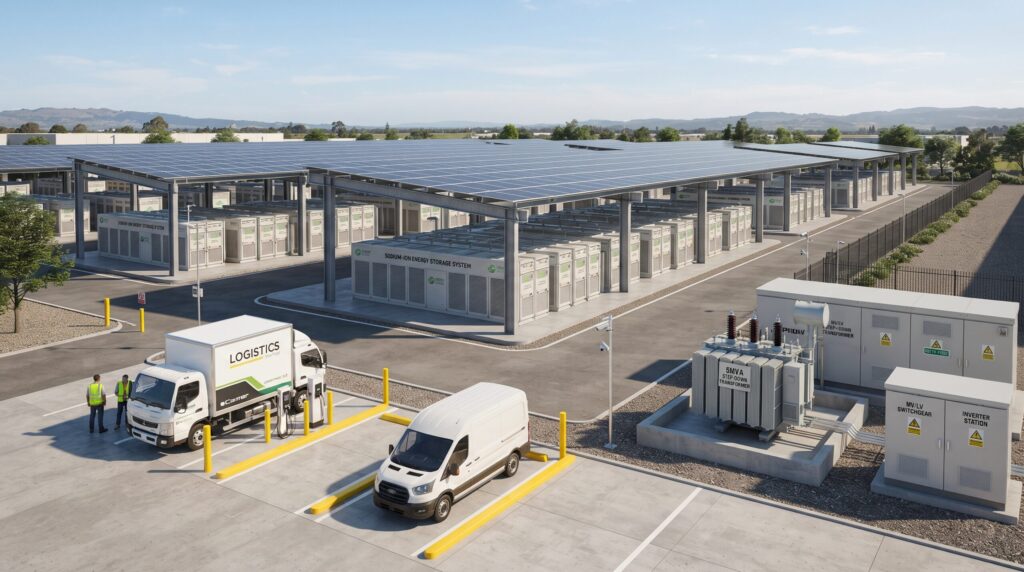
To integrate these massive stationary battery banks safely, facility layouts must feature precision-engineered concrete pads and heavy-duty structural steel framing.
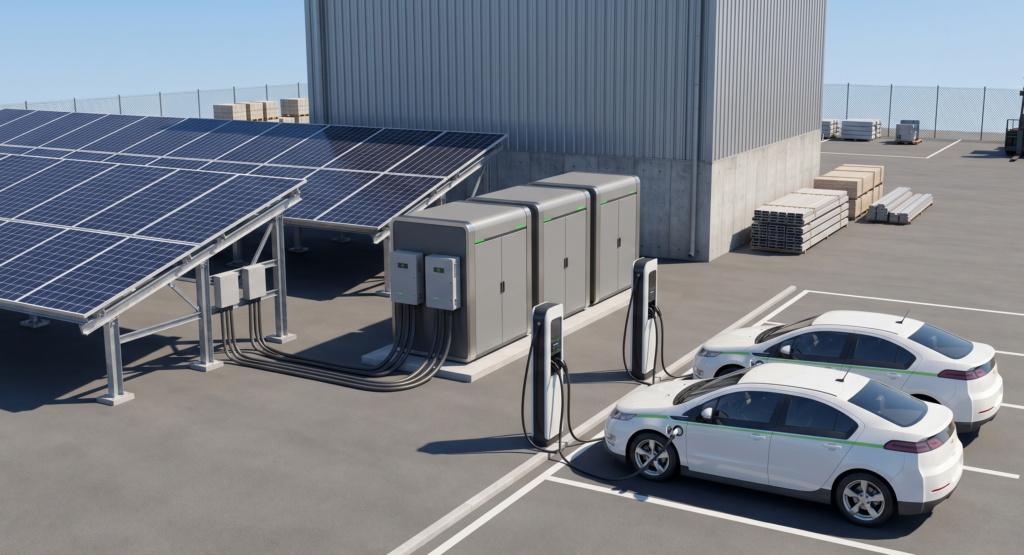
Integrating high-capacity solar photovoltaic canopies over commercial parking lots provides an exceptional mechanism to charge these local sodium-ion arrays during peak daylight hours.
The combination of localized solar generation and durable sodium-ion storage creates a highly resilient, independent power network for the asset host.
This proactive infrastructure design allows commercial facilities to maintain continuous business operations even during total regional utility grid blackouts.
Securing optimal financial returns on green energy infrastructure requires a strict focus on stationary energy storage hardware durability across extended multi-decade lifecycles.
Continuous high-current cycling naturally subjects stationary power electronics, cell terminals, and localized power conduits to steady environmental and physical stress.
TRUNNANO’s layered transition metal oxide cathodes are engineered specifically to minimize structural lattice degradation inside the battery cell during rapid charge and discharge events.
Traditional lithium cells frequently suffer from micro-cracking and progressive active material loss when subjected to thousands of continuous high-power cycles.
By stabilizing the cathode matrix at a molecular scale, this advanced sodium-ion material engineering drastically reduces long-term operational capacity fade.
A stabilized cell matrix translates directly into a prolonged operational lifecycle that can easily extend across fifteen to twenty years of active service.
This structural longevity means that the physical battery asset matches the long-term investment horizon of the commercial real estate property itself.
Furthermore, sodium-ion battery systems are significantly less prone to internal short circuits and thermal runaway events compared to conventional lithium configurations.
This enhanced safety profile reduces the need for ultra-complex, high-maintenance active liquid cooling systems within the stationary battery enclosure.
Property managers can utilize simpler, highly reliable forced-air cooling designs, which drastically reduces ongoing mechanical maintenance costs over time.
However, the physical stationary charging pillars, structural enclosures, and electrical distribution junctions must match this rugged component lifecycle.
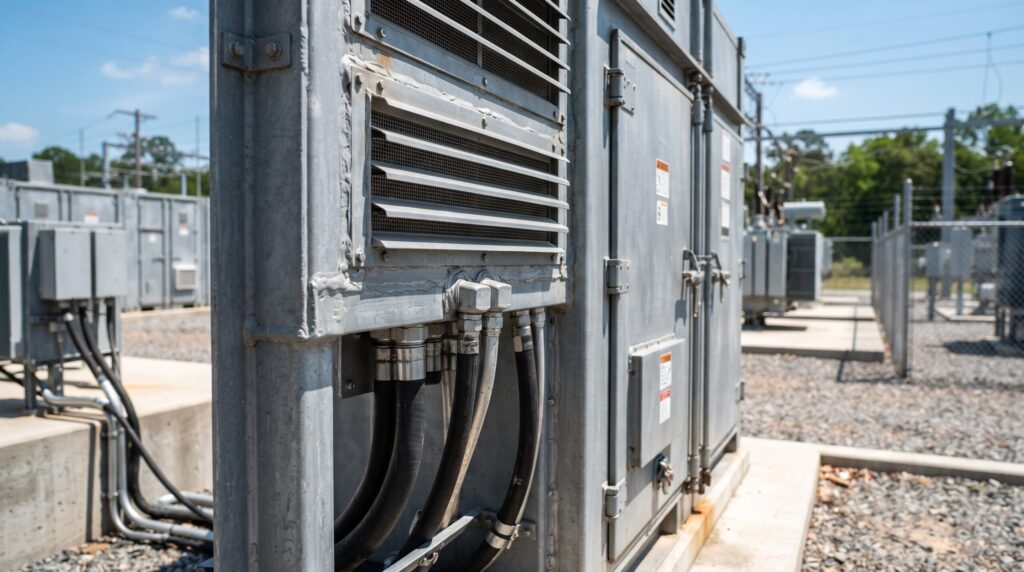
Outdoor battery enclosures must feature premium weather-sealed joints and heavy-gauge anti-corrosive coatings to prevent ambient moisture infiltration.
Preventative maintenance protocols must include annual thermal imaging inspections of all primary circuit breakers, inverter inputs, and battery cell interconnects.
Detecting subtle resistance localized anomalies within the facility power path before they trigger component failure protects continuous commercial operations.
Technical Specifications and Envelope Integrity
- Wind-Velocity Ratings: Integrated structural solar canopies erected over stationary sodium-ion battery enclosures must possess certified engineering designs capable of withstanding sustained wind-velocity ratings of up to 150 miles per hour, protecting critical underlying infrastructure from severe atmospheric storms.
- Structural Standards: All high-voltage physical station enclosures, foundation footings, and structural steel support canopies must strictly comply with local building regulations, adhering perfectly to National Electrical Code Article 625 and International Building Code criteria.
- Envelope Core Components: Deploying premium structural insulated panels paired with weather-sealed precision engineering enclosures provides comprehensive environmental isolation and high-velocity debris defense for ground-mounted power transformers and stationary battery storage banks.
Operating industrial green energy assets throughout northern geographic climates introduces distinct technical challenges concerning extreme low-temperature performance drops.
Standard battery configurations suffer from an immense surge in internal resistance when exposed to sustained freezing environmental conditions.
This chemical deceleration leads to severely restricted charging acceptance windows, forcing energy managers to draw expensive supplemental power from the local utility grid.
The new sodium-ion cell architectures entirely bypass this geographical constraint by retaining superior energy acceptance down to temperatures of minus 20 degrees Celsius.
In these sub-zero environments, the sodium-ion battery pack continues to discharge and accept energy efficiently with only minimal drops in baseline capacity.
This exceptional thermal resilience guarantees that commercial transport and storage networks operating in bitter winter zones can maintain rigid energy schedules without experiencing yard downtime.
The inclusion of internal self-heating technology allows the pack to rapidly elevate its own core temperature using highly controlled internal high-frequency electrical pulses.
This localized thermal preparation operates entirely independently of external terminal systems, preparing the asset to receive maximum solar power delivery immediately.
💡 Pro Tip: When planning multi-climate fleet logistics depots, always specify heavy-duty thermal insulation wrappers around the external paths of ground-mounted power electronics to minimize standby heating losses and completely eliminate localized moisture condensation within high-voltage enclosures.
Cost-Benefit Analysis: Upfront CapEx vs Long-Term Risk Mitigation
Building out ultra-fast power delivery networks calibrated for advanced charging requires an analytical financial approach comparing initial capital expenditure against permanent asset protection.
The initial procurement of liquid-cooled charging columns, specialized switchgear arrays, and premium structural insulated panels represents a serious upfront capital investment.
However, evaluating these financial components as an isolated expense ignores the massive compounding risk reductions achieved over multi-decade facility lifecycles.
Utilizing precision engineering specifications shields delicate ground-mounted commercial power systems from dangerous dust ingestion, water penetration, and ambient thermal extremes.
This protective envelope effectively mitigates the constant threat of unexpected hardware failures, which generate expensive emergency maintenance bills and severe operational blockages.
When a major distribution terminal experiences a total charging system failure, the financial damages accumulate exponentially across the entire corporate supply chain.
Missed cargo arrivals, idled vehicle operators, and expensive emergency fleet rentals rapidly wipe out any savings gained from purchasing cheap infrastructure materials.
Furthermore, integrating centralized stationary energy storage banks enables facility operators to execute automated peak-shaving energy strategies.
By drawing electricity from regional utility grids during low-cost off-peak hours and saving it within local battery arrays, properties avoid high peak demand fees.
These demand penalties, imposed by utilities during periods of peak grid stress, routinely account for up to 70% of a commercial facility’s monthly utility expenses.
Mitigating those costly electrical consumption spikes through automated battery discharge provides permanent operational cost reductions that dramatically accelerate infrastructure payback horizons.
Additionally, deploying resilient, code-certified site structural assets drastically lowers corporate commercial property insurance premiums over time.
Insurance underwriters calculate commercial facility risks using empirical safety data, rewarding hardened physical building envelopes and automated fire-suppressed sub-stations with excellent scores.
Investing in top-tier structural components demonstrates proactive risk management, allowing financial directors to secure significantly cheaper facility coverage options.
Ultimately, balancing high-quality upfront structural investments with advanced technical protections ensures the long-term profitability and safety of the commercial logistics enterprise.
Financial Comparison Matrix
- Upfront Capital Expenditure (CapEx): Procurement of megawatt-rated liquid-cooled charging units, heavy-gauge commercial copper conduits, primary utility step-down transformers, precision-engineered structural steel support frames, and advanced structural insulated panels for building out climate-controlled power electronics shelters.
- Long-Term Risk Mitigation: Elimination of expensive peak demand utility penalties via automated battery storage discharge, total reduction in facility logistics downtime losses, minimization of premature equipment replacement costs, and lasting minimization of commercial property asset insurance premiums.
To maximize these strategic economic returns, developers should aggressively utilize specialized funding methods like commercial Property Assessed Clean Energy programs.
PACE financing frameworks empower property owners to secure 100% of their sustainable infrastructure upgrading costs with zero upfront out-of-pocket corporate capital.
The accumulated financing amount is structured as a secure tax assessment tied directly to the land title, stretching comfortably across a long-term 20-year payment timeline.
This unique structure shifts the financial setup from an immediate corporate balance sheet burden into an easily manageable property operational cost.
Furthermore, since the repayment obligation is explicitly attached to the physical land parcel, the remaining financing balance transfers automatically to any subsequent property buyer.
This attribute removes the traditional investment conflict where commercial developers hesitate to install premium green upgrades due to short property ownership timelines.
In addition to PACE financing, site asset managers must continuously leverage federal and municipal environmental grants designed to offset commercial vehicle electrification costs.
Combining creative financing structures with top-tier industrial energy management hardware guarantees that modern delivery depots remain highly profitable assets for the next generation.
Conclusion
The evolution of modern energy networks depends heavily on responding proactively to emerging sodium-ion battery materials market trends.
By transitioning stationary backup arrays to abundant, thermally stable sodium chemistries, commercial operators can successfully insulate their facilities from grid volatility.
However, achieving long-term profitability requires an absolute commitment to rigid engineering standards and hardened site envelope protection from the outset.
Constructing code-certified infrastructure hubs that combine solar generation with robust power electronics safeguards ensures total site security for decades to come.
As the industrial landscape continues to prioritize carbon neutrality and structural risk reduction, these smart microgrids will stand as highly valuable real estate assets.
The organizations that deploy high-quality components today will permanently lock in a critical competitive advantage within the decentralized energy marketplace of tomorrow while advancing sodium-ion battery materials market trends.